
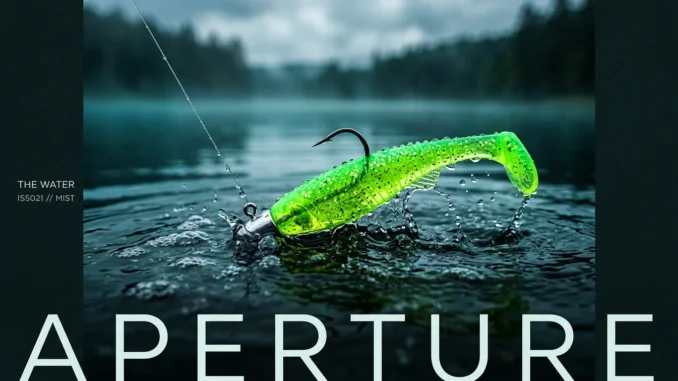
Hooked on Soft Plastics: The Beginner’s Secret Weapon
Ever feel overwhelmed by the dizzying array of fishing lures out there? Hard baits, spinnerbaits, jigs – it can feel like you need a degree in lure science just to get started. But what if I told you there’s a category of lures that are incredibly versatile, surprisingly affordable, and consistently effective, making them a true game-changer for anyone new to fishing? I’m talking about soft plastic lures, my friends. Based on my two decades of chasing fish, these flexible, lifelike baits are arguably the best entry point into lure fishing, offering an amazing balance of simplicity and success. If you’re an apartment dweller or an office worker looking to unwind by the water, mastering soft plastics will unlock a whole new level of enjoyment and more importantly, more bites, without breaking the bank or requiring a massive tackle box.
On Fish Hunter, we’re all about making fishing easy and fun, and that’s precisely what soft plastics deliver. They mimic natural prey so well that fish find them irresistible, often striking even when they’re not actively feeding. Unlike some of their rigid counterparts, soft plastics can be fished in countless ways, adapting to different conditions and fish species with minimal fuss. Ready to simplify your tackle box and multiply your catches? Let’s dive into why these pliable powerhouses are about to become your new best friend on the water.
What Exactly Are Soft Plastics, and Why Are They So Good?
At their core, soft plastic lures are artificial baits made from flexible, rubbery materials designed to imitate various natural prey items like worms, crawfish, minnows, and even insects. Think of them as the chameleons of the fishing world – they can take on almost any shape, size, and color imaginable, and their soft texture feels incredibly natural to a fish, making them hold on longer once they bite. This gives you more time to set the hook, which is a huge advantage for beginners!
Their popularity, especially for those just starting out, comes down to a few key benefits. First, their versatility is unmatched. With just a few different shapes and colors, you can effectively target bass, crappie, perch, trout, and even various saltwater species like redfish or snapper. Second, they are generally much more affordable than hard baits. Losing a $3 soft plastic isn’t nearly as painful as losing a $15 crankbait! Finally, and perhaps most importantly, soft plastics are incredibly effective. Their lifelike action and natural feel often trigger strikes when other lures fall short. Honestly, some of my most memorable catches, from giant largemouth bass to feisty panfish, have come on nothing more complicated than a simple soft plastic.
You’ll hear terms like “rigging” when discussing soft plastics, which simply means attaching the hook and sometimes a weight to the lure in a specific way. Don’t worry, it’s far simpler than it sounds, and we’ll cover the easiest methods shortly. The ability to make them “weedless” – meaning the hook point is hidden within the plastic to avoid snags – is another massive plus, allowing you to fish in heavy cover where big fish often hide without constantly getting hung up.
Your First Soft Plastics: Essential Shapes and Colors
When you first walk into a tackle shop, the sheer number of soft plastic options can be daunting. To keep it simple and effective for beginners, let’s focus on three categories that consistently produce results and are easy to fish. For most freshwater applications, especially bass, crappie, and perch, these are your go-to:
- Stick Worms: These are exactly what they sound like – simple, cylindrical worms, often with a subtle taper. The most famous example is the Senko-style worm. They have an incredible shimmy as they fall through the water, often without you doing anything!
- Recommendation: A 5-inch Senko-style worm.
- Best for: Largemouth bass, Smallmouth bass, sometimes even large panfish.
- Creature Baits: These are a bit more abstract, designed to imitate crawfish, lizards, or other bottom-dwelling critters. They have various appendages that flap and move, creating a lot of commotion.
- Recommendation: A 3-4 inch crawfish imitation.
- Best for: Bass, especially when they’re hiding near rocks or wood.
- Grubs & Swimbaits: These mimic baitfish. Grubs usually have a single curly tail, while paddle tail swimbaits have a paddle-shaped tail that kicks back and forth. Both are fantastic for a simple retrieve.
- Recommendation: 3-inch single-tail grub or a 3.5-inch paddle tail swimbait.
- Best for: Bass, crappie, perch, trout, and many inshore saltwater species.
When it comes to color selection, don’t overthink it. For clear water, stick with natural shades like green pumpkin, watermelon seed, or black and blue. These imitate natural forage well. In murky water or on overcast days, brighter colors like chartreuse, white, or bubblegum can stand out more. As for gear, a standard 6-7 foot medium power spinning rod paired with a 2500-3000 size spinning reel spooled with 8-10 lb monofilament or 15-20 lb braided line (with a short fluorocarbon leader for stealth) is a perfect all-around setup for fishing these lures.
Rigging Made Easy: Your First Three Go-To Setups
Now that you have your soft plastics, how do you put them on the hook? This is where the magic happens, and thankfully, it doesn’t require a master’s degree in engineering. We’ll focus on three super effective, easy-to-learn rigging methods that will cover most of your beginner fishing scenarios.
1. The Texas Rig: Go Anywhere, Catch Anything
The Texas Rig is your absolute best friend for fishing around weeds, submerged trees, or rocky bottoms because it makes your lure virtually weedless. This means the hook point is hidden, preventing snags. Here’s how to do it:
- Slide a bullet weight (a cone-shaped fishing weight, typically 1/8 to 1/4 oz for beginners) onto your main line, tapered end first.
- Tie on an offset hook (a hook with a bend near the eye, designed for soft plastics) using a reliable knot like the Improved Clinch Knot or Palomar Knot.
- Insert the hook point into the very front center of your soft plastic (e.g., a worm or creature bait) about a quarter to half an inch.
- Thread the hook through the plastic until the eye of the hook is almost at the nose of the lure, then rotate the hook 180 degrees.
- Lay the hook alongside the body of the plastic to see where the hook point would naturally exit. Gently push the hook point through the body and then just barely embed the tip back into the plastic’s body. This makes it weedless!
This rig is fantastic for bass and can be fished by dragging it slowly along the bottom or hopping it over structure. Imagine this situation: you’re fishing a pond with lily pads or submerged grass. A Texas Rig lets you cast right into that fishy cover without constant snags, allowing your lure to get right where the fish are hiding. It’s incredibly effective!
2. The Wacky Rig: Simple Action, Big Bites
The Wacky Rig is ridiculously simple and incredibly effective, especially for stick worms. It creates a unique, irresistible shimmy as the worm falls.
- Take your stick worm (like a Senko-style worm).
- Hook it directly through the middle, perpendicular to the body, using an exposed worm hook (or even a standard octopus hook).
That’s it! Cast it out, let it sink on a slack line, and watch the ends wiggle. A slight twitch of your rod tip will make it dance even more. Fish often hit it on the fall. I’ve had countless days where a wacky rig outfished everything else, especially in clearer water or when fish are finicky.
3. The Jig Head Rig: The All-Around Workhorse
For grubs and paddle tail swimbaits, the Jig Head Rig is probably the easiest and most versatile. A jig head is simply a hook with a weighted head (often round or football-shaped) molded onto it.
- Take your jig head (1/8 to 1/4 oz is a good starting point).
- Insert the hook point into the center of the nose of your soft plastic grub or swimbait.
- Thread the plastic onto the hook shank until the nose of the lure butts up snugly against the lead head of the jig.
- Ensure the hook point is exposed and straight.
This rig is perfect for a simple cast-and-retrieve, letting the tail do all the work. It’s excellent for searching for fish and works across a wide range of species and water conditions. To be fair, this is probably the rig I recommend most often to someone who has literally never cast a lure before.
Bringing Them to Life: Basic Retrieve Techniques
Having your soft plastic rigged correctly is half the battle; the other half is making it look alive in the water. Luckily, soft plastics are very forgiving. Here are three basic retrieve techniques that will get you started:
- The Slow & Steady Fall (Wacky Rig & Weightless Texas Rig): Cast your wacky-rigged worm or weightless Texas Rig near cover. Let it sink on a slack line. Pay close attention to your line – if it twitches, jumps, or starts moving off to the side, set the hook! After it settles, give your rod tip a gentle twitch, let it fall again, and repeat. This mimics a dying worm or insect.
- The Drag & Hop (Texas Rig & Jig Head on Bottom): For Texas rigs or jig heads fished on the bottom, cast out and let your lure sink. Once it’s on the bottom, slowly drag your rod tip from 9 o’clock to 11 o’clock, then reel up the slack as you drop your rod tip back to 9 o’clock. Occasionally, give your rod a quick, sharp hop. This imitates a crawfish scuttling or a baitfish feeding on the bottom.
- The Simple Swim (Jig Head with Grub/Swimbait): This is arguably the easiest. Cast out your jig head with a grub or swimbait and simply reel it in at a steady, moderate pace. The paddle tail or curly tail will do all the work, creating vibrations and flash that attract fish. Vary your retrieve speed until you find what the fish like that day.
Common Mistakes to Avoid: The biggest mistake beginners make with soft plastics is reeling too fast. Remember, these lures are often about subtle, natural movements. Another common issue is not feeling for bites. Soft plastic bites can be very subtle – a slight tick, a spongy feeling, or your line just moving sideways. If something feels different, set the hook!
Your Next Step: Go Fish!
You’ve now got the lowdown on why soft plastics are a beginner’s best friend, which ones to pick up, and how to rig and fish them effectively. This isn’t just theory; these are the exact techniques and lures that have filled my livewell and countless others’ for years. They offer a simple, fun, and highly successful path into the world of lure fishing.
So, what to do this weekend? Head to your local tackle shop and grab a pack of 5-inch green pumpkin stick worms, a few 1/8 oz bullet weights, and a pack of 3/0 offset worm hooks. If you have a local pond, river, or even a pier nearby, grab your trusty spinning rod and go give these techniques a try. You’ll be amazed at how quickly you can start catching fish with these simple yet incredibly effective lures. Remember to practice sustainable fishing – release what you don’t plan to eat, handle fish gently, and always pick up any discarded soft plastics (they’re not biodegradable!). Get out there, have fun, and I guarantee you’ll be unlocking more bites in no time!
Leave a Reply