
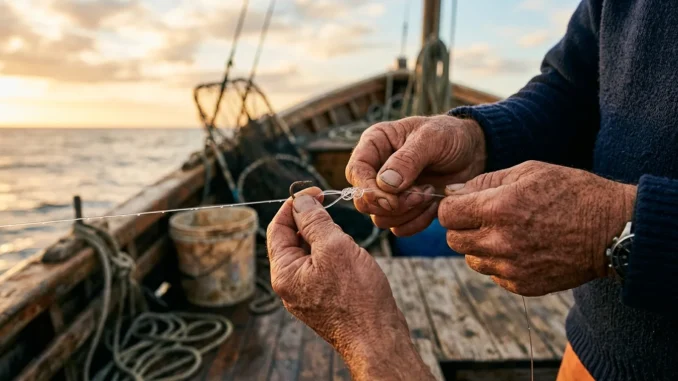
Introduction to Fishing Knots
Fishing knots are a crucial part of any angler’s arsenal. A well-tied knot can make all the difference between landing a fish and losing it. But what would you do in this situation: you’re out on the water, waiting for a bite, when suddenly your line snaps due to a poorly tied knot? You’d likely be left feeling frustrated and defeated. In my opinion, knowing how to tie a few essential knots is a fundamental skill for any fisherman.
For example, imagine this situation: you’re fishing for trout in a fast-moving stream, and you need to quickly switch to a different lure. If you don’t know how to tie a reliable knot, you’ll waste valuable time and possibly miss out on a big catch. Honestly, I’ve been in this situation before, and it’s not fun. That’s why I want to share my knowledge of fishing knots with you, so you can avoid making the same mistakes I did.
So, let’s get started with the basics. A fishing knot is a type of knot that connects your line to your lure, hook, or swivel. There are many different types of fishing knots, but some are more essential than others. In this guide, we’ll cover the most important knots you need to know as a beginner.
Essential Fishing Knots
Improved Clinch Knot
The Improved Clinch Knot is one of the most popular fishing knots out there. It’s easy to learn and can be used to attach your line to a lure or hook. To tie an Improved Clinch Knot, follow these steps:
- Thread the line through the eye of the hook or lure
- Make 5-7 turns with the line around the standing line
- Pass the end of the line through the loop you just created
- Moisten the knot with saliva or water and pull it tight
This knot is great for beginners because it’s easy to learn and is relatively strong. However, it’s not the best knot for very thin lines or for fishing in heavy cover.
Palomar Knot
The Palomar Knot is another essential knot that’s easy to learn and very strong. It’s a great knot to use when fishing with braided line, as it helps to prevent the line from slipping out of the knot. To tie a Palomar Knot, follow these steps:
- Double the line and pass it through the eye of the hook or lure
- Make a loop with the doubled line
- Pass the end of the line through the loop
- Moisten the knot with saliva or water and pull it tight
This knot is great for fishing with heavy lines or in heavy cover, as it’s very strong and resistant to slipping.
Common Mistakes to Avoid
One of the most common mistakes beginners make when tying fishing knots is not moistening the knot before pulling it tight. This can cause the knot to slip or come undone, resulting in lost fish and gear. Another mistake is not leaving enough line when tying the knot. This can cause the knot to come undone when you’re fighting a fish.
To avoid these mistakes, make sure to always moisten your knots with saliva or water before pulling them tight. You should also leave enough line when tying the knot, so it doesn’t come undone when you’re fighting a fish. Let me add something here: it’s also important to practice tying knots before you go fishing, so you can get a feel for how they work and how to tie them quickly and easily.
Advanced Fishing Knots
Once you’ve mastered the essential knots, you can move on to more advanced knots. These knots can help you to fish more efficiently and effectively, and can also help you to avoid losing gear. One example of an advanced knot is the Uni Knot, which is used to connect two lines of different diameters.
To tie a Uni Knot, follow these steps:
- Overlap the two lines by about 6 inches
- Make 5-7 turns with the smaller line around the larger line
- Pass the end of the smaller line through the loop you just created
- Moisten the knot with saliva or water and pull it tight
This knot is great for fishing with different types of line, such as monofilament and braided line. It’s also very strong and resistant to slipping.
Conclusion
Learning to tie essential fishing knots is a crucial part of becoming a successful angler. By mastering the Improved Clinch Knot, Palomar Knot, and other essential knots, you’ll be able to fish with confidence and avoid losing gear. So, what to do this weekend? Get out on the water and practice tying some knots! With a little practice, you’ll be tying knots like a pro in no time. To be fair, it’s not always easy, but with patience and practice, you’ll get the hang of it.
Leave a Reply