
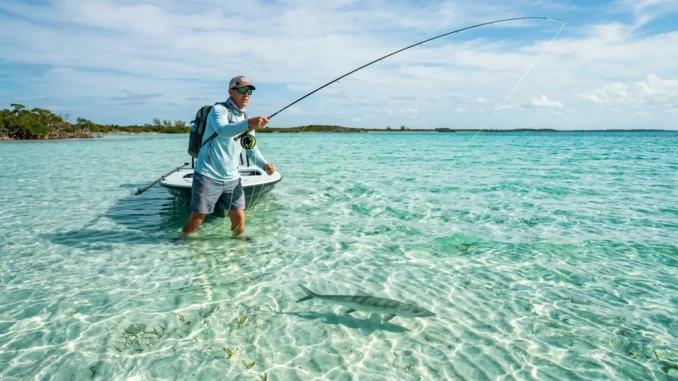
The Thrill of the Hunt: Why Sight Fishing Changes Everything
There’s a special kind of magic in fishing when you can actually see your target before you even cast a line. Forget blind casting and hoping for a bite; sight fishing transforms your outing into a thrilling game of strategy, observation, and precision. It’s like a real-life treasure hunt where the treasure is swimming right in front of your eyes! This technique, often thought of as advanced, is surprisingly accessible and incredibly rewarding for anyone looking to deepen their connection with the water and their quarry.
For us busy folks, whether you’re an apartment dweller exploring a local park pond or a homeowner hitting a clear river, sight fishing adds an extra layer of excitement and knowledge to your trip. It teaches you about fish behavior, their preferred hiding spots, and how they react to different presentations. Honestly, once you’ve experienced the adrenaline rush of watching a fish track your lure and then strike, you might never want to go back to purely blind casting. It’s a game-changer for improving your catch rate and understanding the underwater world.
Essential Gear for Your Eyes and Hands: Seeing is Believing
Your Number One Tool: Polarized Sunglasses
If there’s one piece of gear you absolutely cannot skimp on for sight fishing, it’s a good pair of polarized sunglasses. These aren’t just for looking cool; they’re crucial. Polarized lenses work by blocking horizontal light waves, which significantly reduces glare reflecting off the water’s surface. This allows you to peer into the water, seeing submerged structure, weeds, and most importantly, the fish themselves, instead of just a blinding reflection. Trust me, it’s the difference between seeing a vague shadow and clearly identifying a Largemouth Bass tucked beside a log.
While high-end brands are great, you don’t need to break the bank. Many affordable polarized options are available at sporting goods stores. Look for amber, copper, or brown lens tints, as these tend to enhance contrast and depth perception, which is ideal for varying light conditions. For me, a good pair of polarized shades is more important than the rod itself when I’m specifically targeting visible fish.
The Right Rod, Reel, and Line for a Delicate Touch
For sight fishing, especially in clear waters where fish can be skittish, a lighter, more sensitive setup is usually best. A spinning rod and reel combo is perfect for beginners and seasoned anglers alike. I typically recommend a 6 to 7-foot medium-light to medium power spinning rod paired with a 2500- to 3000-size spinning reel.
A spinning reel is one of the most common types, known for its open-face design where the line spools off a stationary spool. This setup is versatile and easy to cast, making it ideal for accurate presentations. For line, you want something subtle. Start with 6-10 lb monofilament line (a single-strand nylon line, very common and easy to tie knots with) or a 10-15 lb braided line (multi-strand, very strong for its diameter, with no stretch). If using braid, always add a 4-6 foot fluorocarbon leader (a nearly invisible line that sinks, great for wary fish) of 6-10 lb test, tied with a reliable knot like the Uni-to-Uni Knot or an Albright Knot, to maintain stealth. This setup gives you the casting accuracy and sensitivity needed to place your bait precisely without spooking your target.
Mastering the Art of Spotting: Where and How to Look
Reading the Water and Light
Spotting fish is more than just staring into the water; it’s about understanding light, shadows, and fish behavior. The best times for sight fishing are usually early mornings or late afternoons when the sun is lower. Overhead sun at midday can create too much glare, even with polarized glasses. However, if the sun is behind you, shining into the water, it can illuminate fish beautifully. Avoid casting shadows over the water where you expect fish to be; fish are incredibly aware of overhead movement and shadows, seeing them as potential predators.
Focus your gaze on areas of contrast: where light meets shadow, where cover meets open water, or where the bottom changes color or texture. Think about where a fish would logically ambush prey or hide from predators. Look for subtle movements—a flicker of a tail, a slight disturbance in the water, or a shadow that seems to hold its position against the current. Sometimes, it’s not the fish itself you see first, but its shadow on the bottom, especially in very shallow water.
Key Fish Hangouts and Behavior
Fish, like us, seek comfort and food. In clear waters, they’ll often hold near structure that provides cover and ambush points. This includes submerged logs, rock piles, weed lines, docks, lily pads, and even subtle depressions in the bottom. For example, imagine this situation: you’re walking along a clear river bank, and you spot a large shadow under a partially submerged tree branch. You put on your polarized sunglasses and, boom, it resolves into a beautiful Largemouth Bass, perfectly camouflaged and waiting. This is exactly what sight fishing is all about!
Different species have different habits. Largemouth Bass often hug cover, while Trout might hold in current seams or behind rocks, facing upstream. Perch and other panfish often school around weeds or docks. In saltwater, species like Snapper or Redfish on flats might cruise along sandy bottoms or near grass beds. Learning these behaviors helps you anticipate where to look, turning your search into a more educated and efficient process.
The Stealthy Approach and Perfect Presentation
Quiet Movements and Accurate Casting
Once you’ve spotted a fish, the real game begins: not spooking it! Move slowly and quietly, avoiding sudden movements or loud noises. If you’re wading, shuffle your feet to minimize disturbance. Approach from downwind or with the sun in your favor, if possible. The goal is to get into a casting position without the fish knowing you’re there.
Your cast needs to be accurate and delicate. Instead of casting directly at the fish, aim to land your bait or lure a few feet beyond or to the side of it, allowing it to drift naturally into the fish’s strike zone. A soft, controlled cast prevents a loud splash that could send your target darting away. Practice your casting accuracy in your backyard; it pays huge dividends in sight fishing.
Bait and Lure Choices for Visible Fish
When a fish can see your offering, presentation and natural appeal are paramount. Live bait like small worms for bass, minnows, or shrimp are incredibly effective because they look, smell, and move naturally. For lures, think subtle and realistic. Small soft plastics (like a 3-inch wacky-rigged Senko or a small grub on a light jig head), tiny crankbaits, or delicate topwater lures can work wonders. The key is to mimic natural prey and present it without aggression. A slow, subtle retrieve often out-fishes a fast, erratic one when the fish is watching.
For example, if you see a trout holding in a clear pool, a small, natural-colored jig or a single live worm drifted naturally downstream to it can be irresistible. Or, for a bass under a lily pad, a weightless soft plastic dropped quietly nearby and twitched gently can trigger an explosive strike you’ll never forget. This type of fishing truly allows you to experiment and learn what specific fish in specific environments prefer.
Common Sight Fishing Mistakes and Quick Fixes
- Spooking the Fish: This is the most common mistake. Moving too fast, making loud noises, or casting a shadow over the fish.
- Fix: Slow down. Move stealthily. Observe from a distance. Cast well beyond the fish and retrieve into its zone, rather than directly on top of it.
- Not Using Polarized Sunglasses: Trying to sight fish without them is like trying to read a book in the dark. You’re missing 90% of what’s there.
- Fix: Invest in a decent pair. It’s truly non-negotiable for this technique.
- Wrong Angle to the Sun: Fighting glare instead of using the sun to your advantage.
- Fix: Position yourself so the sun is behind you, illuminating the water in front. If the sun is high, look for shaded areas or wait for better light.
- Overly Aggressive Presentation: Loud splashes, fast retrieves, or unnatural lure actions.
- Fix: Focus on delicate, accurate casts. Retrieve slowly and naturally. Use lighter line and smaller, more realistic baits or lures.
Your Weekend Sight Fishing Challenge!
So, what are you waiting for? Grab your polarized sunglasses, a light spinning combo (a 6-7 ft medium-light rod and a 2500 reel with 8lb mono or 10lb braid and a fluorocarbon leader is perfect), and a handful of small soft plastics or some live worms. This weekend, head to your local clear pond, river, or even a pier with calm, clear water. Look for visible structure—docks, rocks, submerged logs, weed lines—and walk slowly, scanning the water for any signs of fish. Remember to move quietly and cast gently a few feet past where you think the fish might be, then slowly retrieve your offering into its zone. The satisfaction of seeing a fish take your bait is unparalleled. Happy hunting on the water, Fish Hunter!
Leave a Reply