
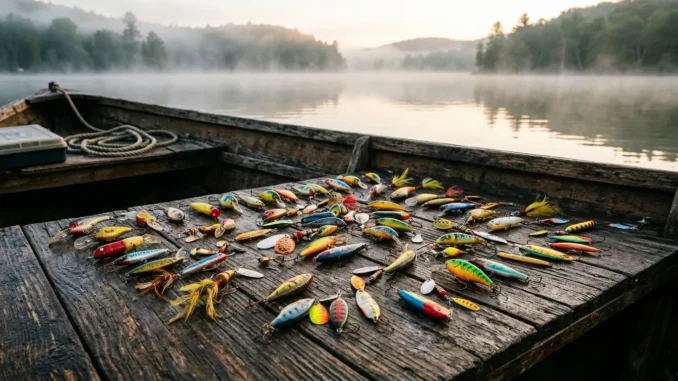
Stepping into the world of fishing can feel like learning a new language, especially when you walk down the tackle aisle. A dizzying array of colorful, oddly shaped contraptions stares back at you – these are fishing lures. For many new anglers, the sheer variety is overwhelming. But what if I told you that you only need to master a handful of these artificial baits to start catching fish consistently and confidently? Based on my two decades of chasing everything from feisty bass in freshwater lakes to hard-fighting snappers in coastal bays, I’ve seen countless beginners get bogged down by choice. That’s why I’ve distilled it all down to the absolute essentials. Forget the fancy, expensive gear for now; let’s talk about the real workhorses that will put fish on your line and a smile on your face.
Why Lures? The Beginner’s Secret Weapon
For new anglers, lures offer a fantastic entry point into fishing, often proving more convenient and less messy than live bait. Honestly, who wants to deal with a bucket of squirming worms or stinky minnows on a hot day if you don’t have to? Lures are clean, reusable, and can be stored easily, making them perfect for apartment dwellers or office workers looking for a quick weekend escape without much fuss.
Beyond convenience, lures encourage a more active style of fishing. Instead of waiting for a bite, you’re constantly casting, retrieving, and experimenting, learning about fish behavior and water conditions. This engagement makes the experience more dynamic and, in my opinion, more rewarding. Lures also allow you to target specific species with greater precision, opening up a world of possibilities on your local lake, river, or pier.
Lure Logic 101: Understanding the Basics & Gear Up
Before we dive into the specific lures, let’s understand the basic categories. Lures generally mimic baitfish, insects, or other prey items. You have soft plastics, which are pliable and often imitate worms or small creatures; hard baits like crankbaits and topwater lures, typically made of plastic or wood, designed to look like swimming or injured fish; and metal baits such as spoons and jigs, which rely on flash and weight to attract fish. The key is presentation – making the lure move in a way that looks natural and enticing to a hungry fish.
Getting Set Up: Your Go-To Gear
To effectively use most of these beginner-friendly lures, you don’t need a complicated setup. A standard spinning rod and spinning reel combo is ideal. I recommend a 6 to 7-foot medium-power spinning rod paired with a 2500 to 3000 size reel. This versatile setup handles most freshwater and light saltwater situations perfectly.
For line, beginners often start with 8 to 10-pound test monofilament line. It’s affordable, easy to tie knots with (like the essential Improved Clinch Knot), and has good stretch, which can be forgiving when a fish strikes. As you gain confidence, consider upgrading to 10 to 15-pound test braided line. This line is incredibly strong for its diameter, offers superior sensitivity to feel subtle bites, and casts further. If you use braid, always tie on a 6 to 10-pound test fluorocarbon leader (a short section of transparent line tied to your main line) using a Palomar Knot or Uni Knot. The leader makes your line less visible to fish and protects your main line from abrasion.
Your First 10 Essential Lures: The Tackle Box Heroes
Now, let’s get to the fun part! Here are ten tried-and-true lures that every beginner should have in their tackle box. These are chosen for their effectiveness, ease of use, and versatility across different species and environments.
1. Soft Plastic Worms (e.g., Senko-style)
These unassuming, worm-shaped pieces of plastic are bass magnets. Often infused with salt, they have a natural fall that fish find irresistible. The most common way to fish a soft plastic worm is called ‘wacky rigging’ where you hook it through the middle, allowing both ends to wiggle as it sinks slowly.
How to use: Cast it out, let it sink on a slack line, and watch your line for any twitch. Gently lift and drop your rod tip, letting the worm flutter back down. You’ll primarily target Largemouth Bass and Smallmouth Bass with these.
Why it’s beginner-friendly: They are incredibly forgiving, require minimal action from the angler, and bass absolutely crush them. Plus, they’re relatively inexpensive.
2. Grubs (Curly-tail)
Grubs are simple yet effective soft plastics with a curly tail that creates enticing action in the water. They typically come in sizes from tiny (1-inch) to larger (4-inch).
How to use: Rig a grub on a small jig head (a weighted hook) and simply cast and retrieve at a steady pace. The tail will do all the work. They are fantastic for Panfish (Bluegill, Crappie, Perch), Trout, and even smaller Bass.
Why it’s beginner-friendly: The cast-and-retrieve method is as simple as it gets, and grubs are incredibly versatile and effective for a wide range of common fish.
3. Spinnerbaits
A spinnerbait is a flashy, vibrating lure with one or more metal blades that spin like a propeller when retrieved, attracting fish with flash and vibration. It often has a skirted body that resembles a baitfish.
How to use: Cast it near cover like weeds or submerged logs, and retrieve steadily. The blades will flash and vibrate, calling fish in. Great for covering water quickly and targeting active fish like Largemouth Bass, Pike, and Walleye.
Why it’s beginner-friendly: They are relatively weedless due to their design, meaning fewer snags, and the retrieve is straightforward.
4. Inline Spinners
Smaller than spinnerbaits, inline spinners feature a single blade that rotates around a central wire shaft, usually adorned with a weighted body and treble hook. Brands like Mepps and Rooster Tail are classics.
How to use: A simple cast and straight retrieve is all you need. The spinning blade creates flash and vibration that fish find irresistible. These are deadly for Trout, Perch, Panfish, and smaller Bass.
Why it’s beginner-friendly: They are incredibly easy to use and consistently catch fish, especially in streams and smaller lakes.
5. Crankbaits (Shallow Diver)
Crankbaits are hard-bodied lures with a plastic lip that causes them to dive when retrieved. A shallow diver runs only a few feet deep. They mimic a swimming baitfish, often with a rattling sound.
How to use: Cast out and retrieve at a steady pace. The lip forces the lure to dive. Experiment with retrieve speed and occasional pauses. Excellent for searching for active Bass, Pike, and Walleye.
Why it’s beginner-friendly: They cover a lot of water efficiently, and the built-in action does most of the work for you.
6. Topwater Poppers
A topwater lure, specifically a popper, is designed to float on the surface and creates a “chugging” or “splashing” sound when retrieved, imitating a struggling baitfish or insect. For example, imagine this situation: it’s a calm summer morning, and you see ripples on the water’s surface. A popper is exactly what you need!
How to use: Cast it out, let the ripples settle, then give your rod tip a sharp, downward twitch to make the lure “pop.” Pause, and repeat. The explosive strikes on topwater lures are incredibly exciting and primarily target Largemouth Bass, Smallmouth Bass, and sometimes Pike. Honestly, the first time I saw a bass explode on a topwater popper, I was hooked for life!
Why it’s beginner-friendly: While it requires a bit more technique than a straight retrieve, the visual thrill of a topwater strike is unmatched and highly motivating for new anglers.
7. Jig Head with Soft Plastic Swimbait
This combo consists of a weighted hook (the jig head) paired with a soft plastic lure that looks like a small fish (a swimbait). This setup is incredibly versatile.
How to use: Cast it out, let it sink to your desired depth, then retrieve steadily or with a lift-and-drop motion. The swimbait’s tail will kick, mimicking a swimming baitfish. This setup is effective for nearly anything that eats smaller fish, including Bass, Walleye, Pike, Redfish, and Snapper in saltwater.
Why it’s beginner-friendly: Simple to rig and highly effective, it’s one of the most versatile lure combinations you can learn.
8. Spoons (Casting Spoons)
Casting spoons are curved pieces of metal that wobble and flash as they move through the water, imitating an injured baitfish. The classic “Daredevil” is a perfect example.
How to use: Cast and retrieve at various speeds, or try a jigging motion by lifting and dropping your rod tip. The erratic action and flash are irresistible. They are great for Pike, Trout, Salmon, and even some saltwater species like Striped Bass.
Why it’s beginner-friendly: Spoons are simple, cast a long way, and their flashy action grabs attention, making them easy for fish to spot.
9. Bucktail Jigs
A bucktail jig is a lead head hook dressed with deer hair (bucktail) or synthetic fibers, creating a natural, pulsing action in the water. They are incredibly effective and come in various sizes.
How to use: Cast and retrieve with a jerky, erratic motion, imitating a fleeing baitfish or shrimp. They can be bounced off the bottom or retrieved through the middle of the water column. Excellent for Flounder, Snapper, and Redfish in saltwater, and surprisingly effective for Bass and Pike in freshwater.
Why it’s beginner-friendly: Simple to use, virtually indestructible, and effective in both freshwater and saltwater environments, making them a great all-around choice.
10. Metal Jigs (Small Casting Jigs)
These are solid pieces of metal, often slender, designed to be cast long distances and retrieved quickly. They sink fast and provide a lot of flash.
How to use: Cast as far as you can, let it sink for a few seconds, then retrieve at a fast, steady pace or with rapid jerks and pauses. They are fantastic for pier fishing or when targeting schooling fish. Ideal for various saltwater species like Mackerel, Bluefish, Snapper, and even small tuna species, but can also tempt freshwater Trout and Perch.
Why it’s beginner-friendly: They cast incredibly far, making them great for reaching distant fish from shore or a pier, and they don’t require complex retrieves to be effective.
Mastering the Retrieve & Avoiding Common Pitfalls
Having the right lures is only half the battle; knowing how to bring them to life is the other. The most basic retrieve is a simple, steady reel. But to truly unlock their potential, you’ll want to experiment. Try varying your retrieve speed, adding pauses, or giving your rod tip a gentle twitch or jerk. Fish are often triggered by erratic movements that mimic injured prey. To be fair, this takes practice, but the fish will tell you what they like!
Common Mistakes & How to Prevent Them
- Not varying your retrieve: Don’t just reel straight in every time. Mix it up!
- Using the wrong size or color: Start with natural colors (greens, browns, silver) and adjust based on water clarity and what local baitfish look like.
- Ignoring structure: Fish love to hide around submerged trees, rocks, docks, and weed lines. Cast your lures near these spots.
- Not checking your line and knots: Before every trip and after every few casts, check your line for nicks and ensure your knots are tight. But what good is a perfect lure if your knot fails under pressure?
- Fishing too fast or too slow: Pay attention to the fish. If they’re not biting, try changing your retrieve speed. Sometimes a slow, methodical retrieve is key, other times a fast, aggressive one.
Essential Gear Check: Beyond the Lures
While lures are critical, don’t forget these other simple essentials for a smooth fishing trip:
- Pliers or Forceps: Crucial for safely removing hooks from fish.
- Line Clippers: For clean cuts when tying knots.
- Small Tackle Box: To keep your lures organized.
- Sunscreen, Hat, Polarized Sunglasses: Protect yourself from the elements and help you spot fish or structure under the water.
- Fishing License: Always, always check your local regulations and get the appropriate license before you cast a line. It’s the law!
Beyond the Catch: Fishing Responsibly
As you embark on your fishing journey, remember that being a responsible angler is just as important as catching fish. Practice catch and release, especially with larger breeding fish, by handling them gently with wet hands and releasing them quickly. Consider using barbless hooks (or crimping down the barb on your existing hooks) for easier, less damaging hook removal. Always respect local size and bag limits, and leave your fishing spot cleaner than you found it. Sustainable fishing ensures that these relaxing, rewarding experiences will be available for generations to come.
There you have it – your starter kit for lure fishing success! These ten essential lures will give you a solid foundation, allowing you to confidently approach a wide variety of fishing situations. Don’t be afraid to experiment, learn from every cast, and most importantly, enjoy the peace and thrill that fishing brings. Grab a few of these lures, head to your local water, and start making those unforgettable fishing memories. Happy fishing from your buddies at Fish Hunter!
Leave a Reply