Stepping into the world of fishing gear can feel like navigating a maze, especially when it comes to choosing the heart of your setup: the reel. You've probably seen a dozen different types, but two stand out as the most common and versatile: the spinning reel and the baitcasting reel. Deciding between them isn't just about what looks cooler; it's about matching your gear to your fishing style, your comfort level, and the kind of fish you're hoping to catch. As your trusted fishing buddy, I'm here to break down the differences and help you make a confident choice.
Understanding the Basics: Spinning Reels Explained
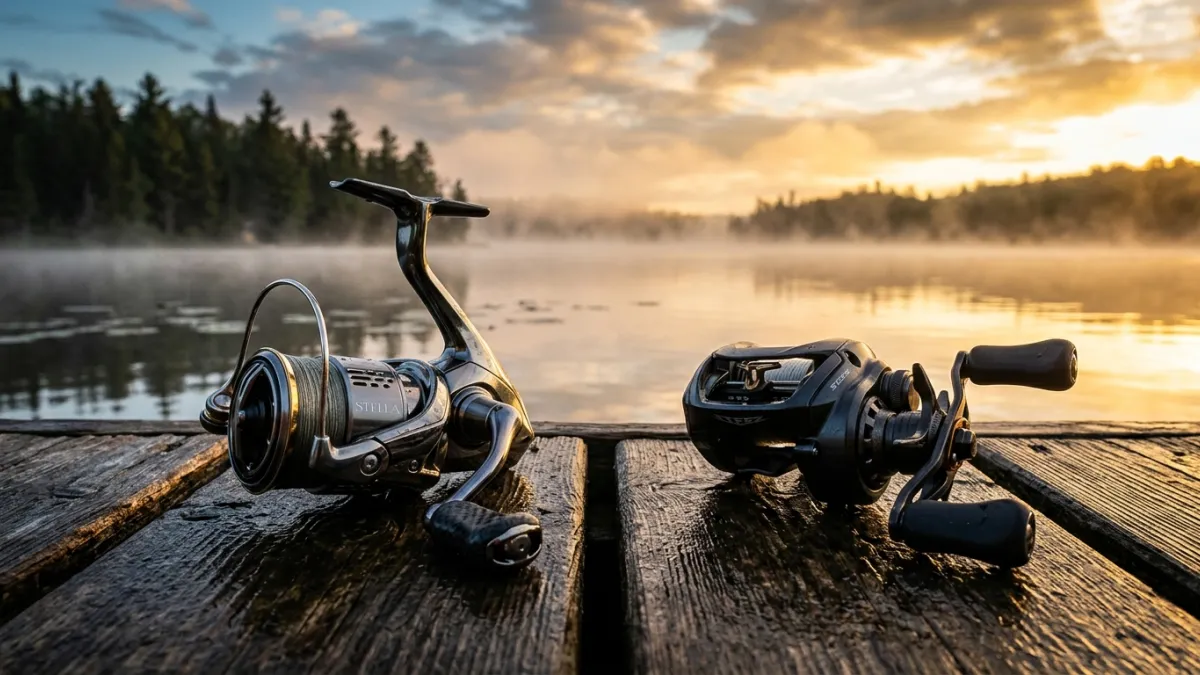
Let's start with the undisputed champion for most beginners and casual anglers: the spinning reel. This is likely the reel you picture when you think of fishing. It's mounted underneath the rod and features an open-faced spool with a wire bail that you flip to cast. When you turn the handle, the bail rotates, wrapping the line evenly back onto the spool. It's simple, intuitive, and incredibly forgiving, which is why I always recommend it for anyone just starting their fishing journey.
The beauty of a spinning reel lies in its ease of use. Casting is straightforward: open the bail, hold the line with your index finger, cast, and then close the bail. The line peels freely off the stationary spool, reducing friction and making long, smooth casts relatively effortless. This design also makes spinning reels excellent for throwing lighter lures or baits, as the line flows off without needing a lot of weight to pull it. For beginners, a 6-7 foot medium-light to medium power spinning rod paired with a 2500-3000 size spinning reel is a fantastic, versatile setup.
When it comes to line, a good quality monofilament line in the 6-10 lb test range is perfect for most freshwater applications. It's supple, easy to manage, and has good stretch, which can act as a shock absorber when a fish strikes. For slightly heavier cover or bigger fish, you could step up to 10-15 lb braided line, which is incredibly strong for its diameter and offers excellent sensitivity. Spinning reels truly shine for target species like Largemouth Bass, Trout, Panfish (like Bluegill or Crappie), and even lighter saltwater species like Spotted Seatrout or Flounder from a pier or kayak.
Stepping Up Your Game: Baitcasting Reels Explained
Now, let's talk about the baitcasting reel. Mounted on top of the rod, this reel is a different beast entirely. Unlike a spinning reel where the spool is stationary, a baitcaster's spool rotates to let the line out during a cast. This rotation means that the line and spool are directly connected, offering a more direct feel for your lure and the fish. But here's the kicker: you need to control that spool rotation with your thumb during the cast to prevent a catastrophic tangling known as a "backlash" or "bird's nest."
Honestly, the learning curve for a baitcaster is steeper. Many anglers, myself included, have spent frustrating hours untangling lines in the beginning. However, once mastered, a baitcaster offers unparalleled accuracy and power. You can place a lure with pinpoint precision right next to a submerged log or under an overhanging branch – something much harder to do with a spinning reel. This precision comes from the direct control you have over the spool. Baitcasting reels also excel at handling heavier lines and lures, making them ideal for fishing thick cover or targeting bigger, more aggressive fish.
A typical beginner baitcasting setup would be a 6.5-7.5 foot medium-heavy to heavy power baitcasting rod paired with a medium gear ratio baitcasting reel. For line, 12-20 lb fluorocarbon line is a popular choice for its low visibility and abrasion resistance, or you can opt for 20-50 lb braided line for sheer strength and sensitivity, especially when fishing around heavy structure. Baitcasters are the go-to for serious Largemouth Bass anglers throwing big jigs, crankbaits, or topwater lures, as well as for targeting Pike, Musky, Catfish, and many inshore saltwater species like larger Snapper or Redfish where power and precision are paramount.
The Head-to-Head Showdown: Spinning vs. Baitcasting
So far, we've covered the individual characteristics of each reel. Now let's get to the really critical point: how do they stack up against each other in various fishing scenarios? It's not about one being inherently "better" than the other, but rather which one is better suited for *your* specific needs and preferences. Let's break down the key differences.
For example, imagine this situation: You're trying to cast a lightweight shaky head jig into a small pocket under some lily pads. With a spinning reel, that light jig will fly out smoothly, unhindered by spool resistance. Now, try that with a baitcaster as a beginner, and you're almost guaranteed a backlash because there isn't enough weight to pull the line evenly off the rotating spool. But what would you do if you needed to pull a 5-pound bass out of thick weeds? A baitcaster, with its superior torque and line capacity for heavy braid, would likely winch that fish out much more efficiently than a spinning reel, which might struggle with the sheer power required.
Here's a quick comparison table to help visualize the differences:
| Feature | Spinning Reel | Baitcasting Reel |
|---|---|---|
| Ease of Use (Beginner) | Very Easy (low learning curve, minimal backlashes) | Difficult (steep learning curve, frequent backlashes initially) |
| Casting Accuracy | Good (but less precise for pinpoint targets) | Excellent (once mastered, superior pinpoint accuracy) |
| Casting Distance | Good for light lures, adequate for medium lures | Excellent for medium to heavy lures, can struggle with light lures |
| Line Management | Simple (line twists can occur, but generally easy) | Requires careful thumb control; potential for severe backlashes |
| Lure Weight Suitability | Best for light to medium lures (1/16 oz to 3/4 oz) | Best for medium to heavy lures (1/4 oz and up) |
| Power/Torque | Good, but less direct pulling power | Excellent, direct power for heavy cover and big fish |
| Line Type Preference | Monofilament, Fluorocarbon, Braided | Fluorocarbon, Braided (can struggle with monofilament for some applications) |
| Price Range (Entry-Level) | $30 - $80 | $60 - $150 |
Making Your Choice: Which Reel is Right for You?
Alright, so you've seen the rundown. Now it's decision time. Based on my experience and what I've seen countless anglers go through, here's my advice on picking your perfect reel. Remember, there's no shame in starting simple and progressing as your skills and passion grow. Many experienced anglers own both types and switch depending on the technique or target.
Choose a Spinning Reel if:
- You are a complete beginner and want the easiest entry into fishing.
- You plan to fish with lighter baits or lures (e.g., small jigs, live worms, bobbers).
- You prioritize ease of casting and minimal frustration over pinpoint accuracy.
- Your target species are generally smaller to medium-sized freshwater fish like trout, panfish, or smaller bass.
- You're on a tighter budget for your initial gear purchase.
- You prefer a versatile setup that can handle a wide range of techniques with less hassle.
Consider a Baitcasting Reel if:
- You have some fishing experience and are ready for a new challenge.
- You want to achieve superior casting accuracy, especially in tight spots.
- You'll be throwing heavier lures such as large crankbaits, jigs, or spinnerbaits.
- Your primary targets are larger, powerful fish like big bass, pike, or heavy saltwater species that require more pulling power.
- You enjoy the "feel" and direct connection to your lure that a baitcaster offers.
- You're willing to invest time in mastering a new skill.
To be fair, many anglers, myself included, end up owning both. I use spinning gear for finesse techniques and light tackle, and baitcasters when I need to throw big baits or pull fish out of heavy cover. Don't feel pressured to pick one and stick with it forever!
Common Mistakes to Avoid
No matter which reel you choose, some common beginner pitfalls can dampen your fishing fun:
- For Spinning Reels: Overfilling the spool with line can lead to tangles and shorter casts. Always leave about 1/8 inch of space from the spool lip. Not setting your drag correctly is another big one; too tight and you'll snap your line, too loose and you'll never land a fish.
- For Baitcasting Reels: The biggest mistake is not properly setting your spool tension and magnetic/centrifugal brakes before you cast. Each lure weight requires a slightly different setting. Also, trying to "power cast" too hard with a baitcaster will almost always result in a backlash. Focus on smooth, controlled motions.
Frequently Asked Questions
Is a baitcaster really harder to learn?
Yes, a baitcasting reel generally has a steeper learning curve than a spinning reel. The primary challenge comes from needing to manually control the spool's rotation with your thumb during the cast to prevent backlashes. With practice, however, it becomes second nature.
Can I use either reel for saltwater fishing?
Absolutely! Both spinning and baitcasting reels come in saltwater-specific models designed with corrosion-resistant materials. For saltwater, always look for reels explicitly labeled "saltwater" and rinse them thoroughly with fresh water after each use.
Which reel is better for kids?
For children, a spinning reel is almost always the better choice. Its ease of use and forgiveness will lead to more successful casts and fewer frustrations, helping them enjoy the fishing experience from the start.
Ultimately, the best reel for you is the one that fits your comfort level, budget, and the kind of fishing you want to do. Whether you choose the beginner-friendly spinning reel or decide to tackle the precision of a baitcaster, the most important thing is to get out there and enjoy the water. This weekend, why not grab a basic spinning combo and hit your local pond? You'll be amazed at how quickly you can pick it up and start catching fish. Happy fishing, and I'll see you on the water!