
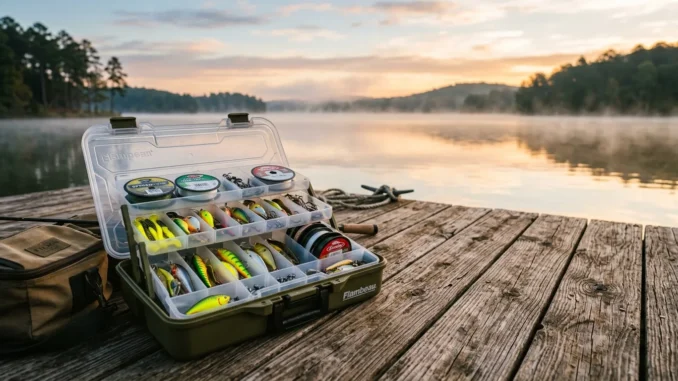
Ever found yourself staring longingly at a calm lake or a bustling pier, wishing you could join the anglers, but feeling overwhelmed by all the gear? Maybe you think fishing requires a huge investment or years of complex learning. Well, let me tell you, that’s simply not true! As an angler who’s been chasing fish for over two decades, from urban ponds to coastal jetties, I’ve seen firsthand that getting started can be incredibly simple, fun, and affordable.
Fishing is one of the most relaxing and rewarding hobbies you can pick up, and you don’t need to break the bank to do it. For less than the cost of a fancy dinner, you can assemble a complete, effective beginner fishing gear setup that will have you catching fish on your very first outing. This guide will walk you through building your first essential tackle box for under $100, focusing on practical items that deliver maximum fun and success.
The Foundation: Your Rod, Reel, and Line Combo (The Big Three)
Before we dive into the tackle box itself, let’s talk about the absolute core of your budget fishing setup: the rod and reel. For beginners, a spinning combo is the undisputed champion. A spinning reel is the most user-friendly type of reel, sitting underneath the rod and ideal for casting lighter baits and lures with ease. These combos are designed to be intuitive, forgiving, and perfect for learning the ropes.
I always recommend a medium-action spinning rod, typically in the 6 to 7-foot range, paired with a 2500 or 3000 size spinning reel. This combination offers excellent versatility, handling everything from small panfish in a local pond to decent-sized bass or even a lively snapper off a pier. Many reputable brands offer rod and reel combos for beginners that come pre-spooled with line and cost anywhere from $40 to $70. This leaves plenty of room in our $100 budget for all the other goodies!
When it comes to line, you’ll want to start with monofilament line (often shortened to “mono”). This is a single strand of nylon fishing line, known for its stretch, abrasion resistance, and ease of handling. For your initial setup, 6 to 10-pound test monofilament is ideal. It’s strong enough for most beginner targets, visible, and less prone to tangles than other line types. Once you get the hang of casting and reeling, you can experiment with other options like braided line, which is thinner and stronger for its diameter, but that’s a topic for another day on Fish Hunter!
The Heart of the Tackle Box: Terminal Tackle (Connecting You to the Fish)
Now that your rod and reel are sorted, let’s fill that tackle box! This is where the magic happens – the small but crucial bits that actually connect you to the fish. We call these “terminal tackle,” and they’re relatively inexpensive but absolutely essential.
Hooks, Weights, and Floats: The Essential Trio
- Hooks: You’ll need an assortment. For general freshwater fishing, #6 to #1 J-hooks (standard curved hooks) are great for panfish and smaller bass. For bigger bass or catfish, step up to 1/0 to 3/0 sized hooks. If you’re planning on using live bait or practicing catch-and-release, consider some circle hooks – they’re designed to hook fish in the corner of the mouth, reducing gut-hooking and making releases much easier. A pack of assorted hooks should cost you less than $5-7.
- Weights (Sinkers): These get your bait down to where the fish are. Grab a pack of assorted split shot weights – small, round weights that you pinch onto your line. They’re perfect for adding just enough weight to cast or keep your bait submerged. For slightly heavier applications, a few small bullet weights or egg sinkers (1/8 oz to 1/2 oz) are handy, especially if you’re fishing in current or want to cast further. Budget around $3-5 for a good selection.
- Floats (Bobbers): Often called “bobbers,” these suspend your bait at a set depth and signal when a fish bites by dipping or moving. For beginners, classic red-and-white clip-on bobbers are perfect. You can also get slip bobbers, which slide freely on your line and allow you to fish deeper, but start with the clip-ons for simplicity. A few bobbers will set you back about $3-5.
Swivels & Snaps: Small but Mighty
These tiny pieces of metal are lifesavers. A swivel is a small device with a rotating barrel that prevents your line from twisting, especially when using spinning lures or in current. Believe me, a twisted line can lead to frustrating tangles and lost fishing time. A snap swivel adds a quick-release clip, allowing you to change lures or rigs in seconds without retying. This is a huge time-saver! Grab a small pack of size 7-10 snap swivels for about $4-6. For example, imagine this situation: you’ve been casting a spoon lure for a while, and suddenly the fish start hitting a different kind of bait. With a snap swivel, you unclip the spoon and snap on a new lure in seconds, rather than fumbling with knots and wasting precious fishing time.
Baits and Lures: Tempting the Catch (And Staying Under Budget)
Okay, you’ve got your rod, reel, line, and terminal tackle. Now, what are you going to put on the hook to attract those fish? For a first fishing trip, keeping it simple and versatile is key. You don’t need a hundred different lures.
The Universal Attractors: Live Bait & Soft Plastics
- Live Bait: Honestly, nothing beats live bait for consistency, especially when you’re starting out. Earthworms are the absolute kings – every freshwater fish loves them! You can buy a dozen for a few bucks at most bait shops, or even dig them up in your backyard. For saltwater, shrimp (live or dead) are a phenomenal choice for nearly anything that swims. This is your most reliable and budget-friendly option.
- Soft Plastics: These are incredibly versatile and cost-effective. Start with a pack of plastic worms (6-inch curly tail worms are great) and a few grub-style lures. You’ll need a couple of jig heads (a hook molded into a weighted head) to pair with them. Soft plastics mimic various prey items and can be fished in many ways. A pack of soft plastics and a few jig heads will be around $5-10.
A Couple of Lure Starters
While live bait and soft plastics cover most bases, it’s nice to have one or two simple lures. But what if the fish aren’t biting the worms, or you want to try something more active? A simple inline spinner (like a Rooster Tail or Mepps Aglia) or a small spoon lure (like a Kastmaster) can be incredibly effective for many species, from trout to bass to perch. They are easy to cast and retrieve, and the flash and vibration often trigger strikes. Pick up one or two for $5-10 each.
Essential Tools & Accessories (The Unsung Heroes)
Don’t overlook the small tools that make your fishing experience smooth and enjoyable. These are the “utility players” of your essential fishing tools.
- Pliers or Forceps: A small pair of needle-nose pliers or specialized fishing forceps is non-negotiable. They’re invaluable for safely removing hooks from fish (and occasionally from yourself!), cutting line, and crimping weights. You can find a decent pair for $5-10.
- Line Cutter/Small Scissors: While your pliers might have a cutter, a dedicated pair of small scissors or clippers makes tying knots much easier and cleaner. A sharp cut is vital for a strong knot. Budget $3-5.
- Small First Aid Kit: Trust me on this one. Hooks are sharp, and accidents happen. A small kit with a few band-aids, antiseptic wipes, and pain relievers can save a trip. Less than $10.
- Sun Protection: A wide-brimmed hat and sunscreen are not optional. Protect yourself from the elements!
- The Tackle Box Itself: You don’t need a fancy multi-tray box right away. A simple, small plastic utility box with dividers (often less than $10 at hardware or sporting goods stores) will do perfectly for your initial setup.
Beyond the Gear: Common Mistakes & Sustainable Practices
Having the right gear is only half the battle. Avoiding common beginner pitfalls and adopting responsible habits will greatly enhance your enjoyment and success.
Common Beginner Mistakes to Avoid
- Overcomplicating Your Setup: Don’t buy a dozen different lures if you don’t know how to use them. Stick to the basics we’ve covered.
- Using the Wrong Knot: A poorly tied knot is the weakest link in your system. Learn the Improved Clinch Knot for tying line to hooks/swivels and the Palomar Knot for tying to lures. Practice them at home!
- Impatience: Fishing requires patience. Don’t get discouraged if you don’t catch a fish in the first five minutes. Enjoy the process!
- Ignoring Local Regulations: Always check your local fishing regulations (license requirements, size limits, catch limits) before you go. This is crucial!
Embracing Sustainable Fishing Practices
As a seasoned angler, I believe this is as important as the gear itself. Fishing is a privilege, and we all have a responsibility to protect our waterways and fish populations. These practices ensure healthy fisheries for everyone, for generations to come:
- Catch and Release: If you’re not planning to eat a fish, or if it’s undersized/oversized, release it gently and quickly. Minimize handling, use wet hands, and support its body.
- Barbless Hooks: Pinching down the barb on your hooks (with those pliers we talked about!) makes hook removal much easier and less damaging to the fish, significantly improving its chances of survival after release.
- Respect Size and Bag Limits: These rules exist to maintain healthy fish populations. Know them, and abide by them.
- Leave No Trace: Pack out everything you pack in. Don’t leave trash, fishing line, or bait containers behind.
Your “What to Do This Weekend” Takeaway
You’ve got the knowledge, now it’s time for action! Here’s your simple checklist to get fishing:
- Head to your local sporting goods store and pick up a 6-7 ft medium spinning rod and 2500-3000 size reel combo (pre-spooled with 8-10lb mono if possible). (Approx. $50-70)
- Grab a small plastic tackle box and fill it with:
- Assorted J-hooks (#6 to 1/0) and maybe a few small circle hooks.
- A pack of assorted split shot weights.
- A few clip-on bobbers.
- A pack of size 7-10 snap swivels.
- A pack of soft plastic worms/grubs and a few small jig heads.
- One or two inline spinners or small spoons.
- A pair of needle-nose pliers/forceps and small line cutters.
- A small first aid kit.
(Approx. $30-40 for all these items)
- Practice tying the Improved Clinch Knot and Palomar Knot at home.
- Find a local pond, lake, or pier on Fish Hunter’s spot guides, grab some worms, and go!
See? You’ve just built a complete beginner fishing gear setup for under $100! Fishing doesn’t have to be complicated or expensive to be immensely satisfying. It’s about getting outdoors, enjoying the peace and quiet, and the thrill of the catch. So, what are you waiting for? Your first great fishing adventure is just a tackle box away!
Leave a Reply