
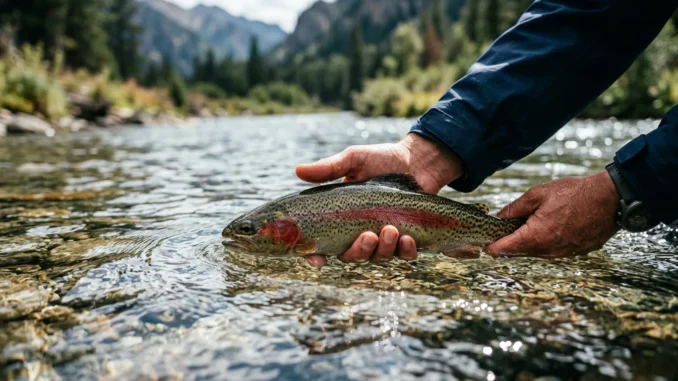
You’ve done it! The line screamed, the rod bent, and after an exhilarating fight, that beautiful fish is finally at your feet (or in your net). It’s a moment of pure triumph, the culmination of your patience and skill. But what happens next is just as crucial as the cast and the retrieve. How you handle that fish – whether you plan to release it back to fight another day or bring it home for a delicious meal – speaks volumes about you as an angler. Honestly, this is where true sportsmanship shines.
For us at Fish Hunter, it’s not just about the thrill of the catch; it’s about respecting the fish and the waters we share. As someone who’s spent over two decades chasing everything from feisty bass in local ponds to powerful snapper on the coast, I’ve seen a lot of fish handled well, and unfortunately, some not so well. My goal today is to walk you through the absolute best practices for handling your catch ethically and safely, ensuring both your success and the health of our fisheries. Let’s make sure every fish you encounter gets the respect it deserves.
The First Decision: Catch & Release or Keep?
Before your hands even touch that fish, a critical decision needs to be made: are you going to release it or keep it? This isn’t just a personal preference; it’s often dictated by a mix of local regulations, the fish species, its size, and even the fish’s condition. Understanding these factors is the cornerstone of responsible angling.
Imagine this situation: you’ve just landed a gorgeous largemouth bass – a true fighter! Your buddy immediately asks if you’re keeping it. But before you answer, you quickly remember that in your state, bass have a slot limit, meaning only fish between 14 and 18 inches can be kept. Anything outside that range must be released. Or perhaps you caught a species known to be fragile, or it’s clearly undersized. In these cases, the decision is made for you, and it’s always to release. Always know your local regulations – they’re there for a reason, protecting fish populations for everyone.
Even if a fish is within legal limits, you might choose to release it. Maybe it’s a trophy-sized specimen that deserves to pass on its strong genes, or perhaps you simply don’t need fish for dinner tonight. This personal choice to practice catch and release is a powerful way to contribute to sustainable fishing. It shows respect for the resource and ensures future generations of anglers can enjoy the same thrills you do.
Mastering the Art of Catch and Release
If you decide to release your fish, your primary goal is to minimize stress and injury, giving it the best possible chance of survival. This starts from the moment you hook it.
Minimize the Fight and Handle with Care
A long, drawn-out fight exhausts a fish, making it harder for them to recover. Try to land your fish as quickly and efficiently as possible without horsing it in. Once it’s close, avoid dragging it onto dry land or rocks. Ideally, keep the fish in the water as much as you can. When you do need to handle it, always wet your hands thoroughly before touching the fish. This protects its delicate slime coat, which is its natural defense against disease and infection. Dry hands can remove this protective layer, leaving the fish vulnerable.
When you lift a fish, support its body horizontally, especially larger fish. Avoid holding them vertically by the jaw or gills unless they are a species like a bass that can tolerate a brief vertical hold by the lip. Never squeeze their belly or gill plates. If you’re using a net, a rubberized landing net is a fantastic investment. Unlike traditional nylon nets, the rubber mesh is gentler on the fish’s fins, scales, and that all-important slime coat, reducing damage and tangles.
Efficient Hook Removal and Reviving
Get that hook out as quickly and gently as possible. For most hooks, a good pair of forceps (like long-nose pliers) is your best friend. They allow you to grip the hook shank and twist it out without putting your fingers too close to sharp teeth or gills. If the hook is deeply swallowed, it’s often better to cut the line as close to the hook as possible rather than tearing at the fish’s throat, which can cause fatal damage. This is where using barbless hooks really shines; a barbless hook, or a regular hook with the barb crimped down, slides out much easier and causes less tissue damage. Honestly, it’s one of the simplest and most effective changes you can make for catch and release.
Once the hook is out, if the fish seems sluggish, gently hold it upright in the water, facing into a mild current. Move it back and forth slightly to push water over its gills, helping it “breathe.” This process, known as reviving, can take a minute or two. Wait until the fish shows signs of strength, like trying to swim away, before letting it go completely. Never just toss a limp fish back into the water; it’s unlikely to survive.
Common Catch and Release Mistakes to Avoid:
- Dry Hands: Damages the fish’s protective slime coat. Always wet your hands!
- Excessive Squeezing: Can injure internal organs.
- Dragging on Dry Surfaces: Causes scrapes and removes slime. Keep them wet.
- Holding by the Gills: Gills are extremely fragile and vital for breathing; avoid touching them.
- Too Long Out of Water: Fish can’t breathe air. Minimize air exposure to mere seconds for photos.
When You Decide to Keep: Respectful Harvest
Choosing to keep a fish for consumption is a perfectly valid part of fishing, provided it’s within legal limits and done humanely. The key here is quick, respectful, and efficient handling to ensure the best quality meat and minimize suffering.
Humane Dispatch and Immediate Cooling
The moment you decide to keep a fish, dispatch it as quickly and humanely as possible. A swift, firm blow to the top of its head with a blunt object (often called a “priest”) is the most common method. This immediately renders the fish unconscious and prevents unnecessary suffering. Letting a fish flop around in a bucket or on the deck for an extended period is not only inhumane but also degrades the quality of the meat.
After dispatching, consider bleeding the fish, especially if you’re keeping larger species like snapper or tuna. This involves making a quick cut near the gills to allow the blood to drain. Bleeding improves the flavor and shelf life of the meat significantly. Once bled, the fish should go straight into a cooler full of ice. Rapid cooling stops bacterial growth and preserves the meat’s quality. A warm fish left in the sun will quickly spoil and won’t taste nearly as good.
Respecting Regulations and Your Catch
Always double-check your local fishing regulations for size limits and bag limits before you even head out. These rules are put in place by wildlife agencies to ensure healthy fish populations for the long term. Keeping undersized or over-the-limit fish isn’t just illegal; it’s detrimental to the ecosystem and reflects poorly on all anglers. As a seasoned angler, I believe it’s our responsibility to know and follow these rules without exception. It’s about being a steward, not just a harvester.
Essential Gear for Responsible Handling
Having the right tools makes all the difference in handling your catch ethically and safely. You don’t need a huge budget, just a few key items:
- Forceps or Long-Nose Pliers: Indispensable for quick and safe hook removal. Look for stainless steel options that won’t rust.
- Rubberized Landing Net: Gentler on fish, prevents fin damage and slime coat removal, especially for catch and release.
- Measuring Tape or Board: Essential for verifying legal size limits quickly and accurately without excessive handling.
- Small Blunt Instrument (Priest): If you plan to keep fish, a specialized tool or even a small, heavy piece of wood can humanely dispatch your catch.
- Cooler with Ice: Non-negotiable if you’re keeping fish. Keeps your harvest fresh and safe.
- Small Towel: Can be useful for gripping certain fish species, but ensure it’s wet before use.
These tools are budget-friendly and will significantly improve your fish handling game. For example, a basic pair of fishing pliers can cost less than $10, and a decent rubberized net can be found for under $30. These are small investments with big returns for ethical angling.
The Bigger Picture: Being a Steward of the Waters
Beyond individual fish handling, our responsibility as anglers extends to the entire aquatic environment. Sustainable fishing practices are about ensuring that our passion can be enjoyed for generations to come. This means leaving no trace, respecting wildlife, and educating ourselves.
Always pack out what you pack in – and then some. Pick up any discarded line, bait containers, or plastic bottles you might find. Old fishing line can be deadly to wildlife, so never leave it behind. Respect private property and other anglers; give them space, especially if they were there first. Understanding and following local regulations isn’t just about avoiding a fine; it’s about contributing to the health of the fishery. Honestly, these simple acts make a huge difference.
So, the next time you feel that exciting tug on your line, remember that the adventure doesn’t end when the fish is landed. How you treat that catch – with respect, knowledge, and care – truly defines you as a Fish Hunter. It’s about becoming a part of the solution, not the problem.
Quick “What to Do This Weekend” Takeaway:
Before your next fishing trip, take five minutes to research the specific regulations (size and bag limits) for the species you’re targeting in your local waters. Gather your essential handling gear: wet your hands, have your forceps/pliers ready, and consider a rubberized net. If you’re planning to keep fish, have a cooler packed with ice. Practice responsible handling, and you’ll not only enjoy your time more but also contribute to a healthier fishing future for everyone.
Leave a Reply