
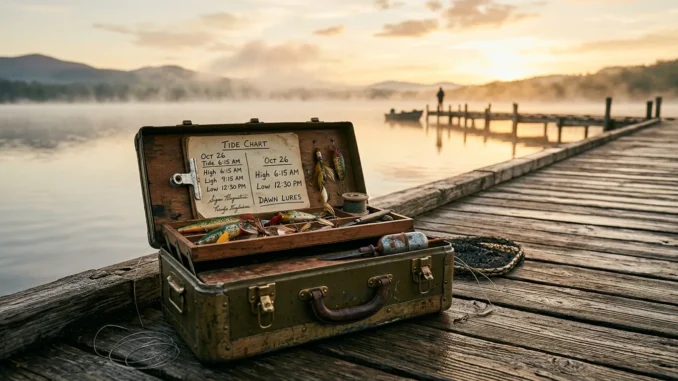
Unlock Your Weekend Fishing Success: Why Local Reports Are Your Best Friend
Ever wonder why some anglers seem to effortlessly pull in fish while you’re left scratching your head, staring at an empty cooler? It’s not always about secret spots or magic lures. More often than not, it comes down to understanding the conditions – and the easiest, most reliable way to get that understanding is by diving into your local fishing report. As someone who’s spent over two decades chasing everything from city park bass to coastal snappers, I can tell you these reports are a game-changer. They transform a hopeful cast into a strategic strike.
For those of us with limited time, juggling work and family, a fishing report isn’t just information; it’s a blueprint for efficiency. It tells you where the fish are, what they’re biting on, and even how they’re behaving, saving you precious hours of trial and error. Think of it as having a seasoned guide whisper key insights into your ear before you even leave the house. Ready to stop guessing and start catching? Let’s break down how to decode these invaluable dispatches for your next weekend escape.
What Exactly *Is* a Fishing Report and Why You Need It
A fishing report is essentially a local snapshot of fishing conditions and activity, compiled by tackle shops, guides, state wildlife agencies, or even passionate local anglers. It’s a real-time (or near real-time) update on what’s happening on the water in your specific area. Instead of just guessing, you get data on everything from water temperature to recent catches, helping you make informed decisions.
Why is this so crucial, especially for apartment dwellers or office workers looking for a relaxing hobby? Because your time is valuable! You don’t want to spend your precious weekend hours driving to the wrong spot, using the wrong bait, or fishing at the wrong time. A good report narrows down your options, pointing you towards the highest probability of success. Honestly, based on my experience, ignoring the report is like trying to navigate a new city without a map – you might get lucky, but you’re probably going to get lost.
So, where do you find these golden nuggets of information? Your first stop should always be your local bait and tackle shop. These folks are on the front lines, talking to anglers every day. Beyond that, many state wildlife and parks departments publish reports, as do local fishing forums, Facebook groups, and even dedicated fishing apps like Fish Hunter. Check a few sources to get a well-rounded picture. For example, imagine this situation: You’re planning a Saturday trip to the local pond. The tackle shop report mentions bass are hitting topwater lures early, while an online forum confirms that the panfish are deep near the lily pads. You’ve just got two solid strategies before even leaving home!
Breaking Down the Key Elements of a Fishing Report
Don’t be overwhelmed by the jargon; we’ll walk through it. A typical fishing report packs a lot of data. Here’s what to look for and what it means for your fishing plan:
Water Conditions: Temperature, Clarity, and Level
- Water Temperature: This is arguably the most critical factor. Every fish species has a preferred temperature range for feeding and spawning. For instance, largemouth bass become active above 50°F (10°C) and really start feeding aggressively in the 60s and 70s. Cold water generally means fish are sluggish and need slower presentations, while warmer water often means more active, aggressive fish.
- Water Clarity: Is it clear, stained (slightly murky), or muddy? Clear water often requires lighter lines (like 6-8 lb monofilament for beginners) and more natural presentations to avoid spooking fish. Stained water can be great for aggressive fish as it provides cover, allowing you to use brighter lures. Muddy water makes sight feeding difficult, so fish rely on scent and vibration; think noisy crankbaits or smelly live bait.
- Water Level/Flow: For rivers, this tells you if the current is high or low, fast or slow. High, fast water can push fish into eddies or slack water behind structures. For lakes, rising water might push fish into newly flooded cover, while falling water often concentrates them in deeper areas.
Weather Forecast: Wind, Barometric Pressure, and Precipitation
Weather isn’t just about comfort; it dictates fish behavior. Wind can create current and chop, oxygenating the water and often activating baitfish, which in turn activates predators. However, too much wind can make fishing challenging. Barometric pressure, often overlooked, is a huge factor. Stable high pressure usually means good fishing, as fish feel comfortable. A sudden drop in pressure (indicating a coming storm) can make fish feed aggressively just before the front, but then shut them down as the front passes.
Precipitation, like rain, can cool surface temperatures and wash nutrients into the water, triggering feeding. But heavy downpours can muddy the water and turn fish off. Always cross-reference the report’s weather notes with a reliable weather app for the most up-to-date conditions.
Species-Specific Activity, Locations, and Recommended Baits/Lures
This is where the rubber meets the road! The report will often tell you which species are biting (e.g., “Bass are hot, crappie are slow”), where they’re being caught (“Bass in shallow coves, crappie in brush piles”), and what they’re hitting (“Worms for bass, small jigs for crappie”). This information is Gold. It tells you exactly what to target and how.
You might see mentions of specific lures like soft plastics, spinnerbaits, or live bait like minnows or shrimp. Pay close attention to the colors and sizes mentioned. If they say “chartreuse crankbaits” are working, don’t show up with just natural colors!
Tidal Information (for Saltwater Anglers)
If you’re fishing saltwater, tides are paramount. The report will specify incoming or outgoing tides, high or low tide times. Moving water, especially during an incoming or outgoing tide, creates current that pushes baitfish around and often triggers predatory fish like snapper or redfish into feeding frenzies. Slack tide (the period of minimal water movement at high or low tide) can often be slower. Understanding this helps you plan your fishing window.
Turning Report Data into Actionable Fishing Plans
So far we covered what a report contains. Now let’s get to the really critical point: translating that info into a successful outing. This is where your strategy comes to life.
Matching Your Gear to Conditions and Species
The report gives you clues for your setup. If bass are in heavy cover, you might want to use a slightly heavier line – say, 10-15 lb braided line on your 2500-3000 size spinning reel. If trout are in clear, open water, a lighter 4-6 lb fluorocarbon leader attached to your main line might be better. A common beginner combo, like a 6-7 ft medium spinning rod paired with a 2500-3000 size reel and 6-12 lb monofilament line, is incredibly versatile and can be adapted to many situations the report describes.
If the report indicates fish are finicky, that might mean using smaller baits or a more subtle presentation. If they’re aggressive, you can throw bigger, louder lures. Always consider the recommended bait or lure type and ensure you have something similar in your tackle box.
Strategy Adjustment: Where, When, and How to Fish
This is where you connect the dots. The report says water temps are high, and bass are deep near drop-offs? You’ll focus on those deeper areas, perhaps using a jig or Texas-rigged soft plastic fished slowly along the bottom. If perch are schooling near docks in the morning, you’ll hit those docks early with small live worms or tiny jigs. What would you do in this situation: the report says pike are active in shallow weed beds but the wind is blowing hard? You might focus on the leeward (downwind) side of those weeds, where the water is calmer, and use a spinnerbait that can cut through vegetation.
The report also helps you time your trip. If the bite is best during the first two hours of an incoming tide, you plan to be on the water well before that. If catfish are most active after dark, you pack a headlamp and bug spray. These details don’t just improve your chances; they make your trip more focused and enjoyable.
Common Mistakes When Using Fishing Reports
While fishing reports are fantastic tools, they aren’t infallible. Here are a few common pitfalls to avoid:
- Taking it as Gospel: A report is a snapshot. Conditions can change rapidly. A cold front might roll in, or a sudden rainstorm could muddy the water, completely altering the fish’s mood. Always be prepared to adapt if conditions on the water don’t match the report.
- Ignoring Local Nuances: A report might say “bass are in shallow cover,” but your specific lake might have different types of shallow cover (lily pads vs. submerged timber). Use the report as a guide, but trust your eyes and experience on the water.
- Focusing Only on “Hot Spots”: Reports sometimes highlight specific areas that are “on fire.” While these can be great, don’t limit yourself. Understand *why* that spot is hot (e.g., specific depth, cover, baitfish presence) and look for similar features elsewhere that might be less pressured.
- Not Checking Multiple Sources: One report might be a day old or from a single angler’s perspective. Cross-referencing with 2-3 different sources gives you a more accurate and comprehensive picture.
Quick “What to Do This Weekend” Takeaway
Ready to make your weekend fishing trip a success? Here’s your actionable plan:
- Find Your Reports: Check your local tackle shop, state wildlife website, and a trusted online forum or app like Fish Hunter. Aim for reports published within the last 24-48 hours.
- Analyze Key Data: Note water temperature, clarity, recent weather, and specific species activity/location. If saltwater, check tide charts.
- Plan Your Attack: Based on the data, decide on your target species, general location (e.g., shallow coves, deep channels, pier pilings), and primary bait/lure selection.
- Pack Smart: Select your rods, reels (like that trusty 6-7 ft medium spinning rod with a 2500 reel), lines (6-12 lb mono or 10-20 lb braid), and tackle based on your plan. Don’t forget essentials like pliers, sunscreen, and a valid fishing license!
- Be Flexible: Arrive at your spot, observe the actual conditions, and be ready to adjust your plan if needed.
There you have it, fellow Fish Hunter! Fishing reports are not just for the pros; they’re an indispensable tool for every angler, especially those just starting out or looking to maximize their limited time on the water. By learning to read and interpret these reports, you’re not just hoping for a catch; you’re strategically increasing your odds. So, before you grab your rod this weekend, spend a few minutes decoding your local report. You’ll be amazed at the difference it makes in your catch rate and your overall enjoyment. Tight lines!
Leave a Reply