
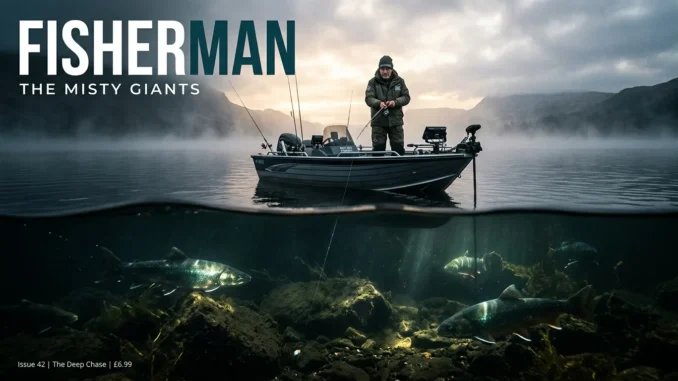
Why Bottom Fishing Works & What You’ll Catch
Ever wonder why some anglers seem to consistently pull fish out of the water, even when others are struggling? Often, the answer lies on the bottom. Bottom fishing is one of the oldest, simplest, and most effective fishing techniques out you can master, especially for beginners. It involves presenting your bait directly on or very near the lakebed, riverbed, or seabed, targeting species that naturally feed in these areas.
This method is incredibly productive because a vast number of fish species are either bottom dwellers or prefer to scavenge for food near the substrate. You’re putting your bait right in their dining room! It eliminates a lot of guesswork about water column depth and allows you to focus on the structure and contours below. From my 20+ years on the water, from local ponds to ocean piers, bottom fishing has saved many a slow day.
So, what can you expect to catch with this versatile technique? In freshwater, you’ll often hook into species like Catfish (channel, blue, flathead), Carp, Perch, Walleye, and even larger Largemouth Bass and Trout that forage along the bottom. For saltwater anglers, the possibilities are even wider, including delicious Snapper, Grouper, Drum, Croaker, Flounder, and Sheepshead. Honestly, if it swims near the bottom, bottom fishing gives you a great shot at it.
Essential Gear for Bottom Fishing Success
You don’t need a boatload of expensive gear to excel at bottom fishing. The beauty of it lies in its simplicity. Let’s break down the essentials that will get you started without breaking the bank.
Rod & Reel Combo
For beginners, I always recommend a spinning combo. A spinning reel is the most user-friendly type, with an open-face design where the line unwinds from a stationary spool, making casting much easier. Pair this with a 6-7 foot medium-heavy spinning rod. “Medium-heavy” refers to the rod’s power, meaning it has enough backbone to handle heavier sinkers and bigger fish, while still offering decent sensitivity. A 3000-4000 size spinning reel is perfect, offering good line capacity and drag power. Think brands like Ugly Stik GX2 combos or Daiwa Crossfire sets – solid performers for around $50-$100.
Line Selection
Your fishing line is your direct connection to the fish. For beginners, monofilament line in 10-20 lb test is a great starting point. Monofilament is a single-strand nylon line, known for its stretch, abrasion resistance, and ease of handling, which helps forgive casting mistakes. As you gain experience, consider switching to braided line (20-30 lb test). Braided line is made of multiple synthetic fibers woven together, offering incredible strength-to-diameter ratio, zero stretch for superior sensitivity, and greater casting distance. However, it can be a bit more challenging for knot tying initially. Regardless of your main line, adding a 15-25 lb fluorocarbon leader (a short piece of line tied to your main line) is a smart move. Fluorocarbon is virtually invisible underwater and highly abrasion-resistant, crucial when fishing near rocks or structure.
Weights & Sinkers
These are what get your bait to the bottom. Pyramid sinkers (for sandy bottoms and current), egg sinkers (for Carolina rigs), and bank sinkers (all-purpose) are your main choices. The key is to use just enough weight to hold your bait on the bottom without it drifting too much. Too much weight can reduce your feel for bites and get snagged more often. Start with 1/2 oz to 2 oz and adjust based on current and depth.
Hooks
For bottom fishing, circle hooks are fantastic, especially if you plan on catch-and-release. A circle hook is designed to hook fish in the corner of the mouth, reducing gut-hooking. Sizes 1/0 to 5/0 are common, depending on your target species. Alternatively, traditional J-hooks (sizes 2 to 4/0) also work well, but require more precise hook sets.
Other Must-Haves
Don’t forget some basic tools: needle-nose pliers or a hook remover, a small tackle box for your terminal tackle, a bait bucket if using live bait, a tape measure to check fish against size limits, and a small cooler for keeping your catch fresh (or your drinks cold!).
The Art of Rigging Your Bottom Fishing Setup
Now that you have your gear, let’s talk about putting it all together. The right rig makes all the difference in presenting your bait effectively.
The Basic Carolina Rig
This is my go-to rig for both freshwater and saltwater bottom fishing and it’s incredibly simple. Here’s how to tie it:
- Slide an egg sinker onto your main line (or braided mainline with a fluorocarbon leader).
- Next, slide a small plastic or glass bead onto the line. This protects your knot from the sinker.
- Tie a barrel swivel to the end of your main line using an Improved Clinch Knot. The Improved Clinch Knot is a strong, reliable knot perfect for tying line to swivels, lures, or hooks.
- To the other end of the barrel swivel, tie a 1-3 foot piece of fluorocarbon leader (15-25 lb test) using another Improved Clinch Knot.
- Finally, tie your hook (circle or J-hook) to the end of the leader using a Palomar Knot. The Palomar Knot is incredibly strong and easy to tie, ideal for tying line directly to hooks or swivels.
The beauty of the Carolina Rig is that the fish can pick up the bait without feeling the weight, giving you a better chance for a solid hook set.
The Simple Bottom Rig (Paternoster/High-Low Rig)
This rig is excellent for saltwater, especially from piers or boats, when you want to present multiple baits. It typically has two dropper loops (short loops where hooks are tied) above a heavy sinker. You can use different baits on each hook, increasing your chances. It’s a bit more prone to tangles than a Carolina rig, but very effective for species like snapper or croaker.
Bait Selection: What’s on the Menu?
This is where local knowledge truly shines. Matching the hatch (using bait that naturally occurs in the area) is key. For freshwater, live worms (nightcrawlers, red wigglers) are universal and catch almost anything. Cut bait like chicken liver or chunks of hot dogs are deadly for catfish. Corn and dough balls work wonders for carp and some panfish. For saltwater, fresh shrimp (live or dead) is a top producer. Squid strips, cut fish (mullet, bunker, pinfish), and clams are also highly effective. Ask at your local bait shop what’s been working – they’re a goldmine of information!
Where and When to Drop Your Line
Knowing where and when to fish can dramatically improve your success. It’s not just about getting bait to the bottom; it’s about getting it to the right bottom.
Finding the Sweet Spots
Fish love structure and changes in depth because these areas offer food, cover, or ambush points. Look for rocky areas, fallen trees, brush piles, underwater ledges, and drop-offs in freshwater. In saltwater, bridge pilings, jetties, oyster beds, reefs, and wrecks are prime targets. Also, pay attention to current seams where slower and faster water meet, as baitfish often congregate there, attracting predators. But what if you can’t see the bottom? Use a basic fish finder if you have one, or simply learn to “read” the water and observe shorelines for hints of underwater structure.
Seasonal & Time Considerations
Fish behavior changes with the seasons and even the time of day. In spring, fish are often shallower, preparing to spawn or recovering from winter. Summer usually means targeting deeper, cooler water during the day, with fish moving shallower during early mornings and late evenings. Fall is often a feeding frenzy as fish bulk up for winter, making them very aggressive. For saltwater, tides are crucial: moving water (incoming or outgoing tide) often means feeding fish, while slack tide can be slower. Check local tide charts for the best fishing windows.
Common Mistakes & Sustainable Practices
Every angler makes mistakes, especially when starting out. Learning from them is part of the journey. And just as important as catching fish is ensuring we can keep catching them for years to come.
Avoiding Beginner Blunders
- Using too much weight: This is a classic. Excess weight reduces your feel for bites and increases snags. Use just enough to hold bottom.
- Not checking your bait frequently: Bait can get stolen, fall off, or become less appealing. Reel in and check every 15-30 minutes.
- Setting the hook too hard with circle hooks: With circle hooks, don’t yank! Just reel slowly until the line tightens, and the hook will set itself.
- Ignoring current: Current can quickly move your bait out of the strike zone. Adjust your weight or casting location.
- Fishing in dead water: If you’re not getting bites after 20-30 minutes, move! Fish are rarely everywhere.
Fishing Responsibly: Our Shared Waters
As passionate anglers at Fish Hunter, we believe in sustainable fishing practices. If you’re practicing catch and release, handle fish with wet hands to protect their slime coat, minimize their time out of water, and use barbless hooks (hooks with the barb crimped down or removed) for easier, less harmful removal. Always know and respect local size and bag limits for every species. And please, always leave no trace – pack out everything you pack in, including discarded line and bait containers. Honestly, it’s about preserving the sport for everyone, ensuring future generations can enjoy the thrill of the catch just as we do.
Your Weekend Bottom Fishing Plan!
Bottom fishing is your direct ticket to consistent catches and a deeper understanding of what lies beneath the surface. It’s an accessible technique for anyone, from apartment dwellers looking for an escape to seasoned anglers wanting to refine their skills. By understanding your gear, mastering a few simple rigs, and knowing where to drop your line, you’ll unlock a whole new world of fishing possibilities.
So, what are you waiting for? This weekend, grab that medium-heavy spinning combo, spool up some 15lb monofilament, tie on a Carolina rig, and head to your local lake, river, or pier. Bait up with some worms or shrimp, cast out to that promising-looking structure, and wait for that familiar tap-tap-tap. You’ll be amazed at what you can pull from the depths. Happy fishing!
Leave a Reply