
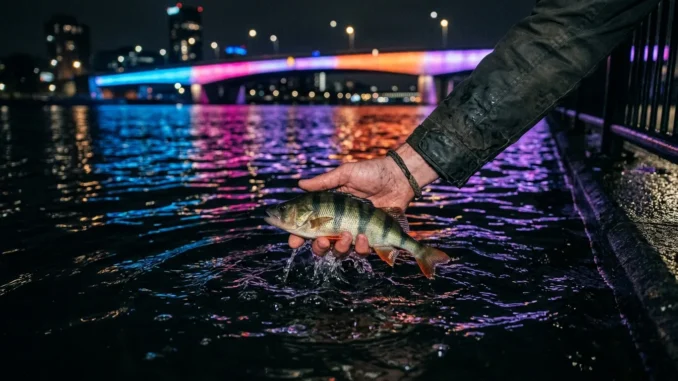
Why Perch Are Your Perfect Urban Fishing Target
Ever feel that itch to get outdoors, maybe even wet a line, but think you need to drive for hours to find good fishing? Think again, my friend! Right in your city’s backyard, often in waters you pass every day, lives one of the most accessible, feisty, and rewarding fish for urban anglers: the Perch. Whether you’re a complete beginner who’s never held a rod or an intermediate angler looking for a quick, reliable catch, perch are your ticket to instant angling gratification.
Perch, particularly the Yellow Perch, are widely distributed, tolerant of various water conditions, and incredibly aggressive feeders. This means they’re often plentiful, relatively easy to find, and eager to bite, making them perfect for busy individuals seeking a relaxing hobby or a quick escape from the daily grind. Plus, they put up a surprisingly strong fight for their size, and honestly, they’re delicious on the dinner table! For me, there’s nothing quite like pulling a plump perch from a city canal on a sunny afternoon.
Finding Perch in the Concrete Jungle
The first step to catching perch is knowing where to look, and trust me, they love urban environments just as much as they love pristine wilderness. Perch are ambush predators, meaning they like to hide and dart out to grab their food. This behavior gives us a huge clue: they’re always looking for structure.
Think about your local public parks with ponds, slow-moving rivers that wind through town, or even canals and public piers along larger bodies of water. These spots often have elements that attract perch. Look for anything that offers cover or a break in the current: docks, bridge pillars, submerged shopping carts (yes, really!), fallen trees, weed beds, rock piles, or even just a subtle drop-off in the bottom contour. These are perch magnets because they provide shelter from predators, a place to hide, and often concentrate their food source.
Reading the Water: Key Perch Hideouts
When I say “read the water,” I mean paying attention to what’s visible and imagining what’s below. For example, imagine this situation: you’re walking along a city canal you’ve passed a hundred times. You spot an old bridge pillar with a cluster of weeds growing at its base, and maybe a slight eddy where the current slows down. Most people see just another piece of city infrastructure; a seasoned perch angler sees prime real estate for a hungry school of perch! They’ll often school up in these areas, making it possible to catch several from one spot once you find them.
Don’t be afraid to explore. Some of my best perch spots have been discovered purely by accident, just by taking a different route or peeking over a railing. Always check local regulations for fishing access and licenses before you cast your first line!
Gear Up for Perch: Simple & Effective Setups
You don’t need a boatload of expensive gear to catch perch. In fact, a simple, budget-friendly setup is often all it takes. The key is light tackle, which not only makes the fight more fun but also allows for more delicate presentations that perch often prefer.
For beginners, I always recommend a light to medium-light spinning rod, typically 6 to 7 feet in length. Pair this with a 2000 to 2500 size spinning reel. A “spinning reel” is that open-face reel where the spool is exposed, and it’s super easy to cast, even for first-timers. This combo offers enough backbone to handle a feisty perch but remains sensitive enough to feel those subtle bites. As for line, I usually spool up with 6 to 8 lb monofilament line. “Monofilament” is a single-strand nylon line, known for its stretch, ease of knot tying, and affordability – perfect for learning. A good quality 6 lb test will handle most urban perch beautifully.
The Essential Perch Tackle Box
Your tackle box for perch fishing can be minimalist, which is great for portability in an urban setting. Here’s what I always have on hand:
- Hooks: Size 6 to 10 baitholder hooks (they have little barbs on the shank to hold bait) or Aberdeen hooks (thin wire, easier to remove from fish).
- Weights: A variety of small split shot sinkers or small slip sinkers. “Split shot” are small, round weights that pinch onto your line. “Slip sinkers” slide freely on your line.
- Bobbers: Small clip-on bobbers are fantastic for beginners. They’re visual indicators of a bite and keep your bait at a consistent depth.
- Swivels (optional but helpful): Small barrel swivels (size 10-14) can prevent line twist, especially if you’re using spinners.
- Pliers/Forceps: Essential for removing hooks safely and quickly.
- Small cooler/bucket: To keep your catch fresh if you plan to keep them, or for carrying water for live bait.
Baiting & Luring Perch: What They Can’t Resist
Perch aren’t picky eaters, which is another reason they’re so great for beginners. Both live bait and small artificial lures can be incredibly effective. The trick is often more about presentation than the bait itself.
For live bait, you simply can’t beat live worms. Nightcrawlers or red wigglers are readily available at most bait shops, tackle stores, or even digging in your own garden! Cut a nightcrawler into smaller, 1-inch pieces; perch have smaller mouths. Small minnows (if legal in your area) and even maggots or wax worms are also excellent choices. Thread your worm piece onto the hook, leaving a bit wiggling, and you’re good to go. The natural scent and movement are often irresistible.
If you prefer artificials, small jigs are incredibly versatile. Try 1/32 to 1/8 ounce jigs tipped with a small soft plastic grub, curly tail, or even a tiny piece of live worm. A “jig” is essentially a weighted hook with a molded lead head, often dressed with hair, feathers, or a soft plastic body. Other effective lures include tiny inline spinnerbaits (a “spinnerbait” often has a wire frame with a spinning blade and a skirt) or micro crankbaits (a “crankbait” is a hard-bodied lure with a lip that makes it dive when retrieved). The key with lures is to match the size to the perch’s mouth and retrieve them slowly.
Mastering the Retrieve
When fishing with a bobber and bait, simply cast near structure and wait. Watch that bobber like a hawk! A gentle dip, then a steady pull under the water usually signals a bite. With jigs, a slow, steady retrieve with occasional subtle twitches of your rod tip is often all it takes. Imagine a small insect or minnow swimming naturally – you want to mimic that. Remember, perch are often schooling fish, so if you catch one, there are likely more in the same spot. Keep that in mind, but what if the fish aren’t biting where you expect them? Do you just pack up? No way! Adjust your depth, try a different bait, or move to another piece of structure nearby.
Perch Fishing Techniques & Common Mistakes
There are a few go-to techniques that work wonders for perch, and avoiding a few common pitfalls will boost your success significantly.
- Bobber Fishing: This is a classic for a reason. Attach a small bobber about 1-3 feet above your hook (adjust depth based on water depth and where you think the fish are). Add a split shot or two just above your hook to get the bait down. Cast it out, let it sit, and watch for that bobber to disappear!
- Bottom Fishing: If perch are holding deeper, a simple bottom rig works. Use a small slip sinker above a swivel, then a 12-18 inch leader of line tied to your hook. This allows the fish to pick up the bait without feeling the weight of the sinker.
- Light Jigging: With a small jig, cast it out and let it sink. Then, gently lift your rod tip a foot or so, let the jig fall back down on a semi-slack line, and reel in the slack. This “lift and drop” motion imitates a struggling baitfish.
Troubleshooting Common Perch Fishing Problems
Even the best anglers face challenges. Here are a few common issues and quick fixes:
- No Bites: You’re probably not where the fish are, or your bait isn’t at the right depth. Try moving along the bank, casting to different structures, or adjusting your bobber depth in 6-inch increments.
- Fish Stealing Bait: If you’re getting nibbles but no hookups, perch might be “short biting.” Try smaller pieces of bait or a smaller hook. Wait just a moment longer before setting the hook.
- Tangled Line: This is a beginner’s bane! It often happens from overfilling your reel, casting too hard, or not closing your bail after a cast. The best fix is prevention: don’t overfill, cast smoothly, and always close the bail. If a tangle happens, patiently pull the loops apart; don’t yank!
- Lost Fish: Perch have somewhat soft mouths. Avoid “horsing” them in. Keep steady pressure on the fish, and use a smooth, consistent retrieve.
When tying your hook to your line, the Improved Clinch Knot is a reliable choice for beginners, strong and relatively easy to learn. For tying a swivel or a heavier lure, the Palomar Knot is exceptionally strong and simple. Both are fantastic knots to have in your arsenal, and you can find easy-to-follow guides right here on Fish Hunter. Speaking of knots, knowing how to tie a good knot is one of the most fundamental skills in fishing – it’s literally the connection between you and the fish!
Sustainable Perch Angling
As responsible anglers, we must always practice sustainable fishing. Perch populations are generally healthy, but respecting them ensures they remain so for generations. Practice catch and release, especially for larger breeding fish, if you don’t intend to eat them. Using barbless hooks (hooks with the barb crimped down or filed off) makes unhooking fish much easier and less stressful for them, increasing their survival rate. Always respect local size and bag limits – these regulations are in place for a reason. Take only what you need, and leave the rest for another day.
Honestly, the simple act of being outdoors and connecting with nature, even in an urban park, is a huge part of the joy. Catching fish is just the icing on the cake, but catching them sustainably makes it even sweeter.
What to Do This Weekend
Ready to hit the water? This weekend, grab a 6-7 ft light spinning rod, spool it up with 6 lb monofilament, pick up a container of worms, and head to your nearest public park pond, canal, or river access point. Look for those structures—docks, bridge pillars, weed lines. Start with a simple bobber rig, cast out, and just enjoy the peace of the water. You might be surprised at how quickly you hook into a feisty perch!
There you have it: urban perch fishing made simple, fun, and successful. It’s an accessible gateway to the wonderful world of angling, proving that you don’t need to travel far or spend a fortune to enjoy the thrill of the catch. So, get out there, explore your local waters, and discover the fantastic fishing opportunities right in your own city. Happy fishing, and I hope you find those perch!
Leave a Reply