Ever wonder why some anglers seem to effortlessly pull fish out of the water while others cast all day for nothing? It’s not magic, my friend, it’s about understanding where fish live, eat, and hide. This isn’t about fancy gear or secret spots; it’s about reading the water and decoding the structure – a skill that will transform your fishing, whether you’re chasing bass in a local pond or snapper from a coastal pier.
Forget just randomly chucking your line out there. Think of yourself as a detective, looking for clues in the ripples, the shadows, and the underwater landscape. As someone who’s spent over two decades figuring out exactly what fish are up to, I can tell you this: once you start seeing the water differently, you’ll start catching fish more consistently. Let’s dive into how you can become that angler everyone admires.
Why “Reading Water” Matters (Beyond Just Casting)
Reading water simply means understanding the environment beneath the surface and predicting where fish are likely to be. Fish, much like us, seek comfort, safety, and food. They don’t just swim aimlessly; they gravitate towards specific areas that offer these essentials. By learning to identify these key areas, you significantly reduce the amount of time you spend casting into unproductive water, and honestly, that’s half the battle won.
This isn’t just about efficiency; it’s about enjoyment. There’s immense satisfaction in making an educated cast and feeling that satisfying tug, knowing you’ve outsmarted your finned quarry. Imagine this situation: you arrive at a new fishing spot, and instead of feeling overwhelmed by the vastness of the water, you immediately start scanning for tell-tale signs. You spot a fallen tree, a subtle current line, or a change in water color. Suddenly, the water isn’t just a big blue expanse; it’s a map filled with potential fish hideouts. That’s the power of reading water.
Decoding the “Structure” – Fish Hideouts Revealed
Structure refers to any physical feature, natural or man-made, that breaks up the uniformity of the bottom or water column. Fish are drawn to structure like magnets because it provides shelter from predators, protection from strong currents, shade from the sun, and often, concentrated food sources. Understanding different types of structure is paramount to finding fish.
Natural Structures: The Fish’s Built-in Homes
These are the natural elements that create cover and ambush points. They are the backbone of any healthy aquatic ecosystem. Fish use these features for everything from spawning to escaping danger. Learning to identify them will give you a huge advantage.
- Weed Beds/Lily Pads: These are prime nurseries and ambush points for species like Largemouth Bass, Pike, and Panfish. Fish hide in the dense vegetation, waiting to ambush prey or find cool, shaded areas on hot days. Cast your lures alongside the edges or into the pockets within the weeds.
- Fallen Trees/Logs (Laydowns/Brush Piles): These offer excellent cover and are often teeming with baitfish and insects, making them irresistible to larger predatory fish. Bass and Catfish especially love to hang around submerged timber. Cast close, but be prepared for snags!
- Rocks/Boulders/Reefs: Rocky areas create current breaks, provide hiding spots, and attract invertebrates, which in turn attract fish. Smallmouth Bass, Walleye, Trout, and many saltwater species like Snapper and Perch are often found near rocks. Look for transitions where rocks meet sand or mud.
- Drop-offs/Ledges: These are sudden changes in depth. Fish use drop-offs to move between shallow feeding grounds and deeper, safer water. They’re fantastic spots for almost any species, particularly Trout, Walleye, and Bass. A fish finder can be invaluable here, but you can often spot these transitions by looking for changes in water color or current patterns.
Man-Made Structures: Urban Angler’s Goldmines
For us urban anglers, these structures are often the easiest to access and can be incredibly productive. Don’t overlook the concrete jungle; fish use these features just as readily as natural ones.
- Docks/Piers/Boat Ramps: The pilings provide shade and cover, and often attract baitfish. Panfish, Bass, and many saltwater species like Croaker or Flounder hang around these areas. Cast under and around them, especially on sunny days.
- Bridges/Culverts: Bridge supports create current breaks and shade. Culverts (pipes under roads) often have deeper water and current flow at their mouths, attracting fish like Catfish and Bass. Fish the shadowed sides and where the current hits the pilings.
- Buoys/Navigation Markers: These objects, though small, act as isolated structure in open water, providing cover for baitfish which then attract predators. Striped Bass and Trout can often be found near these in larger bodies of water.
- Seawalls/Riprap: The rocky edges of seawalls or riprap (piles of rocks used to prevent erosion) offer excellent habitat. They provide numerous nooks and crannies for fish to hide and ambush prey. Perch, Bass, and various saltwater species love these areas.
Interpreting “Water” – Clues in the Current and Clarity
Beyond just looking at what’s *in* the water, it’s crucial to understand the water itself – its movement, its temperature, and its clarity. These factors dictate where fish will be and how they’ll behave.
Current and Flow: The Dinner Conveyor Belt
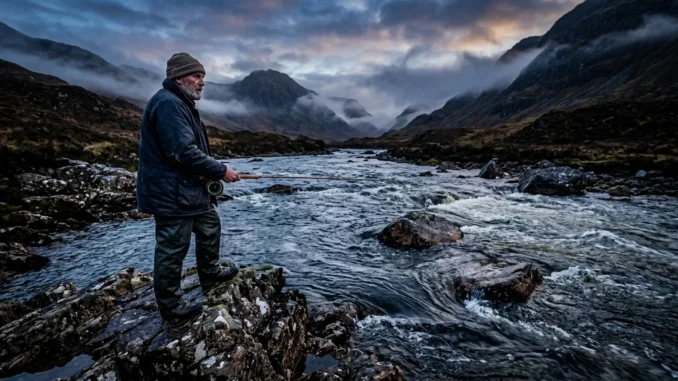
In rivers, streams, and even tidal estuaries, current is king. Fish use current to their advantage, often positioning themselves to conserve energy while waiting for food to be delivered to them. Current breaks are prime examples of this – areas where the main flow is disrupted, creating calm pockets.
- Eddies: These are swirling pockets of calm water behind an obstruction (like a large rock or bridge piling). Fish will sit in the eddy, letting food float by in the main current, then dart out to grab it. Cast into the main current upstream of the eddy and let your bait drift into it.
- Seams: The line where fast water meets slow water is called a seam. These are fantastic ambush points, especially for Trout and Smallmouth Bass. Imagine a fast-moving river with a slower channel alongside a bank; the seam between them is where the fish will be.
- Behind Obstacles: Any object that breaks the current, be it a log, a boulder, or a bridge abutment, creates a calm zone downstream. Fish will hide here, out of the main flow, conserving energy. Target these spots with your bait or lure.
Water Clarity & Temperature: The Fish’s Comfort Zone
Water clarity and temperature are often overlooked by beginners, but they profoundly affect fish behavior. Clear water, for example, means fish can see better, but they can also be spooked more easily. In murky water, fish rely more on scent and vibration, meaning different lure choices might be more effective. Honestly, these details can make or break a trip.
- Clarity:
- Clear Water: Fish are often deeper or holding tight to structure, and more wary. Use natural colors for lures/baits and longer leaders on your monofilament or fluorocarbon line (which is nearly invisible underwater).
- Stained/Murky Water: Fish might be shallower and less skittish. Use brighter, more contrasting colors (e.g., chartreuse, orange) and lures that create vibration (crankbaits or chatterbaits are great here).
- Temperature:
- Cold Water (Winter/Early Spring): Fish are often sluggish and seek deeper, more stable temperatures. Slow presentations with smaller baits are key. Think jigs or soft plastics worked slowly along the bottom.
- Warm Water (Summer): Fish can be very active, but also seek cooler, oxygenated water. This might mean deeper spots during the day, or shallower areas at dawn/dusk. Look for shade and current. Oxygen levels drop in very warm water, so fish will move to where there’s more of it (e.g., incoming stream mouths).
- Moderate Water (Spring/Fall): Often the best fishing! Fish are active and feeding, found in a wider range of depths. This is your feeding frenzy time.
Putting It All Together: Your Weekend Action Plan
The real magic happens when you combine your understanding of both structure and water conditions. A weed line (structure) next to a drop-off (structure) in slightly stained water (clarity) during a warm, active period (temperature) is an absolute goldmine. It’s not just about finding any structure, but the right structure under the prevailing conditions.
Common Mistakes to Avoid
- Blind Casting: Haphazardly throwing your line without observing the water. Slow down, look around, and plan your casts.
- Ignoring the Obvious: Overlooking a visible log, a ripple pattern, or even birds diving (indicating baitfish). These are huge clues!
- Not Adapting: If you’re not getting bites in one type of structure, move on or try a different depth. Fish move, and you should too.
- Being Afraid of Snags: The best structure often leads to snags. Use weedless hooks or be prepared to lose a few lures. The reward is worth the risk.
Quick “What to Do This Weekend” Takeaway
For your next fishing trip, pick one new spot you haven’t fished much. Before you even make your first cast, spend 10-15 minutes just observing. Look for: any visible structure (docks, rocks, fallen trees), changes in water color, current lines, and even any subtle surface activity. Once you identify a promising spot, make your first few casts deliberately, targeting the most likely fish-holding areas. Even if you don’t catch a trophy, you’ll gain invaluable experience in how to read water and structure, and that, my friend, is the foundation of becoming a true Fish Hunter.
Learning to read the water and structure isn’t an overnight skill, but it’s one of the most rewarding journeys in fishing. It connects you more deeply to the environment and transforms every outing into a puzzle to solve. Keep observing, keep experimenting, and trust your instincts. With a little practice, you’ll be finding fish and enjoying more successful, relaxing trips than ever before. Tight lines!
Leave a Reply