
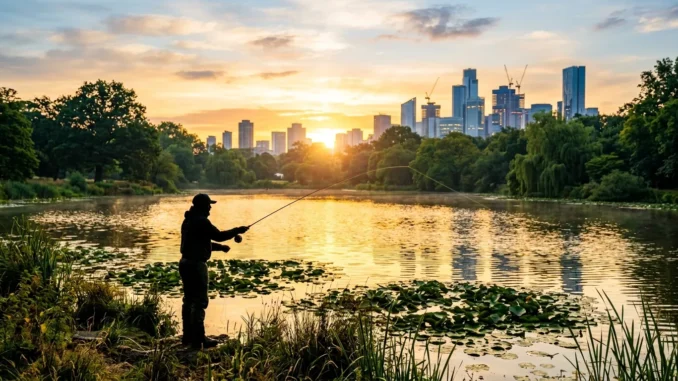
Think you need to drive for hours to find a great fishing spot? Think again! Right here, nestled within our bustling cities, are countless hidden gems: urban ponds and lakes in your local parks. These often-overlooked waters offer incredible fishing opportunities, a quick escape from the concrete jungle, and the perfect classroom for new anglers. Honestly, some of my most memorable catches have come from waters just a stone’s throw from major highways!
As a seasoned angler who’s spent countless hours chasing fish from urban piers to serene city park ponds, I can tell you that urban fishing isn’t just convenient; it’s genuinely rewarding. It’s about discovering that thrill of a tug on your line without the hassle of a long road trip. This guide from Fish Hunter is designed to make urban pond fishing simple, fun, and successful for you, whether you’re a complete beginner or an intermediate angler looking to hone your skills.
Why Urban Ponds Are Your New Fishing Hotspot
The appeal of urban ponds goes far beyond their accessibility. For apartment dwellers and office workers, they represent a vital connection to nature and a stress-relieving hobby that fits into a busy schedule. You can often be fishing within minutes of leaving your home, making it easy to grab an hour or two on a weekday evening or a relaxing morning on the weekend.
What many don’t realize is the surprising variety of fish species these waters can hold. Most city parks manage their ponds, often stocking them regularly or maintaining healthy populations of native species. This means you’re not just casting into an empty puddle; you’re often targeting robust, catchable fish. Plus, the serene atmosphere, even amidst city sounds, provides a much-needed mental break. It’s truly a unique blend of convenience and outdoor adventure.
Common Urban Pond Species You’ll Encounter
- Largemouth Bass: Often the apex predator in these waters, bass are aggressive, fun to catch, and thrive in the cover provided by urban ponds. They love structure like lily pads, submerged logs, and docks.
- Panfish (Bluegill, Crappie, Perch): These are the superstars for beginners! Abundant, eager to bite, and found in schools, panfish provide constant action and are excellent for building confidence. They’re often found near vegetation or shallow areas.
- Catfish: Especially in warmer climates or during summer, catfish can be plentiful. They’re strong fighters and are often active from dusk into the night. Look for them in deeper holes or near bottom structure.
- Trout: In some cooler regions, parks will seasonally stock rainbow or brown trout, particularly in spring and fall when water temperatures are favorable. These offer a different challenge and are a prized catch.
Essential Gear for the Urban Angler (Keep it Simple!)
You absolutely don’t need a boatload of expensive gear to start urban pond fishing. The beauty here is simplicity. Based on my experience, a modest, versatile setup is all you need to get started and be successful. What would I recommend for someone just starting out, or even an intermediate angler who wants a reliable, no-fuss setup?
Rod & Reel Combo: Your Go-To Setup
For urban ponds, a 6-7 foot medium-light or medium action spinning rod paired with a 2500-3000 size spinning reel is perfect. A spinning reel is an open-faced reel where the spool remains stationary and the bail arm rotates around it, laying line onto the spool. It’s incredibly user-friendly for casting light baits and lures, which is exactly what you’ll be doing in most urban ponds. This combo offers enough backbone for a decent bass but is sensitive enough to feel a bluegill nibble. Many brands offer excellent beginner combos for under $100, which is a fantastic starting point.
Line & Terminal Tackle
For line, I always recommend 6-10 lb test monofilament line for beginners. Monofilament line is a single-strand nylon line known for its stretch, ease of knot tying, and affordability. It’s forgiving for those learning to cast and feel bites. While braided line (multiple strands woven together for strength and no stretch) has its place, monofilament is simpler to manage when you’re starting out.
For terminal tackle (the bits at the end of your line), keep it minimal: a small assortment of size 6-10 bait holder hooks for panfish, 1/0-3/0 worm hooks for bass, a few small split shot sinkers, and some small clip-on or slip bobbers. That’s it! No need for a giant tackle box.
Basic Gear Checklist
- Your rod & reel combo
- Small tackle box with hooks, sinkers, bobbers
- Pliers or forceps (for hook removal)
- Small towel
- Sunscreen, hat, sunglasses
- Water bottle
- Fishing license (check your state’s requirements!)
Bait & Lure Strategies for Urban Pond Success
Now for the fun part: what to put on your hook! The key to success in urban ponds is often versatility and understanding what the fish are currently feeding on. For beginners, I always suggest starting with natural bait, but don’t shy away from experimenting with lures once you get comfortable.
Live Bait: The Easiest Way to Start
Honestly, nothing beats live bait for consistency, especially when you’re learning. Live worms (nightcrawlers or red wigglers) are the universal bait – everything eats them! They work for bass, panfish, and catfish. Just hook a piece of worm on a small hook under a bobber and cast it near any structure or vegetation. Small pieces of shrimp (peeled, raw, cut into dime-sized pieces) can also be incredibly effective for catfish and panfish, particularly in waters where they’re used to scavenging.
Artificial Lures: For More Active Fishing
Once you’re comfortable casting, trying lures adds another dimension to your fishing. Soft plastics are flexible, realistic lures that mimic worms, crawfish, or baitfish. A wacky rigged worm (a plastic worm hooked in the middle) is deadly for bass. Small 1/16 to 1/8 oz jigs with grub tails are fantastic for panfish and smaller bass. Crankbaits (hard-bodied lures with a lip that makes them dive) in smaller sizes, or compact spinnerbaits, are excellent for covering water and enticing bass. And for an exciting visual strike, topwater lures (lures that float on the surface, mimicking struggling prey like frogs or injured baitfish) like small poppers or hollow-body frogs can be incredible during low light conditions like dawn or dusk. But what would you use for a specific fish on a specific day? My advice: start with worms, and if you see bass busting on the surface, try a topwater!
Seasonal Patterns in Urban Ponds
- Spring: Fish move into shallow waters to spawn. Target areas with new growth or submerged structure. Bass, crappie, and bluegill are very active.
- Summer: Fish retreat to deeper, cooler water or seek shade during the hottest parts of the day. Early mornings and late evenings are best in the shallows; otherwise, fish deeper.
- Fall: A “feeding frenzy” as fish bulk up for winter. They can be found throughout the water column, actively chasing bait. This is often one of the best times to fish!
Mastering the Basics & Fishing Responsibly
You’ve got your gear and some bait ideas. So far we’ve covered the ‘what’ and ‘where’. Now let’s get to the really critical point: the ‘how’ and ‘how to do it right’. Learning a few basic techniques and understanding responsible fishing practices will significantly boost your enjoyment and success.
Basic Casting & Knot Tying
Start with a simple overhead cast. Practice in your backyard or an open field first – aim for a bucket! It takes a few tries, but you’ll get the hang of it quickly. For knots, you only need to master two to start:
- Improved Clinch Knot: This is your workhorse knot for tying line directly to hooks, swivels, and lures. It’s strong and relatively easy to learn. Simply pass the line through the hook eye, twist it around itself 5-7 times, pass the tag end back through the loop near the eye, then through the larger loop you just created, and pull tight.
- Palomar Knot: An incredibly strong and reliable knot, especially good for tying on lures or heavier lines. It involves creating a loop, passing it through the hook eye, tying a simple overhand knot, then passing the loop back over the hook and pulling tight. Watch a quick video on Fish Hunter for a visual guide; it’s easier than it sounds!
Finding the Fish & Avoiding Common Mistakes
Fish love structure and cover. Look for lily pads, fallen trees, docks, culverts, or any noticeable changes in the bottom contour. These spots offer food, shade, and protection. If you’re not getting bites in one spot, move! Fish don’t have legs, but you do.
Common beginner mistakes include overthinking the gear, staying in one unproductive spot for too long, and ignoring local fishing regulations. Don’t be afraid to ask other anglers you see at the pond for tips – most are happy to share. And always, always remember to get your fishing license; it’s a legal requirement and supports fisheries conservation.
Sustainable Fishing Practices
As a fishing buddy, I believe it’s our responsibility to protect these urban gems. Catch and release is crucial, especially for larger fish or if you don’t plan to eat your catch. Consider using barbless hooks (you can crimp down the barb on regular hooks with pliers) to minimize harm to the fish. Always respect size and bag limits set by your local wildlife agency. And finally, leave no trace – pack out all your trash, including any discarded fishing line.
Your Weekend Action Plan: Go Fish Your City!
Alright, urban angler, you’ve got the knowledge! This weekend, don’t just dream about fishing; do it. Here’s your quick checklist:
- Get your fishing license online or at a local bait shop.
- Grab a beginner spinning rod/reel combo (6-7 ft medium-light/medium) and some 6-10 lb monofilament line.
- Pick up a pack of live worms and a small assortment of hooks, sinkers, and bobbers.
- Use Google Maps to find a local park pond near you.
- Head out there, cast your line, and discover the peace and excitement of urban pond fishing.
Imagine this situation: You’ve had a crazy week at work. Friday evening hits, and instead of battling traffic for hours, you walk to your local park. The sun is setting, a gentle breeze rustles the leaves, and within minutes, you feel that familiar, thrilling tug on your line. You reel in a beautiful bluegill, release it gently, and cast again, feeling the day’s stress melt away. That’s the magic of urban pond fishing, and it’s waiting for you! Happy fishing, and I look forward to seeing your urban catches on Fish Hunter!
Leave a Reply