
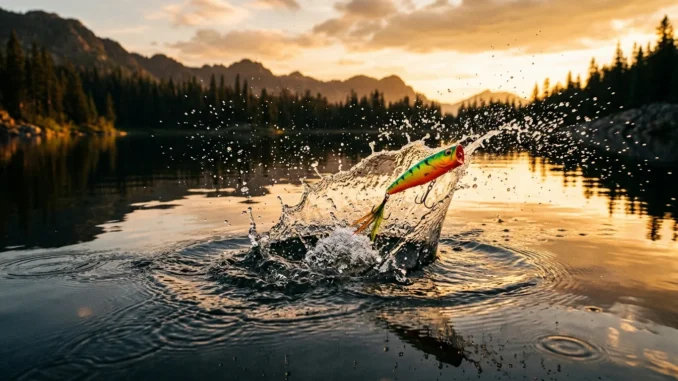
Imagine this: the water is still, the air is calm, and suddenly, a violent splash shatters the surface as a fish absolutely explodes on your lure. That heart-stopping moment, the adrenaline rush, the pure visual spectacle – that’s the magic of topwater fishing. It’s arguably one of the most exciting ways to catch fish, and honestly, it’s not as complicated as some make it out to be. If you’re looking for a way to add some serious thrill to your fishing adventures, especially as a beginner or an intermediate angler wanting to step up your game, topwater lures are your ticket.
Here at Fish Hunter, we believe fishing should be fun, accessible, and successful without needing a ton of fancy gear or years of practice. Topwater fishing perfectly embodies that spirit. It’s a technique that provides instant gratification and incredible visual feedback, making it super rewarding. Let’s dive into how you can start experiencing those unforgettable surface strikes.
Understanding Topwater Lures: The Surface Game
Before we cast out, let’s clarify what a topwater lure actually is. Simply put, these are lures designed to float and work exclusively on the water’s surface. Unlike crankbaits or jigs that dive, topwater lures create commotion, splashes, and unique movements right where the fish can see (and hear!) them from below. This triggers an aggressive, territorial, or feeding response that leads to those spectacular surface blow-ups.
There’s a whole family of topwater lures, each with its own action. For beginners, I recommend starting with two main types:
- Poppers: These lures have a cupped or concave face. When you twitch your rod tip, they grab water and create a “pop” or “chug” sound and a splash, mimicking a struggling baitfish or frog. They’re fantastic for drawing fish out of cover.
- Walk-the-Dog Lures (e.g., Heddon Super Spook Jr.): These are typically cigar-shaped and, when retrieved correctly, glide from side to side across the surface in a “walking” motion. This action is incredibly enticing and realistic, mimicking an injured baitfish. Mastering the “walk” takes a little practice but is hugely rewarding.
Other types like prop baits (with propellers for added splash) and frogs (weedless lures for heavy cover) are also great but can be tackled once you’re comfortable with poppers and walk-the-dogs.
Gearing Up for Topwater Success
You don’t need a specialized arsenal to start throwing topwater lures. Your standard beginner setup will work just fine, but a few tweaks can make a big difference in your success and enjoyment.
Rod and Reel Combo
A versatile spinning rod and reel combo is perfect. I’d recommend a 6-foot 6-inch to 7-foot medium power spinning rod with a fast action tip. This provides enough backbone for casting lures and fighting fish, but the fast tip helps you impart action to the lure. Pair it with a 2500 or 3000 size spinning reel. A spinning reel is a type of open-faced fishing reel where the spool remains stationary and the line is gathered by a rotating bail. It’s incredibly user-friendly for beginners due to its ease of casting.
Line Choices
For topwater, line choice is crucial. Braided line is my top pick. Braided line is fishing line made by braiding multiple strands of synthetic fiber, making it incredibly strong for its diameter, very sensitive (no stretch), and excellent for casting. A 10-20 lb braided line (like PowerPro or Spiderwire) is ideal. The lack of stretch in braid means you can easily impart action to your lure and feel every subtle twitch. It also floats, which helps keep your topwater lure in its zone. Because braid is visible in clear water, I always recommend tying on a fluorocarbon leader (a short section of transparent line, usually 12-24 inches) of 8-12 lb test to the end of your braided line. This leader is virtually invisible underwater and helps prevent spooking fish. Use a reliable knot like the FG knot or an Improved Albright knot to connect the braid to the fluorocarbon.
Mastering the Retrieve: Bringing Lures to Life
This is where the magic happens! Topwater fishing isn’t about simply reeling in; it’s about making your lure dance. The key is to remember that you’re trying to mimic a distressed baitfish, frog, or insect. This means erratic movements and pauses.
Popper Retrieve Technique
Cast your popper near cover like lily pads, submerged timber, or dock pilings. Let it sit for a few seconds – sometimes fish will hit it on the initial splash! Then, give your rod tip a sharp, downward twitch, causing the lure to “pop” and splash. Immediately let your rod tip return to the original position, taking up a tiny bit of slack line. Now, pause. The pause is absolutely critical. Fish often strike during this pause, thinking the “stunned” bait is an easy meal. Vary your retrieve: pop-pop-pause, or just a single pop and a longer pause. Experiment to see what the fish respond to that day.
Walk-the-Dog Retrieve Technique
This takes a little more coordination but is incredibly effective. Cast your walk-the-dog lure. Point your rod tip slightly downward, towards the water. Give a rhythmic series of short, downward twitches of your rod tip while simultaneously reeling in the slack line. Don’t reel constantly; just take up the slack created by your twitch. The trick is to establish a cadence where the lure glides left, then right, then left. It’s all in the wrist! For example, imagine this situation: You’ve cast near a fallen tree. You give a twitch, reel, twitch, reel. The lure “walks” beautifully. Suddenly, you see a wake behind your lure. What would you do? The natural instinct is to speed up, but often, a slight pause or a subtle continuation of the walk can trigger the strike.
When and Where to Throw Topwater
Timing and location are key to successful topwater fishing. While fish can hit topwater at any time, certain conditions greatly increase your chances of those explosive strikes.
Best Times
- Low Light Conditions: Early mornings (dawn) and late evenings (dusk) are prime times. The reduced light makes fish feel more comfortable hunting closer to the surface, and the cooler water often makes them more active. Overcast days can also extend the topwater bite throughout the day.
- Warm Water Seasons: Topwater truly shines from late spring through early fall, when water temperatures are consistently warm. This is when species like Largemouth Bass, Smallmouth Bass, Pike, and even larger Perch are actively feeding near the surface.
Best Locations
Focus on areas where fish can ambush prey or where baitfish congregate. These include:
- Shallow Water: Bays, coves, and flats with depths of 2-5 feet.
- Cover and Structure: Look for lily pads, weed lines, fallen trees (laydowns), brush piles, boat docks, seawalls, and rocky points. Fish use these areas for ambush and shelter.
- Transition Zones: Where shallow water meets deeper water, or where two types of cover meet (e.g., weeds ending at a drop-off).
Honestly, I’ve had some of my most exciting topwater bites casting parallel to a dock on a hot summer evening. The fish are just waiting there, looking for an easy meal.
Common Mistakes and How to Fix Them
Even seasoned anglers make mistakes, especially with topwater. Here are a few common beginner pitfalls and how to avoid them:
- Setting the Hook Too Early: This is the #1 mistake! When a fish blows up on your lure, it’s incredibly tempting to set the hook immediately. Resist! Often, they just slap at the lure or miss it entirely. Wait until you feel the weight of the fish on your line before sweeping the rod to set the hook. Count to one-Mississippi after the splash.
- Too Fast a Retrieve: Many beginners reel too quickly, giving the fish no time to react or commit to the strike. Slow down, and incorporate those pauses!
- Using the Wrong Gear:</ 細胞gt; Trying to cast light topwater lures with a heavy catfishing rod will be frustrating. Ensure your rod has enough flex (medium power, fast action) to work the lure effectively.
- Not Varying Retrieve: If one speed or cadence isn’t working, don’t be afraid to change it up. Try longer pauses, shorter twitches, or a different rhythm. Fish aren’t always looking for the same thing.
- Ignoring the Conditions: While possible, midday topwater in bright, clear conditions is often less productive. Focus on those low-light times for maximum success.
To be fair, getting that timing right on the hookset takes practice. Don’t get discouraged if you miss a few. It’s part of the learning curve!
Quick Takeaway: Your Weekend Topwater Plan
Ready to experience the thrill? Here’s your actionable plan for this weekend:
- Grab Your Gear: A 6.5-7 ft medium power spinning rod with a 2500-3000 reel, spooled with 10-15 lb braided line and an 8-10 lb fluorocarbon leader.
- Pick Your Lures: Get a couple of poppers (e.g., Rebel Pop-R or Heddon Pop-N-Image) and one walk-the-dog lure (e.g., Heddon Super Spook Jr.). Start with natural colors like shad or frog patterns.
- Find a Spot: Head to your local lake, pond, or slow-moving river known for bass, especially areas with shallow cover like docks, lily pads, or submerged logs. Piers can also be surprisingly good in saltwater estuaries for species like Snapper or juvenile Barracuda with smaller lures.
- Time it Right: Plan your trip for early morning or late evening. Overcast days are a bonus!
- Cast and Retrieve: Start with poppers. Cast near cover, let it sit, then pop-pop-pause. Practice the walk-the-dog retrieve in an open area until you get the rhythm down. Remember to wait for the weight before setting the hook!
- Practice Sustainable Fishing: Many topwater encounters are with aggressive, healthy fish. Consider using barbless hooks (you can easily crimp down the barb on your existing hooks with pliers) and practicing catch and release to ensure these exciting moments can be enjoyed by others for years to come. Always respect local size and bag limits.
Trust me, there’s nothing quite like watching a fish ambush your lure on the surface. It’s an unforgettable experience that will hook you on fishing even more. Go out there, have fun, and get ready for some explosive action!
Leave a Reply