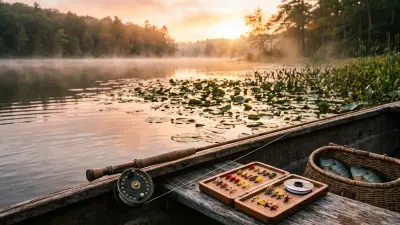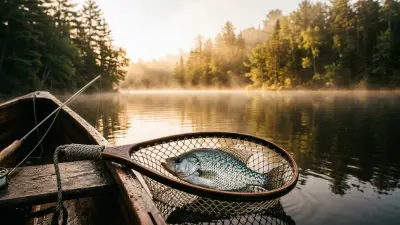
There's a special kind of magic that happens when you feel that first tug on your line. For many of us, that magic started with panfish. These feisty, abundant, and often delicious fish are the perfect gateway to a lifelong passion for angling, whether you're casting from a city pier or a quiet country pond. I've spent over two decades chasing everything from monster bass to elusive trout, but I still get a thrill out of a lively panfish putting a bend in my rod. They're accessible, they're fun, and they offer a fantastic learning curve for anyone looking to unwind by the water without needing a super complicated or expensive setup.
Why Panfish Are Your Best Bet for Fishing Fun (and Dinner!)
Let's face it, life gets busy. For apartment dwellers, homeowners, or office workers dreaming of a weekend escape, fishing needs to be simple, rewarding, and not require a week-long expedition. That's exactly where panfish shine. These small, schooling fish are found in virtually every freshwater body across North America and beyond – from local park ponds to vast reservoirs and slow-moving rivers. They’re a fantastic target because they’re usually eager to bite, put up a surprisingly spirited fight for their size, and let's not forget, they make for some excellent table fare.
Meet the Panfish Family: Your Go-To Targets
When we talk about "panfish," we're really talking about a group of smaller, generally round-bodied fish that are literally the perfect size to fit in a frying pan. The most common and popular members of this family include:
- Bluegill: The quintessential panfish! Recognizable by the dark spot on their gill flap and vertical bars, bluegill are aggressive biters and incredibly common. They're often the first fish a beginner catches.
- Crappie (Black and White): Known for their delicious white meat, crappie are usually found in schools around submerged brush or timber. They have a distinctive speckled pattern (black crappie) or vertical bars (white crappie).
- Perch (Yellow Perch): These beautiful fish boast vibrant yellow sides with distinct dark vertical stripes. They prefer cooler waters and often school in open water or around deeper structure.
- Sunfish (Pumpkinseed, Green Sunfish, Redear Sunfish): A diverse group, often colorful, and just as eager to bite as bluegill. They share similar habitats and behaviors.
My earliest fishing memory involves a tiny bluegill I caught in a neighborhood pond using a cane pole and a piece of hot dog. It wasn't just catching a fish; it was the start of a lifelong adventure. Panfish offer that same simple joy and immediate gratification, making them ideal for anyone dipping their toes into the fishing world.
The Panfish Advantage: Abundance, Accessibility & Action
The beauty of panfish lies in their sheer abundance and widespread distribution. You don't need a fancy boat or expensive electronics to find them. They thrive in accessible areas, often close to shore, making them perfect for bank fishing, pier fishing, or even a small kayak. Their schooling behavior means that once you find one, you've likely found a whole bunch, leading to consistent action that keeps things exciting. Plus, their eagerness to strike a variety of baits and lures builds confidence quickly, which is invaluable for new anglers.
They might not be monster fish, but a lively 8-inch crappie on a light spinning rod feels like a heavyweight champion. This translates to more bites, more fish caught, and ultimately, more fun and relaxation on your fishing trip. And let's not forget the culinary aspect – a fresh panfish fry is a tradition many anglers cherish.
Gearing Up for Panfish: Simple & Effective Setups
You don't need to break the bank to get into panfish fishing. The best part is that a simple, lightweight setup is not just budget-friendly, it’s actually the most effective way to catch these smaller fish. Forget heavy bass rods or specialized saltwater gear; we're going for finesse and sensitivity.
The Perfect Rod & Reel Combo: Lightweight & Responsive
For panfish, a spinning reel paired with a light or medium-light action rod is your ticket to success. What does that mean?
- Rod: Look for a rod that's typically 6 to 7 feet long with a "light" or "medium-light" action. "Action" refers to where the rod bends. A medium-light action rod bends further down its blank, allowing it to load up and cast lighter baits more easily, and it's sensitive enough to detect those subtle panfish nibbles. A good example is a Ugly Stik GX2 Spinning Combo or a Shimano Sienna FE Spinning Combo, both offering excellent value.
- Reel: A 2000 or 2500 size spinning reel (sometimes you'll see 20 or 25) is ideal. A spinning reel is an open-faced reel where the spool remains stationary and a "bail" rotates around it to wind the line. These sizes are compact, lightweight, and perfect for the lighter lines we'll be using. They provide a smooth retrieve and enough drag power for any panfish you'll encounter. While a 3000 size can work, 2000-2500 is often a better match for the lighter rods.
This setup allows for comfortable casting of small baits and lures, and more importantly, it provides the sensitivity needed to feel even the most delicate bites from panfish. You'll be amazed at how much fun a 6-inch bluegill can be on a balanced light tackle setup!
Line Choices That Make a Difference
Your fishing line is the direct connection to the fish, so choosing the right type and strength is crucial for panfish. We want something thin, sensitive, and relatively low-visibility.
- Monofilament Line (Mono): For beginners, 4 to 6-pound test monofilament line is an excellent choice. Monofilament is a single-strand nylon line that's affordable, easy to tie knots with, and has a good amount of stretch, which acts as a shock absorber. This stretch can be forgiving when a panfish makes a sudden move. Its slight buoyancy also helps keep your bait suspended when using a bobber.
- Braided Line: If you're looking for increased sensitivity and casting distance, a 6 to 10-pound test braided line can be fantastic. Braided line is made from multiple synthetic fibers woven together, making it incredibly strong for its diameter and providing virtually zero stretch. This means you'll feel every bump and nibble. However, because it's more visible and has no stretch, it's often best to tie a fluorocarbon leader (4-6 lb test, a virtually invisible line that sinks) to your braided main line using a knot like the Uni-to-Uni or an FG knot. This gives you the best of both worlds: sensitivity from the braid and stealth from the fluorocarbon.
For most panfish scenarios, I recommend starting with good quality 6 lb monofilament. It's forgiving, easy to manage, and perfectly effective.

Essential Terminal Tackle & Baits: Small & Mighty
Terminal tackle refers to everything at the "terminal" end of your fishing line: hooks, weights, swivels, and your bait or lure.
- Hooks: Small is key! Size #6, #8, or #10 Aberdeen or Octopus hooks are perfect. Aberdeen hooks are thin-wired, making them less likely to harm smaller fish if you're practicing catch-and-release, and they often straighten out if snagged, saving your line.
- Bobbers (Floats): These are essential for suspending your bait at a desired depth and indicating bites. For panfish, small fixed bobbers (which attach directly to your line) or slip bobbers (which slide freely on your line, allowing you to fish deeper) are great. Slip bobbers are slightly more advanced but allow for much deeper presentations without needing a huge cast.
- Split Shot: Small, pinch-on lead or non-toxic weights that help get your bait down to the desired depth. Use just enough to sink your bait slowly. A small assortment of sizes (BB, 3/0, 2/0) will cover most needs.
- Swivels: A small barrel or snap swivel (size 10-12) can help prevent line twist, especially when using spinners or fishing in current. It also makes changing lures quick and easy.
Now, let's talk about what panfish love to eat!
| Category | Examples | When & Why to Use | Best For |
|---|---|---|---|
| Live Bait | Worms (red wigglers, nightcrawlers), Crickets, Mealworms, Small Minnows | When fish are finicky, in colder water, or for guaranteed action. Natural scent and movement are irresistible. | Bluegill, Sunfish, Perch, Crappie (minnows) |
| Artificial Lures | Small Jigs (1/32 to 1/16 oz), Micro Spinners (Mepps, Rooster Tail), Tiny Crankbaits, Soft Plastics (tube baits, grubs) | When fish are aggressive, for covering more water, or for catch-and-release (fewer deep hooks). Can be more active. | Crappie, Perch, Bluegill (jigs, spinners) |
For beginners, live worms are an absolute killer for almost all panfish species. They're easy to find (bait shops, garden), easy to rig, and panfish can't resist them. Experimentation is key, but start with the basics!
Mastering Panfish Techniques: Where, When & How to Catch More
Knowing your gear is one thing, but understanding how panfish behave and how to present your bait is where the real magic happens. Panfish are creatures of habit and structure, and once you learn their patterns, you'll be catching them consistently.
Finding Panfish Hotspots: Structure is Key!
Panfish love cover and protection. They congregate around areas that offer food, shade, and safety from predators. These "structures" are your fishing goldmines:
- Weed Beds & Lily Pads: These provide excellent cover, ambush points, and host aquatic insects – a panfish buffet! Cast to the edges or into pockets within the vegetation.
- Fallen Trees & Brush Piles (Laydowns): Submerged timber is a magnet for crappie and bluegill. Fish around the branches, being mindful of snags.
- Docks & Piers: The shade and physical structure of docks attract panfish. Cast under them or along the pilings.
- Rocky Shorelines & Riprap: Rocks create crevices and attract crawfish and insects, drawing in various panfish, especially perch.
- Bridge Pilings & Culverts: Any man-made structure in the water can hold fish.
Most panfish will be found in relatively shallow waters, typically less than 15 feet deep, often much shallower, especially in spring. Don't be afraid to cast right up against the bank or into those thick lily pads.
Seasonal Patterns: Timing Your Trip for Success
Panfish behavior changes with the seasons, mainly influenced by water temperature and spawning cycles:
- Spring (Pre-Spawn & Spawn): This is prime time! As water temperatures rise into the 60s°F (around 15-20°C), panfish move into very shallow water (1-5 feet) to spawn. Look for visible nests (circular depressions) in sandy or gravelly bottoms. They're aggressive and easy to catch.
- Summer: As temperatures soar, panfish often move to deeper, cooler water or seek refuge in dense shade under docks, lily pads, or within thick weed beds. Early morning and late evening bites are often best.
- Fall (Feeding Frenzy): As water cools, panfish actively feed to bulk up for winter. They'll often move back into shallower areas during the day, becoming very aggressive. This can be one of the best times for consistent action.
- Winter: Fishing slows down, but panfish can still be caught. They'll typically hold in deeper holes or basins, often schooling tightly. A very slow, subtle presentation is required, often with small jigs.
Presentation is Key: Float Fishing & Light Jigging
How you present your bait makes all the difference. Panfish bites can be subtle, so pay close attention!
- Float Fishing (Bobber Fishing): This is the ultimate beginner-friendly technique.
- Tie on a small hook (size #8 or #10).
- Add one or two small split shots a few inches above the hook.
- Attach a fixed or slip bobber above the split shot. Adjust the bobber so your bait hangs a foot or two off the bottom, or at the depth you're seeing fish.
- Bait your hook with a small piece of worm, a cricket, or a mealworm.
- Cast near structure and watch the bobber. Any dip, drag, or disappearance means a fish is biting!
This technique is fantastic because it keeps your bait in the strike zone and signals bites visually. I've caught countless panfish using nothing more than a bobber and a worm.
- Light Jigging: For a more active approach, or when panfish are deeper, jigging is effective.
- Tie on a 1/32 to 1/16 ounce jig head (small lead head with a hook).
- Thread on a small soft plastic grub, tube, or a live minnow.
- Cast out and let the jig sink.
- Slowly retrieve with a series of subtle lifts and drops, or small twitches of the rod tip.
- Pay attention to any "thump" or sudden heaviness on the line – that's a bite!
Jigging allows you to cover more water and present your bait with enticing action. Crappie particularly love small jigs.
No matter which method you choose, remember that panfish are not usually chasing down fast-moving baits. A slow, natural presentation is often the most effective.

Knot Tying: Your Connection to the Fish
A reliable knot is non-negotiable. Here are three essential knots every angler should know:
- Improved Clinch Knot: This is a fantastic all-around knot for tying your line directly to hooks, swivels, and lures. It's strong and relatively easy to learn.
- Palomar Knot: Super strong, especially good for braided line, and widely considered one of the most reliable knots for tying on lures and hooks. It's a bit trickier to learn but worth the effort.
- Uni Knot: A versatile knot that can be used for tying directly to terminal tackle, creating a loop, or connecting two lines (like a main line to a leader). It's a great "utility" knot.
Practice these at home before you hit the water. A poorly tied knot is the quickest way to lose a fish!
Setting the Hook & Landing Your Catch
When that bobber dips or you feel a subtle tap, don't yank with all your might. Panfish have relatively soft mouths. A gentle but firm sweep of the rod tip upwards or to the side is usually enough to set the hook. Once hooked, keep steady pressure on the fish and reel it in smoothly. Avoid pumping the rod too aggressively, as this can tear the hook out. For smaller fish, you can simply lift them out of the water; for larger ones, a small net can be handy.
Common Panfish Mistakes & Sustainable Practices
Even seasoned anglers make mistakes, but knowing what to avoid can save you a lot of frustration and lead to more successful trips. And as responsible anglers, we also need to protect the resources we enjoy.
Avoiding Beginner Blunders: Learn From My Mistakes!
I've made every one of these mistakes, so you don't have to:
- Using Tackle That's Too Heavy: A common mistake! Heavy line, big hooks, and stiff rods will result in fewer bites and a less enjoyable fight. Panfish are sensitive, and finesse wins the day.
- Fishing Too Fast or Impatiently: Panfish often need time to find your bait and commit to a bite. Don't constantly retrieve or move your bait too quickly. Sometimes, simply letting your bait sit still for a minute or two is all it takes.
- Ignoring Subtle Bites: Panfish bites aren't always a dramatic pull. Sometimes it's just a slight twitch of the bobber, a feeling of "mushiness" on the line, or your line moving sideways. Pay attention to everything!
- Not Checking Local Regulations: Every body of water has rules regarding fishing licenses, size limits, and bag limits. Always check with your local wildlife or fisheries department before you go. This is critical for legal and sustainable fishing.
- Fishing in the Wrong Spots: Casting into open, featureless water will yield few results. Always look for structure, shade, and changes in depth. "Find the cover, find the fish" is a great mantra.
Patience truly is a virtue in fishing, especially for panfish. Take your time, observe, and adjust. Sometimes, moving just 20 feet down the bank can make all the difference.
Being a Responsible Angler: Protecting Our Waters
Fishing is a privilege, and it's our responsibility to ensure healthy fisheries for future generations. Embrace these sustainable practices:
- Catch and Release: If you're not planning to eat your catch, or if you catch a fish that's too small or too large for regulations, release it carefully. Handle fish with wet hands to protect their slime coat, minimize air exposure, and use barbless hooks (or crimp down the barb on your existing hooks) for easier, less damaging removal.
- Respect Size and Bag Limits: These rules are in place to protect fish populations. Know them, and abide by them. Don't be a "fish hog" – take only what you need and what's legal.
- Leave No Trace: Pack out everything you pack in. This includes old fishing line, bait containers, and any other trash. Our waterways are not dumpsters.
- Protect Habitats: Avoid disturbing spawning beds or sensitive aquatic vegetation. A healthy habitat means healthy fish populations.
These practices aren't just about following rules; they're about ensuring that the joy of fishing for panfish continues for everyone, for years to come.
What to Do This Weekend: Your Panfish Action Plan
Alright, you've got the knowledge, now let's get you fishing! Here's your actionable plan to get out there and start catching panfish this weekend:
- Scout a Local Spot: Use Google Maps or local park websites to find a pond, lake, or slow-moving river near you that allows fishing. Look for public piers, docks, or areas with visible weed beds or fallen trees.
- Grab Your Gear: Pick up a 6-7 ft medium-light spinning rod and a 2000-2500 size spinning reel combo (a good quality one can be found for $50-$100). Spool it with 6 lb monofilament line.
- Get Your Terminal Tackle: Buy a small pack of #8 or #10 Aberdeen hooks, a small assortment of split shot, a few small fixed bobbers, and a container of live worms (red wigglers are perfect).
- Practice Your Knot: Before you leave, practice tying the Improved Clinch Knot a few times with a hook (be careful!) and a piece of line.
- Go Fishing! Rig up your rod: tie on a hook, add a split shot 6-8 inches above it, and attach a bobber about 2-3 feet up your line. Put a small piece of worm on the hook. Cast near some cover, watch that bobber, and get ready for some fun!
Panfish fishing is arguably the easiest, most reliable way to get into fishing and enjoy consistent success. It's relaxing, rewarding, and a fantastic way to reconnect with nature, even if you're just casting a line in a city park. So, grab your gear, find a spot, and go make some memories!