
Introduction to Fishing Lines
As an angler, choosing the right fishing line can be a daunting task, especially for beginners. With so many options available, it’s easy to get overwhelmed. But what would you do in this situation? Let’s start with the basics. Fishing lines are the connection between you and the fish, and they play a crucial role in determining your fishing success. In this article, we’ll delve into the world of monofilament and braided fishing lines, exploring their differences, advantages, and disadvantages.
Imagine this situation: you’re out on the water, waiting for a bite, when suddenly your line snaps, and you lose your catch. This is a common problem that can be avoided by choosing the right fishing line. Monofilament and braided lines are two of the most popular types of fishing lines, each with its unique characteristics.
What are Monofilament Lines?
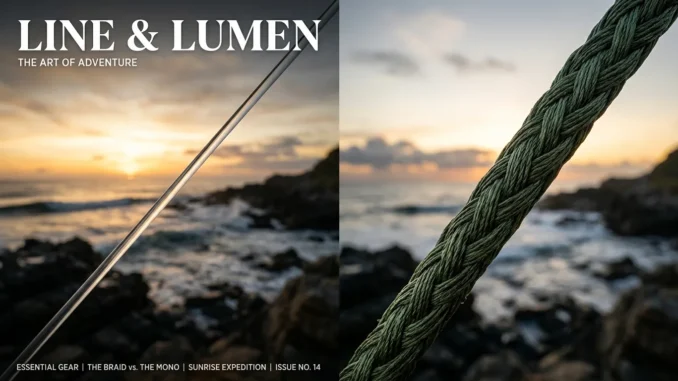
Monofilament lines are made from a single strand of nylon or polyethylene material. They are relatively inexpensive, easy to handle, and have a good balance of strength, flexibility, and knot strength. Monofilament lines are a great choice for beginners, as they are forgiving and easy to cast. However, they can be prone to stretch, which can affect their sensitivity and accuracy.
What are Braided Lines?
Braided lines, on the other hand, are made from multiple strands of material, such as polyethylene or polyester, woven together. They are known for their exceptional strength, durability, and resistance to abrasion. Braided lines are also more sensitive than monofilament lines, allowing for better feel and control. However, they can be more expensive and have a higher memory, which can affect their casting performance.
Comparison of Monofilament and Braided Lines
So far, we’ve covered the basics of monofilament and braided lines. Now, let’s get to the really critical point: which line is best for you? The answer depends on your fishing style, the type of fish you’re targeting, and the water conditions you’re fishing in. Here are some key differences to consider:
- Strength: Braided lines are generally stronger than monofilament lines, with a higher LB test rating.
- Stretch: Monofilament lines have a higher stretch factor than braided lines, which can affect their sensitivity and accuracy.
- Durability: Braided lines are more resistant to abrasion and have a longer lifespan than monofilament lines.
- Cost: Monofilament lines are generally less expensive than braided lines.
When to Choose Monofilament Lines
Monofilament lines are a great choice for beginners, as they are easy to handle and forgiving. They’re also a good option for fishing in clear water, where visibility is not a concern. Additionally, monofilament lines are suitable for fishing in cold water, as they have a lower memory than braided lines.
When to Choose Braided Lines
Braided lines are ideal for fishing in heavy cover, such as weeds or rocks, where their strength and durability can withstand the rigors of fishing in tough conditions. They’re also a good choice for fishing in murky or dirty water, where their low visibility can be an advantage. Additionally, braided lines are suitable for fishing in warm water, where their high strength and sensitivity can help you catch more fish.
Common Mistakes to Avoid
When choosing a fishing line, it’s easy to make mistakes that can affect your fishing success. Here are some common mistakes to avoid:
But what would you do in this situation? Let’s say you’re fishing in a lake with a lot of vegetation, and you’re using a monofilament line. You cast your line and wait for a bite, but the line keeps getting tangled in the weeds. This is a common problem that can be avoided by choosing the right line for the job. In this case, a braided line would be a better choice, as it’s more resistant to abrasion and can withstand the rigors of fishing in heavy cover.
To avoid making mistakes, it’s essential to consider the specific fishing conditions and the type of fish you’re targeting. Honestly, it’s not just about choosing a line that’s strong enough; it’s also about choosing a line that’s suitable for the water conditions and the type of fishing you’re doing.
Conclusion and Recommendations
In conclusion, choosing the right fishing line can make all the difference in your fishing success. By understanding the differences between monofilament and braided lines, you can make an informed decision and choose the line that’s right for you. Based on my experience, I believe that monofilament lines are a great choice for beginners, while braided lines are ideal for more experienced anglers who need a line that can withstand the rigors of fishing in heavy cover.
So, what to do this weekend? Why not try out a new fishing line and see how it improves your fishing experience? Whether you’re a beginner or an experienced angler, choosing the right line can help you catch more fish and enjoy your time on the water. Let me add something here: don’t be afraid to experiment and try out different lines until you find the one that works best for you.
Leave a Reply