
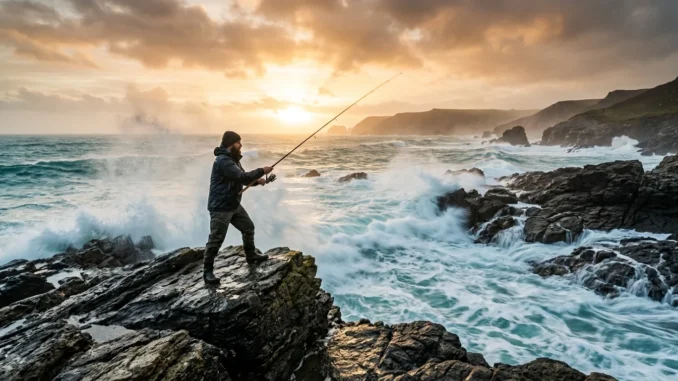
Hooked on the Horizon: Why Saltwater Fishing is Your Next Adventure
Ever gazed out at the vast ocean and wondered what mysteries lie beneath? That pull you feel isn’t just the tide; it’s the call of saltwater fishing! As a fellow angler who’s spent countless hours chasing everything from feisty snapper off a pier to hard-fighting redfish in the surf, I can tell you there’s nothing quite like the thrill of a saltwater hook-up. If you’re an apartment dweller dreaming of an escape, or an office worker craving the sea breeze, this guide is tailor-made for you. Forget the complicated setups and expensive boats; we’re going to make saltwater fishing simple, fun, and incredibly rewarding.
Saltwater fishing offers a unique blend of challenge and relaxation, often with a much wider variety of fish than freshwater. Think about it: one day you might be battling a powerful Red Drum, and the next, you’re reeling in a tasty Flounder for dinner. The air is fresh, the scenery is breathtaking, and the potential for an unforgettable catch is always just a cast away. But what exactly do you need to get started without breaking the bank or feeling overwhelmed? Let’s dive in.
Gearing Up for the Brine: Rods, Reels, and Essential Tackle
You don’t need a boatload of gear to start saltwater fishing. My philosophy has always been to keep it simple, effective, and durable. The ocean can be tough on equipment, so choosing wisely from the start will save you headaches later.
The Right Rod & Reel Combo for Beginners
For most beginner saltwater scenarios – think piers, jetties, and even light surf fishing – a spinning reel and a matching spinning rod combo is your best friend. A spinning reel, characterized by its open-face design and fixed spool, is incredibly easy to cast and manage, even for complete novices. I recommend a 7 to 8-foot medium-heavy spinning rod paired with a 4000 to 5000 size spinning reel. This setup offers enough backbone to handle larger saltwater species like Snapper, Black Drum, or even smaller Striped Bass, while still being comfortable enough to cast all day long. Brands like Penn, Shimano, or Daiwa offer excellent budget-friendly combos that will serve you well.
Why this specific size? The extra length of the rod helps with casting distance, which is often crucial when fishing from shore or a pier. The medium-heavy power provides the strength needed to muscle in bigger fish against currents, and the larger reel size holds more line, which you’ll appreciate when a strong fish decides to run! Honestly, this combo is incredibly versatile and will cover most of your initial saltwater fishing adventures.
Line & Leader Essentials: The Connection to Your Catch
Your fishing line is your direct link to the fish, so don’t skimp here. For beginners, a 15-20 lb test monofilament line is a great starting point for your main spool. Monofilament line (often called “mono”) is a single-strand nylon line known for its stretch, good knot-tying ability, and relative invisibility underwater. It’s forgiving and easier to handle for those just learning to cast.
However, for saltwater, you absolutely need a fluorocarbon leader. This is a short section of line (typically 2-3 feet) tied to the end of your main line, and then your hook or lure is tied to the leader. Fluorocarbon leader is much more abrasion-resistant than mono, crucial when fishing around rocks or structure, and it’s nearly invisible underwater, making it less likely to spook wary fish. I recommend a 20-30 lb fluorocarbon leader. For example, imagine this situation: you’ve hooked into a nice Redfish, and it dives into a barnacle-encrusted pilings. Without a strong, abrasion-resistant leader, your line would likely fray and snap. The leader is your insurance policy against lost fish and broken hearts!
Terminal Tackle Must-Haves: Hooks, Weights, and Swivels
This is where your bait meets the water. Keep it simple:
- Hooks: For bait fishing, I almost exclusively use circle hooks, sizes 1/0 to 3/0. Circle hooks are fantastic for beginners and for sustainable fishing. Fish typically hook themselves in the corner of the mouth, making for easier, safer catch and release, and reducing gut-hooking.
- Weights: You’ll need sinkers to get your bait down and keep it there. Pyramid sinkers (1-3 oz) are great for surf fishing as they dig into the sand and hold bottom. Egg sinkers (1-2 oz) are good for pier fishing rigs where you want the line to slide freely.
- Swivels: Use good quality barrel swivels (size 7-10) to connect your main line to your leader. They prevent line twist, especially when fishing with bait that might spin in the current.
Baiting Up & Casting Out: Techniques for Success
Now that you have your gear, let’s talk about getting that bait in the water and enticing some fish!
Bait Selection for Saltwater
When it comes to saltwater fishing, fresh bait is almost always king. Here are some beginner-friendly choices:
- Live Shrimp: The universal bait! Almost anything that swims in saltwater will eat a live shrimp. Hook them through the horn or the tail.
- Cut Bait: Freshly cut pieces of fish like Mullet, Sardines, or Mackerel are excellent. The scent trail they release is irresistible to many species, especially Catfish, Drum, and even Snapper.
- Squid: Readily available frozen squid is a fantastic, durable bait that catches a wide variety of fish.
For those who prefer lures, soft plastic baits rigged on a jig head can be very effective for species like Speckled Trout and Flounder. But for pure simplicity and consistent bites, start with live or cut bait.
Simple Rigs for Beginners: The Fish Finder Rig
My go-to rig for beginners fishing piers, jetties, or the surf is the Fish Finder Rig. It’s incredibly effective and easy to tie:
- Slide an egg sinker (1-2 oz) onto your main line.
- Tie one end of a barrel swivel to your main line (after the sinker).
- Tie a 2-3 foot section of your fluorocarbon leader to the other end of the barrel swivel.
- Tie your circle hook (size 1/0 to 3/0) to the end of your leader.
This rig allows the fish to pick up the bait and run a short distance without feeling the weight of the sinker, giving you a better chance to hook them. It’s perfect for bottom-feeding fish like Croaker, Drum, and Flounder. To be fair, there are dozens of rigs, but this one is a workhorse that will get you started catching fish.
Key Knots to Master
Strong knots are non-negotiable in saltwater. Your fish-catching success often depends on them. Don’t worry, you only need to learn a couple to start:
- Improved Clinch Knot: This is a solid, reliable knot for tying your hook or swivel directly to your monofilament or fluorocarbon leader. Practice it a few times at home with a piece of string and a hook; it becomes second nature quickly.
- Palomar Knot: While slightly more advanced than the Improved Clinch, the Palomar is incredibly strong and excellent for braided line, though it works well with mono too. It’s a fantastic knot to learn once you’re comfortable with the basics.
Why are knots so critical? A weak knot is the weakest link in your entire setup. There’s nothing more frustrating than losing a trophy fish because your knot slipped!
Where and When to Fish: Timing Your Coastal Adventure
Knowing where to cast your line and when can dramatically improve your catch rate and overall enjoyment.
Prime Saltwater Spots for Beginners
- Piers & Jetties: These are saltwater fishing goldmines for beginners. They provide easy access to deeper water, often have bait shops nearby, and concentrate fish around their structure. You can target species like Croaker, Spot, Flounder, Speckled Trout, and even smaller Sharks or Spanish Mackerel.
- Beaches & Surf: If you enjoy the open air and the sound of waves, surf fishing is for you. It requires longer casts and a bit more patience, but you can catch species like Pompano, Whiting, Red Drum, and even Striped Bass (depending on location and season).
- Inshore Estuaries & Bays: These calmer, protected waters are often nurseries for many species. They are excellent for targeting Speckled Trout, Redfish, and Flounder, especially from docks or small banks.
Tides & Times: The Ocean’s Schedule
Unlike freshwater, tides play a huge role in saltwater fishing. Fish activity is often directly linked to moving water. Generally, the best fishing occurs during moving tides – either the incoming tide or the outgoing tide, especially around the periods of maximum current. The change of tide (high slack or low slack) can also be productive as fish stage up. Why does this matter? Moving water brings baitfish and nutrients, which in turn attracts predatory fish looking for an easy meal. Always check a local tide chart before you go!
Beyond tides, dawn and dusk are almost always prime fishing times. Low light conditions make fish feel more secure and willing to feed. But honestly, any time you can get out there is a good time, especially when you’re just starting!
Common Beginner Mistakes to Avoid
- Using Freshwater Gear: Saltwater is corrosive. Using freshwater gear without proper rinsing will quickly destroy it. Always rinse your gear with fresh water after every trip!
- Not Checking Tide Charts: This is probably the biggest mistake I see beginners make. Fishing a dead tide can be incredibly slow.
- Overcomplicating Rigs: Start simple. A basic fish finder rig will catch fish. Don’t try to tie a super complex rig your first time out.
- Forgetting Sun Protection: The sun’s glare off the water is intense. Hat, sunglasses, and sunscreen are non-negotiable.
Sustainable Fishing: Be a Responsible Angler
Part of being a true Fish Hunter means respecting the environment and the fish you pursue. Always practice catch and release for fish you don’t intend to eat or that are undersized. Handle fish gently, minimize their time out of water, and use tools like pliers or de-hookers to remove hooks safely. Always check your local fishing regulations for size and bag limits – these rules are in place to protect fish populations for future generations. Leaving no trace behind is also crucial; pack out everything you pack in.
Your Weekend Saltwater Challenge!
So far we’ve covered the basics of saltwater fishing, from gear to techniques to timing. Now, what to do this weekend? My advice: find your nearest fishing pier or public beach access. Grab that 7-8 ft medium-heavy spinning combo, a spool of 15-20 lb mono, a leader of 20-30 lb fluorocarbon, some 1/0-3/0 circle hooks, a few egg or pyramid sinkers, and a pack of barrel swivels. Pick up some live shrimp or frozen squid on your way. Check the tide chart for your chosen spot, aim for an incoming or outgoing tide around dawn or dusk, and go cast a line! You might just be surprised by what’s waiting for you.
Saltwater fishing isn’t just about catching fish; it’s about the experience, the connection to nature, and the sheer joy of being outdoors. It’s accessible, it’s thrilling, and it’s waiting for you. Trust me, once you feel that first saltwater tug, you’ll be hooked for life. Happy fishing, fellow Fish Hunter!
Leave a Reply