
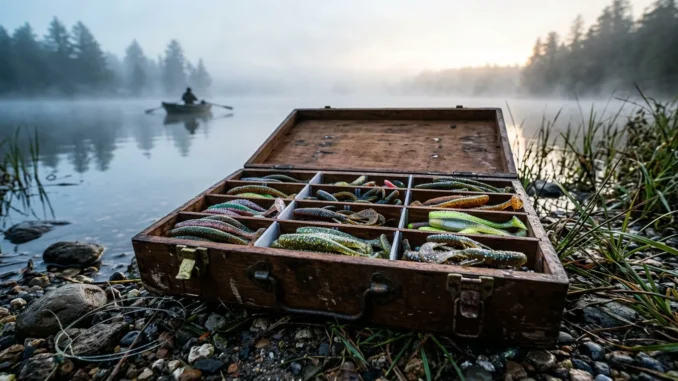
Soft Plastics for Beginners: Unlock Versatile, Effective Lure Fishing
Ever felt overwhelmed by the sheer number of fishing lures out there? Hard baits, spinnerbaits, spoons… it can feel like you need a degree in lure science just to pick one! But what if I told you there’s a secret weapon, incredibly simple yet devastatingly effective, that every beginner angler should master? I’m talking about soft plastics. For over two decades on the water, from urban ponds to vast reservoirs, I’ve seen these flexible, realistic lures consistently outperform many others, especially for folks just starting their fishing journey. They’re affordable, versatile, and can mimic almost any natural forage, making them a game-changer for anyone looking to boost their catch rate without breaking the bank or getting tangled in complex setups.
If you’re an apartment dweller or an office worker looking to unwind outdoors, soft plastics are your ticket to stress-free, successful fishing. They don’t require fancy retrieves or specialized gear. With just a few basic shapes and rigging methods, you can target a wide variety of fish species, from aggressive largemouth bass to elusive trout and even saltwater favorites. This guide will cut through the noise, giving you the no-nonsense rundown on how to choose, rig, and fish soft plastics like a seasoned pro, right from your very first cast.
What Are Soft Plastics and Why Are They So Awesome?
At their core, soft plastics are fishing lures made from flexible, rubber-like materials, designed to imitate natural prey such as worms, baitfish, crawfish, and insects. Unlike rigid hard baits, their pliability allows them to move and undulate in the water with an incredibly lifelike action, often triggering strikes when other lures fail. This realism is a huge advantage, as fish are naturally drawn to anything that looks like an easy meal.
For beginners, soft plastics are a dream come true for several reasons. First, their versatility is unmatched. You can rig them in countless ways to suit different depths, conditions, and fish species. Second, they are surprisingly cost-effective. A pack of soft plastic worms or grubs typically costs far less than a single hard bait, meaning you can experiment with various shapes and colors without emptying your wallet. And honestly, losing a $5 soft plastic to a snag stings a lot less than waving goodbye to a $20 crankbait!
Finally, they are incredibly approachable. You don’t need to master complex retrieves right away. A simple drag-and-pause, or even just letting them sink naturally, can be all it takes to entice a bite. This low barrier to entry makes them perfect for anyone new to lure fishing, allowing you to build confidence and enjoy the process without frustration.
Essential Soft Plastic Shapes for Your Tackle Box
While there’s an endless array of soft plastic designs, a few core shapes will cover 90% of your needs as a beginner. Start with these, and you’ll be well on your way to consistent catches.
Worms (e.g., Senkos, Trick Worms)
Soft plastic worms are arguably the most iconic and effective soft plastics, especially for bass. Brands like Gary Yamamoto’s Senko have achieved legendary status for their simple design and irresistible action. These worms typically range from 4 to 7 inches and come in various thicknesses. Their magic lies in their natural fall – often wiggling enticingly even without any angler input.
They excel when fish are finicky or when you’re fishing around cover like submerged grass, docks, or fallen trees. The subtle, lifelike movement of a soft plastic worm is often what seals the deal when bass are hesitant to chase faster-moving lures. They are a staple in almost every angler’s tackle box, and for good reason.
Grubs (Curly-tail)
Curly-tail grubs are a fantastic all-around option. They usually feature a compact body with a thin, sickle-shaped tail that wiggles and vibrates vigorously with even the slowest retrieve. They’re incredibly versatile, catching everything from panfish (like bluegill and crappie) and trout to bass and even many saltwater species.
Typically rigged on a simple jig head (a weighted hook, which we’ll explain shortly), grubs are easy to cast and retrieve. They’re excellent for searching new waters or when you’re unsure what fish are biting. Plus, their smaller profile means you can often catch smaller fish, which is great for building confidence!
Swimbaits (Paddle-tail)
Soft plastic swimbaits are designed to imitate small baitfish, like shad or minnows. They have a realistic fish-like body with a paddle-shaped tail that kicks and thumps as you retrieve it, creating vibrations that predatory fish can feel and home in on. These are fantastic when fish are actively feeding on schools of baitfish.
They come in various sizes and are often rigged on a jig head or a specialized swimbait hook (a weighted, wide-gap hook). Swimbaits are particularly effective for targeting larger fish like bass, pike, walleye, and even saltwater snapper or redfish. Their lifelike profile and enticing tail action make them irresistible to hungry predators.
Creatures/Craws
These lures mimic crawfish, salamanders, or other bottom-dwelling critters. They feature various appendages like claws, legs, and tentacles that move independently, creating a lot of subtle action and disturbance in the water. Bass, in particular, absolutely devour crawfish, especially in rocky or woody environments.
For example, imagine this situation: You’re fishing a rocky bank on a sunny afternoon. The bass are likely hiding among the rocks, waiting to ambush any unsuspecting prey. A creature bait, slowly dragged and hopped along the bottom, perfectly imitates a crawfish scurrying for cover. That’s often all it takes to trigger a strike from a big bass that wouldn’t touch a faster-moving lure.
Rigging Your Soft Plastics: Simple & Effective Setups
Knowing which soft plastic to use is one thing; knowing how to put it on your hook is another! These beginner-friendly rigging methods will cover most situations you’ll encounter.
The Texas Rig
The Texas Rig is an absolute must-know for bass anglers, especially when fishing around weeds, brush, or rocks. It makes your lure virtually weedless, meaning it glides through cover without snagging. Here’s how you do it:
- Slide a bullet-shaped fishing weight onto your main line (usually monofilament line or braided line, which we’ll discuss in a moment).
- Tie on an EWG (Extra Wide Gap) hook or a straight shank worm hook using an Improved Clinch Knot or a Palomar Knot (both excellent, reliable knots that every beginner should learn).
- Insert the hook point into the head of your soft plastic worm or creature bait about a quarter-inch, then push it through and out the bottom.
- Slide the soft plastic up the hook shank until the eye of the hook is buried in the lure’s head.
- Rotate the hook 180 degrees, lay the soft plastic straight, and measure where the hook point would naturally emerge.
- Lightly push the hook point into the body of the soft plastic, just enough to hide it without piercing through the other side. This is what makes it weedless!
A 6-10 lb monofilament line is a great starting point, but if you’re battling thicker cover, a 10-15 lb braided line with a 10 lb fluorocarbon leader can give you more strength and sensitivity.
The Wacky Rig
The Wacky Rig is incredibly simple and incredibly effective, especially for soft plastic stick worms like Senkos. It gives the lure a mesmerizing, natural shimmy as it falls through the water column.
- Take your soft plastic worm.
- Hook it directly through the middle, perpendicular to its body, using a small, light hook (often called a “Wacky Worm hook” or O-ring hook).
- (Optional but recommended) For added durability and to prevent the worm from tearing, slide a small rubber O-ring onto the middle of the worm first, then hook through the O-ring.
This rig is usually fished weightless or with a very light nail weight inserted into one end of the worm. It’s perfect for open water, around boat docks, or when fish are suspended and need a slow, subtle presentation. You’ll often feel the bite as the lure is slowly sinking.
Jig Head Rig
The jig head is arguably the most straightforward way to rig a soft plastic, especially for grubs and swimbaits. A jig head is simply a hook with a weighted, often round or bullet-shaped, head molded onto it.
- Choose a jig head appropriate for the size of your soft plastic and the depth you want to fish (lighter for shallow water, heavier for deeper water or strong currents).
- Insert the hook point into the center of the soft plastic’s head.
- Thread the soft plastic onto the hook shank, ensuring it lies straight and flat against the jig head, with the hook point exposed.
This setup is perfect for active retrieves, bouncing along the bottom, or swimming through the middle of the water column. It’s incredibly versatile and a staple for catching almost anything that swims.
Fishing with Soft Plastics: Techniques and Tips for Success
Now that your soft plastic is rigged, how do you make it dance? The beauty of soft plastics is their forgiveness, but a little technique goes a long way. The key is to impart action, mimicking a struggling or fleeing baitfish or a foraging critter.
For Texas Rigs and creature baits, focus on a drag-and-hop retrieve. Cast near cover, let it sink to the bottom, then slowly drag your rod tip a foot or two, pause, and let the lure settle. Then gently hop your rod tip, lifting the lure off the bottom before letting it fall again. Most bites happen on the fall or during the pause, so pay close attention! For Wacky Rigs, simply cast and let it sink on a slack line, watching your line for any twitch or movement as it falls. A slow, steady retrieve with occasional twitches works wonders for grubs and swimbaits on a jig head.
Color selection is important, but don’t overthink it as a beginner. Start with natural colors like green pumpkin, watermelon, or black and blue for clear water, and brighter colors like chartreuse or white for stained or murky water. As for when and where, soft plastics shine around any kind of structure or cover: docks, fallen trees, rock piles, weed lines, or even just open water when fish are suspended. They are particularly effective during warmer months when fish are active and feeding.
Common Mistakes to Avoid
- Using too heavy a weight: This makes your lure fall unnaturally fast and reduces its lifelike action. Start light and only go heavier if current or depth demands it.
- Not imparting enough action: Soft plastics need you to bring them to life. Don’t just reel them straight in like a crankbait. Experiment with pauses, twitches, and hops.
- Ignoring your line: Many bites on soft plastics are subtle. Watch your line for any twitch, jump, or unnatural movement – that’s often a fish picking up your lure before you feel the tap.
- Not checking your presentation: Before casting, drop your rigged soft plastic near your boat or the bank to see how it looks and moves in the water. Does it look natural?
Honestly, the biggest mistake is not trying them! What would you do in this situation if you only had one type of lure? I believe soft plastics would be the most versatile choice.
Gear Up for Soft Plastic Success (Budget-Friendly)
You don’t need an expensive setup to start catching fish on soft plastics. A simple, versatile combo is perfect.
- Rod & Reel Combo: A 6 to 7-foot medium power spinning rod paired with a 2500 or 3000 size spinning reel is the perfect all-around choice. This setup is light enough for finesse presentations but has enough backbone to handle a good-sized fish. Brands like Ugly Stik or Penn Battle offer excellent budget-friendly options.
- Fishing Line: For beginners, 6-10 lb monofilament line is forgiving, easy to tie knots with, and offers good casting distance. If you want more sensitivity and strength, consider 10-15 lb braided line with a 6-10 lb fluorocarbon leader. The leader is crucial because fluorocarbon is virtually invisible underwater, giving you a stealthy presentation.
- Basic Tackle: You’ll need a selection of EWG hooks (sizes 2/0 to 4/0), straight shank hooks (size 1 to 2/0), and various jig heads (1/8 oz to 1/2 oz). Don’t forget bullet weights (1/8 oz to 1/2 oz) and maybe some O-rings for wacky rigging.
In my opinion, investing in a good selection of soft plastic colors and shapes before buying a ton of expensive hard baits is a smart move for any beginner. Remember, sustainable fishing practices are important for our waterways. Practice catch and release, especially for larger breeding fish, and consider using barbless hooks (or crimp down your barbs) to make unhooking easier on the fish.
Ready to Cast?
Soft plastics are more than just another lure; they’re a cornerstone of modern fishing, offering incredible realism, versatility, and effectiveness. They’re forgiving for beginners and deadly in the hands of experienced anglers. By understanding a few key shapes, mastering basic rigging techniques like the Texas Rig and Wacky Rig, and practicing simple retrieves, you’ll unlock a whole new world of fishing success.
So, what to do this weekend? Head to your local tackle shop, grab a few packs of soft plastic worms, grubs, and creature baits in natural colors, pick up some EWG hooks and bullet weights, and head to your nearest pond, lake, or river. Tie on a Texas Rig, cast it near some submerged structure, and slowly work it back to you. You might just feel that exhilarating “thump” that hooks you on fishing for life. Happy hunting, Fish Hunter!
Sıkça Sorulan Sorular
What are soft plastics in fishing?
Soft plastics are fishing lures made from flexible, rubber-like materials, designed to imitate natural prey such as worms, baitfish, crawfish, and insects. They are incredibly lifelike and can move and undulate in the water, often triggering strikes when other lures fail. This realism is a huge advantage, as fish are naturally drawn to anything that looks like an easy meal.
Why are soft plastics effective for beginners?
Soft plastics are effective for beginners because they are versatile, cost-effective, and approachable. They can be rigged in countless ways to suit different depths, conditions, and fish species, and are surprisingly affordable. Additionally, they don't require complex retrieves, making them perfect for anyone new to lure fishing.
What are the essential soft plastic shapes for a beginner's tackle box?
The essential soft plastic shapes for a beginner's tackle box include worms, such as Senkos and Trick Worms, and curly-tail grubs. These shapes will cover 90% of your needs as a beginner and can be used to target a wide variety of fish species, from bass to trout and saltwater favorites.
How do soft plastic worms work?
Soft plastic worms work by imitating the natural movement of a worm in the water. They typically range from 4 to 7 inches and come in various thicknesses, and their subtle, lifelike movement is often what seals the deal when bass are hesitant to chase faster-moving lures. They excel when fish are finicky or when you're fishing around cover like submerged grass, docks, or fallen trees.
What is the advantage of using soft plastics over hard baits?
The advantage of using soft plastics over hard baits is that they are more lifelike and can mimic the natural movement of prey in the water. They are also more cost-effective, as a pack of soft plastic worms or grubs typically costs far less than a single hard bait. This makes them perfect for beginners who want to experiment with different shapes and colors without emptying their wallet.
Leave a Reply