
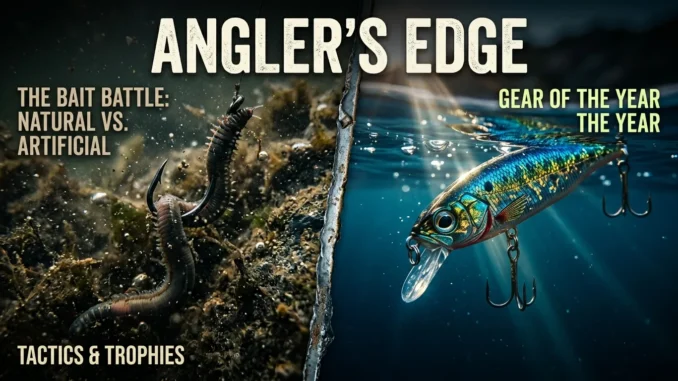
Introduction to live bait and Artificial Lures
Fishing is an art that requires patience, skill, and the right tools. Two of the most crucial elements in Fishing are live bait and artificial lures. But what would you do in this situation: you’re at the lake, rod in hand, and you’re not sure whether to use live bait or an artificial lure? Honestly, it’s a dilemma many anglers face, especially Beginners. Let me add something here: understanding when to use live bait and when to use artificial lures can make all the difference between a successful Fishing trip and a disappointing one.
Based on my experience, live bait is often the go-to choice for many anglers, especially when targeting specific species like Largemouth Bass or Trout. However, artificial lures have their own advantages and can be just as effective, if not more so, in certain situations. For example, imagine this situation: you’re fishing in a clear lake on a sunny day, and you want to catch a Bass that’s lurking in the depths. In this case, a crankbait or a soft plastic lure might be a better choice than live bait.
Understanding Live Bait
Live bait is, well, alive. It’s a living creature that you use to entice fish to bite. Common types of live bait include worms, minnows, and crickets. Live bait is often preferred because it’s natural and can be very effective in certain situations. However, it can also be messy and requires proper handling and storage. To be fair, live bait can be a bit more expensive than artificial lures, especially if you’re buying it from a tackle shop.
So, when should you use live bait? Honestly, it’s best to use live bait when you’re targeting species that are known to be attracted to natural prey, such as Panfish or Catfish. Live bait is also a good choice when you’re fishing in murky or dirty water, as the scent and movement of the bait can help attract fish.
Introduction to Artificial Lures
Artificial lures, on the other hand, are man-made devices designed to mimic the appearance and movement of live bait. They come in a wide range of shapes, sizes, and colors, and can be made from various materials, including plastic, metal, and wood. Artificial lures are often preferred because they’re convenient, easy to use, and can be reused multiple times.
But what makes artificial lures so effective? In my opinion, it’s the fact that they can be designed to mimic the exact appearance and movement of live bait, making them almost indistinguishable from the real thing. For example, a topwater lure can be designed to mimic the movement of a frog or a mouse, making it perfect for targeting species like Bass or Pike.
Choosing the Right Artificial Lure
So, how do you choose the right artificial lure for your fishing trip? Honestly, it depends on the species you’re targeting, the water conditions, and the time of day. For example, if you’re targeting Trout in a clear stream, you might want to use a dry fly or a spinner. On the other hand, if you’re targeting Bass in a murky lake, you might want to use a crankbait or a soft plastic lure.
Here are some tips for choosing the right artificial lure:
- Consider the species you’re targeting and the type of bait they’re attracted to.
- Think about the water conditions and the time of day.
- Choose a lure that mimics the appearance and movement of live bait.
- Experiment with different lures and techniques to find what works best for you.
Common Mistakes to Avoid
When it comes to using live bait and artificial lures, there are some common mistakes to avoid. Honestly, one of the biggest mistakes is using the wrong type of bait or lure for the species you’re targeting. For example, using live bait to target Bass in a clear lake might not be the most effective approach, especially if the fish are wary of live bait.
Another common mistake is not paying attention to the presentation of the bait or lure. For example, if you’re using a topwater lure, you want to make sure you’re retrieving it at the right speed and depth to mimic the movement of a frog or a mouse.
Tips for Presenting Live Bait and Artificial Lures
So, how do you present live bait and artificial lures effectively? In my opinion, it’s all about paying attention to the details. For example, if you’re using live bait, you want to make sure you’re hooking it correctly and presenting it in a natural way. If you’re using an artificial lure, you want to make sure you’re retrieving it at the right speed and depth to mimic the movement of live bait.
Here are some tips for presenting live bait and artificial lures:
- Pay attention to the hooking and presentation of live bait.
- Retrieve artificial lures at the right speed and depth.
- Experiment with different presentations and techniques to find what works best for you.
- Pay attention to the water conditions and the behavior of the fish.
Conclusion
In conclusion, choosing between live bait and artificial lures is a crucial decision that can make all the difference between a successful fishing trip and a disappointing one. Honestly, it’s all about understanding the species you’re targeting, the water conditions, and the type of bait or lure you’re using. By following the tips and techniques outlined in this article, you can increase your chances of success and make your fishing trip more enjoyable.
So, what to do this weekend? Why not try experimenting with different live baits and artificial lures to see what works best for you? Remember to pay attention to the details, and don’t be afraid to try new things. Happy fishing!
Leave a Reply