
From Beginner Bliss to Bigger Bites: Why Upgrade Your Setup?
You’ve done it! You picked up your first rod, learned the basics on Fish Hunter, and enjoyed the pure relaxation of catching panfish, small bass, or local perch. Maybe you even landed a decent keeper. That feeling of the line going tight? There’s nothing quite like it. But now, you’re probably looking at those bigger fish stories, seeing seasoned anglers pull in monsters, and thinking, “Could I do that?” The answer is a resounding YES! It’s time to move beyond your trusty beginner combo and start thinking about gear that can handle more power, more fight, and bigger challenges.
Upgrading your fishing setup isn’t about spending a fortune; it’s about making smart, targeted choices that empower you to tackle species like hefty largemouth bass, hard-fighting pike, channel catfish, or even explore light saltwater action for snapper or redfish. Your initial 6-foot medium-light spinning rod and 2500 reel combo was perfect for learning, but it might struggle with a 10-pound catfish or a northern pike determined to break your line. This guide will walk you through the practical steps to level up your gear, explaining everything you need to know to make your next big catch a reality.
The Heart of the System: Upgrading Rods & Reels for Power
Rods: Action, Power, and Length for the Win
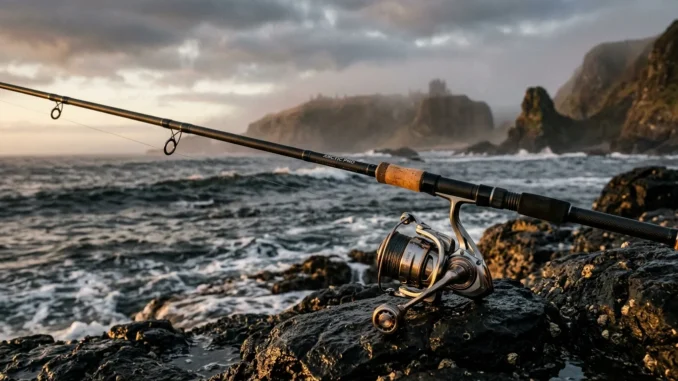
When you’re ready to target bigger fish, your rod choice becomes critical. Your beginner rod likely had a “medium” or “medium-light” power and a “moderate” or “fast” action. Let’s break those down. Rod Power refers to the rod’s lifting strength – how much force it takes to bend the rod. For bigger fish, you’ll want to move up to a medium-heavy or even heavy power rod. This gives you the backbone to turn a fish away from cover and exert more control during a fight.
Rod Action, on the other hand, describes where the rod bends. A fast action rod bends mostly in the tip, offering sensitivity and quick hook sets, great for single-hook lures. A moderate action rod bends more towards the middle, providing more give and cushioning, which is ideal for treble hook baits where you don’t want to rip the hooks out. For bigger fish, a fast or extra-fast action in a medium-heavy or heavy power rod is often preferred for strong hook sets and control. Longer rods (7-8 feet) can also offer better casting distance and leverage, especially from shore or a pier.
Reels: Spinning vs. Baitcasting & Size Matters
Your trusty spinning reel is fantastic, and you can certainly find larger, more robust spinning reels for bigger fish (e.g., 4000-5000 series). These offer more line capacity and drag power. However, for serious power and precision, especially with heavier lines and lures, many anglers graduate to a baitcasting reel. A baitcasting reel sits on top of the rod and spools line directly off the reel, offering incredible casting accuracy and control, especially for heavier lures or punching through dense cover. The learning curve is a bit steeper – mastering the thumb control to prevent dreaded “backlashes” (when the line tangles into a bird’s nest) takes practice – but the rewards are immense. For baitcasters, a 300-series or 400-series (low profile) is a common choice for bigger freshwater species, while conventional (round) baitcasters are often used for very large freshwater fish or heavy saltwater applications.
My personal take? Don’t rush into a baitcaster if you’re not comfortable. A quality 4000-series spinning reel paired with a 7-foot medium-heavy fast action spinning rod is an incredible upgrade that can handle a surprising amount of fish, from big bass to hefty catfish and even smaller coastal species. It’s often more budget-friendly than a high-end baitcasting setup too.
Your Unbreakable Connection: Advanced Lines and Knots
Line Logic: Beyond Monofilament
While monofilament line (your typical clear or colored nylon line) is great for its stretch and shock absorption, it has its limits. For bigger fish, you’ll want to explore two other powerful options: braided line and fluorocarbon line.
- Braided Line: This is my go-to for many situations. Braided line is made of multiple strands of synthetic fibers woven together, making it incredibly strong for its diameter (e.g., 20 lb braid is often thinner than 8 lb mono!). It has virtually no stretch, which means incredible sensitivity – you feel every little tap – and powerful hook sets. It’s also very abrasion-resistant. For chasing bigger fish, I’d recommend starting with 20-40 lb braided line. Because it’s visible underwater, you’ll often tie on a fluorocarbon leader.
- Fluorocarbon Line: This line is often used as a leader because it’s nearly invisible underwater (its refractive index is similar to water). It’s also more abrasion-resistant than mono and offers less stretch than mono, though more than braid. Many anglers use 10-20 lb fluorocarbon leaders, depending on the target species and water clarity. You can also spool your entire reel with fluorocarbon, but it’s typically more expensive and has more memory (coil) than braid.
Knots That Hold: Your Lifeline to the Lunker
With stronger lines and bigger fish, reliable knots are non-negotiable. You’ve likely mastered the Improved Clinch Knot for tying lures to mono. Now, it’s time to add a few more to your arsenal:
- Palomar Knot: This is a fantastic, incredibly strong knot for tying lures, hooks, or swivels directly to braided line, monofilament, or fluorocarbon. It’s relatively simple to tie and extremely reliable.
- Uni Knot (or Double Uni Knot for connecting lines): Versatile and strong, the Uni Knot works well for tying line to a reel spool, hooks to line, or even connecting two lines together (as a Double Uni) – useful for attaching a fluorocarbon leader to monofilament or lighter braid.
- FG Knot (for connecting braid to fluorocarbon leader): This knot might seem intimidating at first, but it’s arguably the strongest and most streamlined knot for connecting braided mainline to a fluorocarbon leader. It’s incredibly thin, allowing it to slide through rod guides smoothly, and retains almost 100% of your line strength. There are plenty of great video tutorials online; dedicate an evening to practicing it!
Honestly, the strength of your knot is only as good as your tying. Practice these knots at home until you can tie them quickly and confidently, even in low light or adverse conditions. A strong line is useless if your knot fails!
Beyond Basic Baits: Lures and Strategies for Trophy Fish
Catching bigger fish often means using bigger baits or lures. What might have attracted a 1-pound bass might not even get a glance from a 5-pounder. You need to “match the hatch” for larger prey or present something irresistible.
Lures That Call to the Big Ones
- Larger Soft Plastics: Think 7-10 inch worms, creature baits, or swimbaits rigged on heavier hooks (e.g., 4/0 to 6/0 EWG hooks) with heavier weights (e.g., 3/8 oz to 1 oz bullet weights) for a Texas or Carolina rig. These mimic bigger prey like crayfish or baitfish.
- Big Crankbaits & Jerkbaits: Deep-diving crankbaits or larger jerkbaits (5-7 inches) can be deadly for targeting bass, pike, or walleye holding in deeper water or ambushing baitfish.
- Heavy Jigs & Spoons: For species like pike, musky, or even big lake trout, large bucktail jigs (1/2 oz to 2 oz+) or heavy casting spoons are excellent choices.
- Topwater Lures: Bigger poppers, walk-the-dog baits, or frogs (for bass in heavy cover) can elicit explosive strikes from larger predatory fish.
Live Bait for Lunkers
For many trophy fish, especially catfish, pike, or larger saltwater species, live bait is king. Think bigger shiners, bluegill, or shad for freshwater predators, or hearty shrimp, cut mullet, or croaker for coastal fish. Make sure your hooks are appropriately sized and strong enough for the bait and the fish you’re targeting. A standard #4 hook won’t cut it for a 20 lb catfish; you’ll need something like a 3/0 to 8/0 circle hook.
For example, imagine this situation: you’ve been catching small bass on a tiny worm. You switch to a 6-inch swimbait on your new medium-heavy rod. Suddenly, instead of tiny taps, your rod gets absolutely hammered! That’s the difference. You’re now presenting a meal that makes a bigger fish think it’s worth the energy to strike.
Your Next Adventure: Matching Gear to New Challenges & Sustainable Practices
Putting It All Together: Gear for Specific Challenges
Now that you know the components, how do you combine them? Here are a few examples:
- Heavy Bass/Pike Setup: 7-foot medium-heavy fast action baitcasting rod, 300-series baitcasting reel, 30 lb braided mainline with a 15-20 lb fluorocarbon leader. Perfect for throwing larger jigs, crankbaits, or soft plastics.
- Catfish Rig: 7-8 foot heavy power moderate action spinning rod or conventional (round) baitcasting rod, 5000-series spinning reel or a robust round baitcaster, 40-50 lb braided line, 30-40 lb monofilament or fluorocarbon leader. Ideal for soaking large cut bait or live bait.
- Light Saltwater Pier/Shore Setup: 7-8 foot medium-heavy fast action spinning rod, 4000-5000 series saltwater-rated spinning reel, 20-30 lb braided mainline with a 20-30 lb fluorocarbon leader. Great for casting spoons, jigs, or bait rigs for snapper, redfish, or smaller sharks.
Common Mistakes to Avoid When Upgrading
- Going Too Heavy Too Fast: Don’t jump straight to the heaviest gear unless you’re truly targeting monster fish. A medium-heavy setup is a fantastic all-around upgrade for most larger freshwater species.
- Ignoring Balance: A heavy rod with a tiny reel, or vice-versa, will feel awkward and tiring. Try to balance the combo in your hand before buying.
- Neglecting Knots: As I said, a poor knot is the weakest link. Master your knots!
- Forgetting Leader Material: Braided line alone often spooks fish due to its visibility. Always use a fluorocarbon or monofilament leader.
- Not Practicing: Especially with a baitcaster, practice casting in the yard before hitting the water.
Sustainable Fishing: Our Responsibility
As you target bigger fish, remember your role as a steward of the waters. Practice catch and release, especially for large breeding-size fish. Consider using barbless hooks (you can crimp down the barb on most hooks with pliers) to minimize harm, and always respect local size and bag limits. A healthy fishery means more big fish for everyone!
What to Do This Weekend: Your Next Step
Your journey to bigger fish starts now! This weekend, take a few hours to research the specific larger fish species in your local lakes, rivers, or coastal areas. What kind of cover do they prefer? What do they eat? Then, visit your local tackle shop. Talk to the pros there about a 7-foot medium-heavy spinning combo (with a 4000-series reel) or a beginner baitcasting setup. Feel the rods, hold the reels. Pick up a spool of 30lb braided line and some 15lb fluorocarbon leader. Most importantly, practice tying the Palomar and FG knots until they’re second nature. The first time you feel the undeniable power of a truly big fish on your upgraded gear, you’ll know exactly what I mean. Happy hunting!
Leave a Reply