
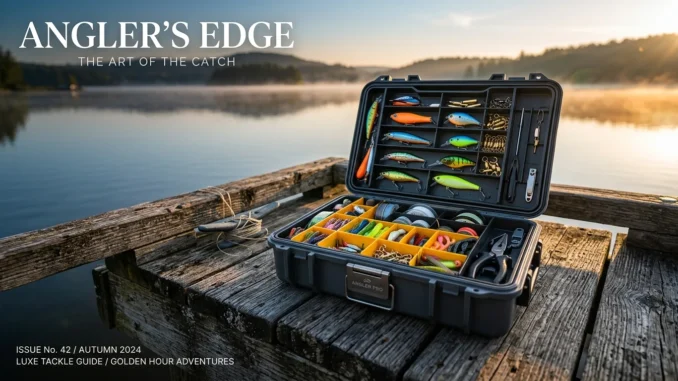
Your First Tackle Box: Why It’s Your Fishing Superpower
So, you’re ready to dip your toes (or your line!) into the wonderful world of fishing? Fantastic! You’ve likely thought about a rod and reel – those are definitely your main weapons. But here’s the secret: your rod and reel are just fancy sticks without the right ammunition. That “ammunition” lives in your tackle box. It’s the difference between a relaxing day by the water and a frustrating day staring at an empty hook.
As your trusted fishing buddy here at Fish Hunter, I’ve seen countless beginners get overwhelmed by the sheer volume of gear out there. Don’t sweat it! You absolutely do not need to mortgage your house to get started. My goal with this guide is to show you exactly how to equip your first tackle box with all the essentials you need to start catching fish, all for under a tidy $100 budget. We’ll assume you’re pairing this with a simple, affordable spinning rod and reel combo (like a 6-7 ft medium spinning rod with a 2500-3000 size reel spooled with 6-12 lb monofilament line, which usually runs another $50-70) – this guide is purely about what goes *inside* that magical box.
The Terminal Tackle Toolkit: What Connects You to the Fish
This is where the rubber meets the road, or rather, where your line meets the fish! Terminal tackle refers to all the bits and pieces you attach to the end of your fishing line. These are non-negotiable for any angler.
Hooks: The Point of Connection
You can’t catch a fish without a hook, right? For beginners, keep it simple. You’ll want a variety of sizes to match different baits and target species. I recommend starting with a mix of J-hooks (classic, versatile) and perhaps a few circle hooks (great for catch and release as they often hook in the fish’s lip).
- Sizes #6 to #1/0: This range covers most common freshwater species like Largemouth Bass, Trout, Catfish, and Perch. A #6 is small for panfish, while a #1/0 is better for larger bass or catfish.
- Budget Buy: Look for multi-packs of assorted hooks from brands like Eagle Claw or Gamakatsu. You can often get a few dozen for under $10.
Sinkers: Getting Your Bait Down
Sometimes you need your bait to sink, either to get it to deeper water or to hold it steady in current. Sinkers add weight to your line.
- Split-Shot Sinkers: These are tiny, easy-to-attach weights that you pinch onto your line. Perfect for fine-tuning your bait’s depth or adding a little extra casting distance. Get an assorted pack.
- Egg Sinkers or Worm Weights: These slide freely on your line above your hook, which can be great for wary fish that might feel resistance from a fixed weight. Good for fishing with worms or soft plastics.
- Budget Buy: A small assortment of split-shot and a few different sizes of egg sinkers (1/4 oz to 1/2 oz) will cost you another $5-8.
Floats (Bobbers): Your Visual Bite Indicator
Ah, the bobber! This is often how many of us got our start in fishing. A bobber keeps your bait suspended at a set depth and, crucially, dips or moves when a fish bites. It’s like a little alarm bell!
- Clip-On Round Bobbers: Simple, cheap, and effective for still water.
- Slip Bobbers: A bit more advanced but allow you to fish deeper without a really long leader. You slide your line through them and use a bobber stop to set the depth.
- Budget Buy: A pack of half a dozen clip-on bobbers will set you back just a few dollars. Maybe one or two slip bobbers if you’re feeling adventurous. Plan for $3-7.
Swivels & Snaps: The Little Connectors
These small but mighty connectors prevent line twist and make changing lures or leaders much easier. Line twist is a real pain and can weaken your line, so don’t skip these!
- Barrel Swivels: Essential for preventing line twist, especially when using spinning lures or live bait that might twist the line.
- Snap Swivels: Combine a swivel with a snap clip, making it super quick to change lures without re-tying your knot every time.
- Budget Buy: A small pack of assorted barrel and snap swivels (size 7-10) will be around $5-10.
Baits & Lures: Your Secret Weapon for Attracting the Bite
Now that you know how to rig your line, what are you going to put on the hook? This is where the fun begins, and honestly, you don’t need a massive collection to start catching fish.
Natural Baits: The Tried and True
Nature provides some of the best baits, and they’re often the most affordable and effective for beginners.
- Live Worms (Nightcrawlers): Universally loved by almost every freshwater fish – Bass, Trout, Perch, Catfish, Panfish. You can buy them at bait shops or even dig them up in your backyard!
- Corn or Hot Dogs: Don’t knock it ’til you try it! These are fantastic for Catfish and even some Carp, and you likely already have them in your fridge.
- Shrimp: If you’re heading to saltwater (piers, jetties), fresh or frozen shrimp is a killer bait for species like Snapper, Whiting, and many others.
- Budget Buy: A container of nightcrawlers is typically $3-5. The rest can come from your kitchen!
Artificial Lures: Simple & Effective Choices
While live bait is fantastic, artificial lures offer the convenience of being ready to go anytime. For beginners on a budget, focus on versatile, easy-to-use options.
- Soft Plastic Worms/Grubs: These are incredibly versatile. You can rig them in many ways (Texas Rig, Carolina Rig, or simply on a jig head) and target Bass, Perch, or even Trout. Get a pack of natural colors (green pumpkin, black, white).
- Small Spinners (Mepps, Rooster Tail): These are “cast and retrieve” lures that mimic small baitfish. They’re fantastic for Trout, Perch, and even smaller Bass. Their rotating blade creates flash and vibration that fish can’t resist.
- Budget Buy: A pack of soft plastic worms (e.g., 5-inch Senko-style worms) is about $5-8. One or two small spinners can be found for $4-7 each. Prioritize a couple of colors or sizes for versatility.
For example, imagine this situation: You’re at a local pond, and fish are actively feeding near the surface. You could rig a worm under a bobber and catch panfish all day. But what if the fish are deeper and ignoring your bobber? A small spinner cast out and slowly reeled in might entice a curious bass or perch hiding in the weeds. Having both options greatly increases your chances!
Essential Tools & The Tackle Box Itself
Beyond what goes on your line, a few simple tools will make your fishing experience much smoother and safer.
Pliers or Forceps: The Indispensable Handyman
These are non-negotiable! They’re used for removing hooks safely from fish, cutting line, and bending wires. Trust me, trying to get a hook out of a fish’s mouth with your bare fingers is a recipe for a poked finger and a stressed fish.
- Budget Buy: A small pair of needle-nose pliers or multi-purpose fishing pliers will cost around $10-15. Look for stainless steel to resist rust.
Line Clippers or Small Scissors: For Clean Cuts
Tying knots requires clean cuts. Dental floss scissors or dedicated line clippers are much better than trying to bite through your line (please don’t do that!).
- Budget Buy: A small, sharp pair of fishing clippers or even nail clippers dedicated to fishing will do the trick for $3-8.
Measuring Tape or Small Scale: Respecting Limits & Bragging Rights
Sustainable fishing practices are crucial. A measuring tape helps you ensure your catch is within legal size limits before you decide to keep it. A small scale is just for fun, to weigh your catches (and maybe send a photo to your buddies!).
- Budget Buy: A retractable tape measure is cheap ($2-5). A basic digital fishing scale might push your budget but can be found for $15-20.
Small First-Aid Kit: Safety First
Hooks are sharp, and accidents happen. A small kit with band-aids, antiseptic wipes, and perhaps some pain relievers is always a smart addition.
- Budget Buy: You can assemble a very basic kit for under $5-10.
The Tackle Box Itself: Your Mobile Command Center
Finally, you need a box to put all this goodness in! For a beginner, a small to medium-sized plastic tackle box with adjustable compartments is perfect. It helps keep things organized and prevents hooks from tangling.
- Budget Buy: A good starter tackle box can be found for $15-25. Look for one that’s reasonably durable and has enough space without being too bulky.
Smart Shopping, Common Mistakes & What to Do This Weekend
Sticking to that $100 budget for your tackle box and its contents requires a little strategy. Look for value packs, visit local discount stores or sporting goods chains, and don’t be afraid to ask for advice from staff. Remember, you don’t need *everything* right away, just the essentials.
Common Mistakes to Avoid
- Overbuying: It’s easy to get caught up in the shiny lure aisle. Resist! Start simple, learn what works in your local waters, then expand.
- Ignoring Local Regulations: Always check your local fishing regulations (licenses, size limits, catch limits) before you go. This is crucial for sustainable fishing and avoiding fines.
- Forgetting Basic Tools: You wouldn’t believe how many times I’ve seen anglers struggle because they forgot pliers or clippers.
- Using the Wrong Line: Make sure your line strength matches your target fish and rod/reel combo. For instance, 6-12 lb monofilament is a great all-around choice for many freshwater scenarios.
Quick “What to Do This Weekend” Takeaway
Head to your local sporting goods store or even a big box store with a fishing section. Pick up a small tackle box, a few packs of hooks (size 6 to 1/0), an assorted pack of split-shot sinkers, a few clip-on bobbers, some barrel swivels, a pair of pliers, and a pack of soft plastic worms. Grab some live worms or hot dogs on your way to a local pond or pier. Tie on an Improved Clinch Knot (it’s easy to learn on YouTube!) and get that line in the water! Don’t forget your fishing license!
Ready to Cast Your Line?
Building your first tackle box doesn’t have to be a complicated or expensive endeavor. With this practical guide from Fish Hunter, you’ve got a clear roadmap to getting the essential gear you need to start catching fish and enjoying the peace and excitement that fishing brings. Remember, the best tackle box is the one that gets you out on the water, fishing confidently and sustainably. Now get out there, wet a line, and make some memories!
Leave a Reply