
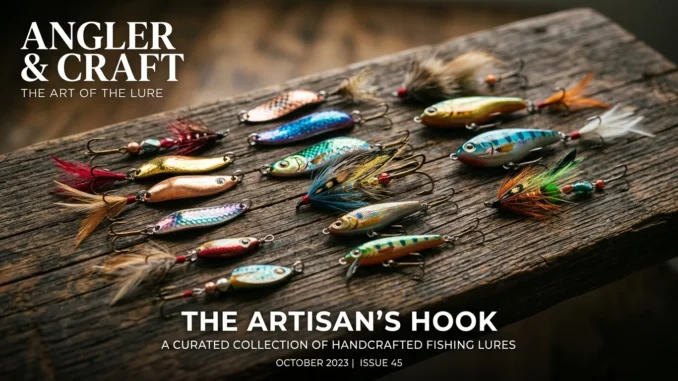
Your First Step to Catching More Fish: The Essential Lure Guide
Ever walked into a tackle shop and felt completely overwhelmed by the dizzying array of fishing lures? Rows upon rows of shiny, colorful, strangely shaped objects, each promising to be the next big thing. For new anglers, or even those looking to step up their game from live bait, it can feel like trying to decipher a secret code. But what if I told you that you don’t need dozens of fancy lures to start catching fish consistently?
As a seasoned angler who’s spent countless hours chasing fish on lakes, rivers, and coastal piers, I’ve learned that success often comes down to mastering a few versatile, proven options. This guide isn’t about emptying your wallet; it’s about equipping you with a core arsenal of 10 essential fishing lures that are easy to use, incredibly effective, and perfect for building your confidence. We’ll break down what each lure does, how to fish it, and what fish love to bite it, turning that tackle shop confusion into confident catches.
Why Lures? Stepping Up Your Game from Live Bait
Many beginners start with live bait – worms, minnows, shrimp. And for good reason! Live bait is undeniably effective. But lures offer a different kind of thrill and a distinct set of advantages. A fishing lure is an artificial bait designed to attract fish through its shape, color, and movement, mimicking natural prey.
Unlike live bait, lures are durable and reusable, meaning you won’t need to constantly re-bait your hook. They allow you to cover more water efficiently, actively searching for fish rather than waiting for them to come to you. Plus, there’s a unique satisfaction that comes from tricking a fish into biting something you’ve skillfully presented. While live bait has its place, learning to effectively use lures will open up a whole new world of fishing possibilities and significantly improve your catch rate.
Your First Lure Tackle Box: The Top 10 Essentials
Alright, let’s get down to brass tacks. These are the lures I’d hand to any beginner angler, confident they’d be catching fish by the end of the day. Remember, you don’t need every color or size right away; start with a few key options and expand as you gain experience.
1. Spinnerbaits: The Vibration King
A spinnerbait is a fantastic all-around lure, especially for bass. It features a wire frame with one or more spinning blades (like a propeller) on one arm and a weighted “head” with a skirted hook on the other. The blades create flash and vibration, mimicking a fleeing baitfish.
- Why it’s great for beginners: It’s nearly weedless, making it easy to cast into cover without getting snagged. Just cast it out and reel it back steadily (a “straight retrieve”).
- Target species: Largemouth Bass, Smallmouth Bass, Pike, Pickerel.
- How to fish it: Cast near submerged logs, weeds, or docks. A slow, steady retrieve is often all you need. Vary your speed until you find what the fish like.
- Recommendations: 3/8 to 1/2 oz size, white/chartreuse for murky water, silver/shad patterns for clear water.
2. Inline Spinners: The Classic Catcher
Think Mepps or Rooster Tail – these are arguably the simplest and most effective lures ever invented for a wide variety of species. An inline spinner consists of a weighted body, a spinning blade, and a treble hook often dressed with a feather or bucktail.
- Why it’s great for beginners: Cast and retrieve. The blade spins as soon as you start reeling, sending out irresistible flash and vibration.
- Target species: Trout, Perch, Panfish, Bass, Pike, Salmon.
- How to fish it: Cast upstream or across current in rivers for trout, or fan-cast in lakes. A medium-slow retrieve is usually best.
- Recommendations: Sizes #0-#2 for panfish/trout, #3-#5 for bass/pike. Silver or gold blades are always a good bet.
3. Soft Plastic Worms (Texas Rigged): Versatility Defined
Soft plastic worms are incredibly versatile and mimic a natural worm or creature. When rigged “Texas style” (hook point embedded in the plastic), they become weedless and irresistible. This is where a slightly heavier line like 10-12 lb monofilament or 15-20 lb braided line on your spinning reel comes in handy for flipping into cover.
- Why it’s great for beginners: It’s slow, subtle, and incredibly effective for wary fish. The weedless rigging prevents snags, which can be a common beginner frustration.
- Target species: Largemouth Bass, Smallmouth Bass, Catfish.
- How to fish it: Cast, let it sink to the bottom, then slowly drag or hop it along, pausing frequently. Most bites happen on the pause.
- Recommendations: 6-8 inch worms in green pumpkin, black, or Junebug colors. Pair with a 3/0 or 4/0 EWG hook and a 1/8 to 1/4 oz bullet weight.
4. Jigs (Football or Skirted): The Bottom Bouncer
A jig is simply a weighted head with a hook, often adorned with a skirt of silicone, hair, or feathers. They are designed to be fished near the bottom, mimicking crayfish or baitfish.
- Why it’s great for beginners: Simple to fish, excellent for structure. The feel of a fish picking up a jig is unmistakable.
- Target species: Bass, Walleye, Crappie, Perch, Catfish.
- How to fish it: Cast, let it sink, then lift your rod tip a foot or two and let it fall back on a semi-slack line. Think of it as hopping or dragging along the bottom.
- Recommendations: 1/4 to 1/2 oz skirted jigs in black/blue, green pumpkin. For panfish, small 1/16 oz tube jigs or hair jigs are fantastic.
5. Crankbaits (Shallow Diver): The Searcher
A crankbait is a hard-bodied lure with a lip (or bill) that causes it to dive when retrieved. Shallow divers are great because they don’t require complex retrieve patterns and are less likely to get snagged in deeper water.
- Why it’s great for beginners: Covers a lot of water quickly, making it excellent for finding active fish. Just cast and reel!
- Target species: Bass, Pike, Walleye, Crappie.
- How to fish it: Cast parallel to shorelines, docks, or weed edges. A steady retrieve is usually all it takes. Experiment with pauses or sudden jerks to trigger strikes.
- Recommendations: Look for models that dive 3-6 feet. Shad, perch, or crawfish patterns are universal.
6. Topwater Poppers/Walkers: Explosive Action!
Few things are as exciting as a fish exploding on a topwater lure! These lures float and are designed to be worked on the surface, mimicking struggling baitfish, frogs, or insects.
- Why it’s great for beginners: The visual strike is exhilarating and addictive. You don’t have to worry about depth, just what’s happening on top.
- Target species: Bass, Pike, Panfish (smaller sizes).
- How to fish it: For poppers, cast and twitch your rod tip to make it “pop” or “chug.” For walkers, a rhythmic twitch-twitch-pause will make it “walk the dog.”
- Recommendations: Poppers in 2-3 inch sizes (white, frog patterns). Best in calm conditions, especially early morning or late evening.
7. Spoons (Casting Spoons): The Flash & Flutter
A fishing spoon is simply a curved piece of metal that wobbles and flashes when retrieved, imitating a wounded baitfish. They are wonderfully simple and effective.
- Why it’s great for beginners: Easy to cast a long distance, simple retrieve, and great for covering open water.
- Target species: Pike, Bass, Trout, Salmon, Walleye, even saltwater species like Snapper.
- How to fish it: Cast out, let it sink to your desired depth, and reel steadily. You can also jig it vertically.
- Recommendations: 1/4 to 1 oz sizes. Silver, gold, or flashy red/white patterns are classics.
8. Soft Plastic Swimbaits: Realistic Motion
These are soft plastic lures molded to look like a small fish, often with a paddle tail that creates a natural swimming action. Often rigged on a jig head.
- Why it’s great for beginners: Extremely realistic profile and action with a simple retrieve.
- Target species: Bass, Pike, Walleye, Redfish, Snook.
- How to fish it: Rig on a suitable jig head (e.g., 1/8 to 1/4 oz) and retrieve steadily, varying speed. You can also let it sink and then lift/drop.
- Recommendations: 3-5 inch sizes in shad, perch, or bluegill patterns.
9. Curly Tail Grubs: Panfish Powerhouse
A small, soft plastic body with a distinct curly tail that wiggles frantically when retrieved. Usually fished on a small jig head.
- Why it’s great for beginners: Incredibly effective for smaller fish, simple to use, and very budget-friendly.
- Target species: Crappie, Perch, Bluegill, Trout, Smallmouth Bass.
- How to fish it: Pair with a 1/32 to 1/8 oz jig head. Cast and retrieve slowly and steadily, or bounce it along the bottom.
- Recommendations: 1-2 inch grubs in white, chartreuse, or black.
10. Lipless Crankbaits: The Rattle & Flash
Unlike traditional crankbaits, these don’t have an external lip. They’re usually flat-sided, heavy for their size, and contain internal rattles. They sink quickly and have a tight, vibrating action when retrieved.
- Why it’s great for beginners: Excellent for covering water quickly and generating reaction strikes. The rattle attracts fish from a distance.
- Target species: Bass, Pike, Walleye.
- How to fish it: Cast and retrieve at a medium-fast pace. You can also yo-yo it by letting it sink and then ripping it up with your rod.
- Recommendations: 1/4 to 3/4 oz sizes. Shad, crawfish, or chrome patterns.
Choosing the Right Lure: Beyond the Basics
So far we’ve covered the “what.” Now let’s get to the really critical point: the “when and where.” Knowing which lure to pick is often about reading the water and conditions. For example, imagine this situation: it’s a bright, sunny afternoon, and the fish seem to be hiding deep under docks. Would you throw a topwater lure? Probably not; a soft plastic worm or jig might be a better bet to get down to them.
Consider the water clarity (clear water often calls for more natural colors and subtle actions, while murky water benefits from brighter colors and more vibration), depth (shallow running lures for shallow water, heavier jigs/crankbaits for deeper), and time of day. Early mornings and evenings often mean fish are shallower and more active, making topwater or spinnerbaits excellent choices. Mid-day sun might push them deeper, requiring jigs or Texas-rigged worms.
Common Lure Mistakes & Quick Fixes
Even with the best lures, beginners can fall into a few traps. Don’t worry, I’ve made them all! Here are some common mistakes and how to fix them:
- Not changing lures often enough: If you’ve been casting the same lure for 20 minutes with no bites, change it up! Try a different color, size, or even a completely different lure type. Fish can be finicky.
- Fishing too fast or too slow: Most fish are opportunistic, but sometimes they want a slow, easy meal, and other times they react to a fleeing, fast-moving bait. Experiment with your retrieve speed. This is crucial.
- Not checking your line: Lures can twist your line, or the line can get abraded on rocks or fish teeth. Periodically check the first few feet of your line for nicks or twists. If you see any, snip them off and retie your knot (like the reliable Improved Clinch Knot).
- Lack of confidence: It’s easy to doubt a lure if you don’t catch anything on the first few casts. Stick with these 10 essentials, learn how to work them, and trust the process. Confidence comes with catches.
What to Do This Weekend: Your Lure Action Plan!
This weekend, grab a few of these essential lures – maybe a spinnerbait, a pack of soft plastic worms with some hooks and weights, and an inline spinner. Head to your local lake or pond. Start by trying the spinnerbait to cover water, then switch to the soft plastic worm to slowly pick apart any promising cover. If you have a river nearby, the inline spinner is your friend for trout and panfish. Don’t be afraid to experiment, observe, and most importantly, have fun! That’s what fishing is all about.
Start Luring Them In!
There you have it – a straightforward, no-nonsense guide to the 10 essential fishing lures for any beginner angler. You now have a solid foundation to build your tackle box and, more importantly, your fishing confidence. Forget the overwhelming choices; focus on mastering these versatile tools. With a little practice, these lures will help you discover the joy of consistent catches, turning those weekend escapes into truly memorable fishing adventures. Get out there, cast a line, and let those lures do their magic!
Leave a Reply