
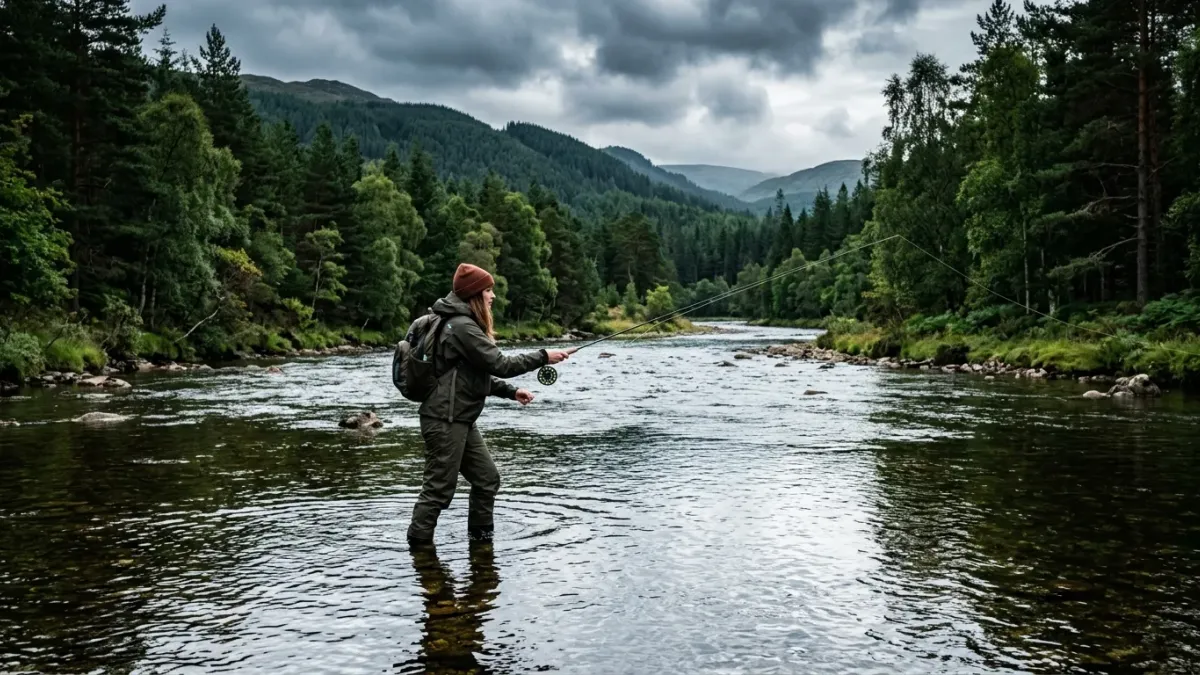
Ever gazed at a tranquil lake or a winding river and imagined the simple joy of casting a line? Freshwater fishing is one of the most accessible and rewarding outdoor hobbies you can pick up, offering a perfect escape from the daily grind for apartment dwellers and busy professionals alike. It’s not just about catching fish; it’s about connecting with nature, finding peace, and the quiet satisfaction of mastering a new skill. As someone who’s spent over two decades chasing everything from feisty bass to elusive trout in lakes, rivers, and ponds, I can tell you it doesn't have to be complicated or expensive to get started. You just need a little guidance, and that's exactly what I'm here to provide – your practical roadmap to becoming a confident freshwater angler.
Gearing Up for Your First Cast: Simple & Effective Setups
Forget the intimidating walls of gear at the tackle shop. For beginners, getting started with freshwater fishing is surprisingly simple and budget-friendly. The key is to choose versatile equipment that's easy to use and forgiving of common beginner mistakes. Think of it like learning to ride a bike – you start with something stable, not a high-performance racing machine.
The Beginner-Friendly Rod & Reel Combo
For your initial foray into freshwater fishing, a spinning rod and reel combo is your best friend. A spinning reel is the most common and easiest type of fishing reel to learn, featuring an open-faced spool that allows the line to uncoil freely during a cast, making it incredibly user-friendly. Paired with a spinning rod, it’s a setup that can handle a wide variety of fish in different environments.
- Rod Length & Action: I always recommend a 6 to 7-foot medium spinning rod. This length provides enough leverage for casting good distances without being unwieldy, and a "medium" action means the rod bends in the upper half of its length, offering a great balance between sensitivity for detecting bites and backbone for fighting fish. It's truly an all-purpose workhorse.
- Reel Size: Look for a reel in the 2500 to 3000 size range. This designation refers to the reel's capacity for line and its overall physical size. A 2500-3000 size reel is perfectly matched for a medium rod, balancing well in your hand and providing enough line capacity for most freshwater species you'll encounter, like bass, trout, and panfish.
You don’t need to break the bank. Excellent beginner combos are available from trusted brands like Shimano (Sienna/FX series), Penn (Pursuit IV/V series), and Ugly Stik (GX2 series) for under $100. These are durable, reliable, and will serve you well for years.
Choosing Your Fishing Line
The right fishing line is crucial for success. It’s your direct connection to the fish! There are a few main types, each with its own advantages:
- Monofilament (Mono): This is the classic beginner's choice. Monofilament line is a single strand of nylon, known for its stretch, abrasion resistance, and affordability. The stretch acts as a shock absorber, which can be forgiving when a fish strikes hard. For most freshwater beginners, I suggest 6 to 12 lb test monofilament. It’s strong enough for bass, trout, and panfish, and easy to handle.
- Braided Line (Braid): Made from multiple woven strands of synthetic fibers, braided line is incredibly strong for its diameter, has virtually no stretch, and offers excellent sensitivity. This means you can feel even the lightest bites. However, it can be a bit trickier to tie knots with and might require a fluorocarbon leader (a nearly invisible line tied to the end of your main line) in clear water. If you’re targeting bigger fish like pike or want more sensitivity for lure fishing, 10 to 20 lb test braided line is a great choice.
- Fluorocarbon: While not typically used as a main line for beginners due to its cost and stiffness, fluorocarbon line is fantastic for leaders. It's nearly invisible underwater, extremely abrasion resistant, and sinks, which can be an advantage when fishing with certain lures or baits.
Essential Terminal Tackle: The Small Stuff That Makes a Big Difference
Once you have your rod, reel, and line, you’ll need a few small but mighty items often referred to as terminal tackle – everything that goes at the "terminal" (end) of your fishing line.
- Hooks: You'll need various sizes. For panfish (bluegill, crappie, perch), small sizes like #6 or #8 J-hooks are perfect. For bass and catfish, #1 to 3/0 (pronounced "three aught") J-hooks or worm hooks (designed for soft plastic worms) are good. For live bait, circle hooks are excellent as they often hook the fish in the corner of the mouth, making for easier, safer release.
- Sinkers/Weights: These help cast your bait further and sink it to the desired depth. Split shot weights (small, pinch-on weights) are great for subtle presentations. Bullet weights are ideal for Texas rigging soft plastics. Have a small assortment from 1/8 oz to 1/2 oz.
- Bobbers/Floats: A bobber (or float) suspends your bait at a set depth and signals bites by dipping or moving. Simple clip-on bobbers are fine for beginners, but slip bobbers allow you to fish deeper by letting the line slide through the bobber until it hits a small stopper knot.
- Swivels: Barrel swivels prevent line twist, especially when using spinning lures. Snap swivels have a clip on one end, making it easy to quickly change lures or leaders. Get small sizes (#10 to #12) to start.
Decoding Baits & Lures: What Fish Eat and Why
Choosing what to put on your hook can feel overwhelming, but it boils down to understanding what fish naturally feed on and what artificial presentations mimic that food. Let's break down the options for freshwater fishing.
Live Bait – The Natural Choice
Live bait is often the easiest way to catch fish, especially for beginners, because it looks, smells, and moves like real food. It’s a universal fish magnet!
- Worms: The undisputed champion. Nightcrawlers are big and juicy, great for bass, trout, catfish, and larger panfish. Red wigglers are smaller, perfect for bluegill and crappie. Hook them once or twice through the body, letting them wriggle naturally.
- Minnows: Small baitfish that entice predatory fish like bass, pike, walleye, and even large trout. Hook them lightly through the lips or dorsal fin (top fin) so they stay lively.
- Crickets & Grasshoppers: Fantastic for panfish and smaller trout, especially in stream environments where insects are a natural food source.
- Shrimp: While primarily a saltwater bait, pieces of raw, peeled shrimp can be incredibly effective for catfish in freshwater, thanks to their strong scent.
Lures – The Artificial Advantage
Lures are designed to mimic baitfish or insects through their appearance, action, and sometimes scent. They require a bit more active fishing (casting and retrieving) but can be incredibly rewarding when you figure out what the fish want.
- Spinners: Simple, effective, and classic. Brands like Mepps and Rooster Tail are famous for their spinners, which feature a blade that spins when retrieved, creating flash and vibration that attracts fish. Great for trout, panfish, and smaller bass.
- Spoons: A metal lure shaped like a spoon, these wobble and flash as they’re retrieved or flutter on the fall. Excellent for pike, bass, and lake trout.
- Soft Plastics: A vast category including soft plastic worms, creature baits, and swimbaits. These are incredibly versatile for bass fishing. Rig them weightless, Texas-rigged, or on a jig head. They mimic worms, crawfish, or baitfish and can be fished slowly along the bottom or retrieved through cover.
- Crankbaits: These hard-bodied lures have a plastic lip (or "bill") that makes them dive and wobble when retrieved. Shallow-diving crankbaits stay near the surface, while deep-diving crankbaits can reach depths of 10-20 feet or more. Great for bass, walleye, and pike, as they cover water quickly.
- Topwater Lures: These lures (like poppers or "walk-the-dog" style baits) float and create commotion on the surface. They’re incredibly exciting to fish, as you literally watch the fish explode on the lure. Best used in low-light conditions (dawn/dusk) or when fish are active near the surface, particularly for bass.
Here's a quick comparison to help you decide:
| Feature | Live Bait | Artificial Lures |
|---|---|---|
| Cost | Generally less expensive for a day's supply | Higher initial cost per item, reusable |
| Ease of Use | Very easy, passive fishing (wait for bite) | Requires active retrieval, more technique |
| Scent/Appeal | Natural scent and movement, highly attractive | Mimics prey visually and via vibration; some have added scent |
| Target Species | Wide range of fish, often more effective for panfish, catfish, trout | More selective; excellent for predatory fish like bass, pike, walleye, trout |
| Environmental Impact | Can introduce non-native species (check local regs) | No biological transfer risk |
Essential Techniques & Knots for Success
Having the right gear is just the first step. Knowing how to use it and where to cast are what truly lead to bent rods and big smiles. Don’t worry, we're starting with the absolute basics.
Basic Casting & Retrieval
Learning to cast a spinning reel is straightforward:
- Grab the Line: Hold the rod with your dominant hand. Use your index finger to hook the fishing line against the rod handle, just above the reel.
- Open the Bail: Flip open the bail arm (the metal half-circle wire) on your spinning reel with your other hand. This releases the line from the spool.
- Aim & Sweep: Turn your body to face your target. With the rod tip pointed slightly up and behind you, make a smooth, forward sweeping motion, bringing the rod to about 10 or 11 o'clock.
- Release the Line: As the rod comes forward, release your index finger from the line. The momentum of the lure or bait will pull the line off the spool.
- Close the Bail: Once your lure hits the water (or just before), manually flip the bail arm closed, or give the reel handle a small turn to engage it. This prevents more line from coming out.
- Start Retrieving: Turn the reel handle to bring your lure or bait back in. Experiment with steady retrieves, stop-and-go retrieves, or small jigging motions (lifting and dropping the rod tip) to imitate natural prey.
Knot Tying – Your Angler’s Superpower
A reliable knot is arguably the most important skill you'll learn. A bad knot means lost fish and lost lures. Here are three essential knots every freshwater angler should know:
- Improved Clinch Knot: This is your bread-and-butter knot for tying hooks, swivels, and most lures to your fishing line. It’s strong and relatively easy to learn. You pass the line through the eye, twist it around itself 5-7 times, pass the tag end back through the first loop created, then through the larger loop, moisten, and pull tight.
- Palomar Knot: Often considered one of the strongest knots, especially for braided line, and simple to tie. Fold about 6 inches of line in half, pass the loop through the hook eye, tie an overhand knot with the loop and the main line, pass the hook through the loop, moisten, and pull tight.
- Uni Knot: A highly versatile knot that can be used to tie your line to a reel spool, to hooks and lures, or even to join two lines together (double uni knot). It's strong and dependable once you get the hang of it.
Practice these knots at home with a piece of string and a key ring until you can tie them quickly and confidently. YouTube is your best friend for visual guides!
Reading the Water: Where the Fish Are
Fish aren't just everywhere; they gravitate towards certain areas for food, cover, and comfort. Learning to "read the water" is a skill that develops over time, but here are some pointers for beginners:
- Structure: Look for anything that breaks up the uniformity of the water. This includes fallen trees (laydowns), rock piles, docks, bridge pilings, and submerged brush. Fish use these as ambush points and protection.
- Cover: Aquatic vegetation like lily pads, cattails, and submerged grasses provide both food and shelter for fish. Cast near the edges or into open pockets within the weeds.
- Depth Changes: Fish often hang out where the bottom contour changes, like where a shallow flat drops off into deeper water (a "breakline"). These areas offer easy access to both shallow feeding grounds and deep, cool refuge. In spring, fish are often in shallower, warmer water for spawning. In summer, they might seek deeper, cooler water during the day. Fall often brings a "feeding frenzy" as fish bulk up for winter, making them more aggressive.
- Shade: On sunny days, fish will often hold in shaded areas, whether it's under an overhanging tree, a dock, or the shadow of a bridge.
The Angler's Code: Sustainable Fishing & Common Mistakes
Fishing is a privilege, and with that comes the responsibility to protect our waterways and fish populations. Plus, knowing how to avoid common pitfalls will make your trips much more enjoyable.
Practice Sustainable Fishing
Being a responsible angler ensures that there will be fish for generations to come. This isn't just a suggestion; it's a vital part of the fishing experience.
- Catch and Release: Many anglers, especially those targeting specific species like bass, practice catch and release. If you intend to release a fish, handle it minimally and gently. Use wet hands to avoid removing their protective slime coat, unhook it quickly, and if possible, use barbless hooks (or pinch down the barbs on regular hooks with pliers) for easier, less damaging removal.
- Respect Size & Bag Limits: Every state and often every specific body of water has regulations regarding the minimum or maximum size of fish you can keep, and how many (the bag limit). Know your local rules before you go. These limits are in place to ensure healthy fish populations.
- Leave No Trace: Pack out everything you pack in. This means all your trash, old fishing line, and bait containers. Our natural spaces are precious, and it’s up to us to keep them clean.
Common Beginner Mistakes & How to Avoid Them
We all make mistakes, especially when starting out. Here are a few common ones I’ve seen (and made myself!) and how to sidestep them:
- Using the Wrong Line for the Job: Too heavy, and your bait won’t look natural; too light, and you risk breaking off a good fish. Stick to the 6-12 lb mono recommendation for general freshwater use.
- Not Checking Your Knots: After tying a knot, give it a firm tug to ensure it's secure. Also, check your line and knots periodically for fraying or weakening, especially after catching a fish or getting snagged.
- Fishing in "Dead Water": If you're not getting bites after 15-20 minutes in one spot, move! Fish are rarely evenly distributed. Look for those structures, cover, and depth changes we discussed.
- Impatience: Fishing requires patience, but it also requires adapting. If one bait or lure isn't working, try another. If you're fishing fast, try slow, and vice-versa. Sometimes, a subtle change can make all the difference.
- Not Setting the Hook Properly: When you feel a bite, don't just gently reel. Give a quick, firm upward or sideways sweep of the rod to drive the hook point into the fish's mouth. This is called setting the hook.
So, what are you waiting for? This weekend, grab that rod and reel, a handful of worms, and head to your nearest lake, pond, or river. Start simple, observe, and enjoy the process. The fish are out there, and with these tips, you'll be ready to greet them!