The Basics: Understanding Reel Design Philosophies
Every fishing reel has the same fundamental job: to hold your fishing line, cast it out, and reel it back in, ideally with a fish attached! But how they accomplish this varies significantly between spinning and baitcasting designs. Understanding these core mechanics is your first step to making an informed choice.Spinning Reels: The Beginner-Friendly Workhorse
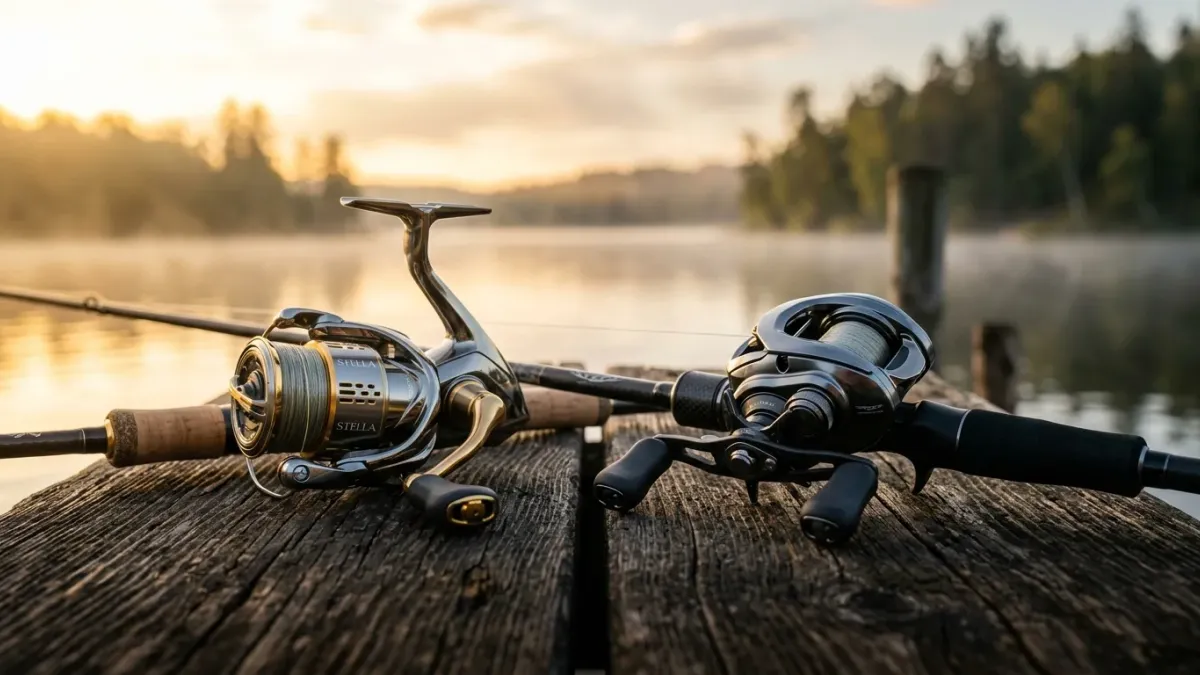
A spinning reel is probably what most people picture when they think of a fishing reel. It's mounted *under* the fishing rod, and it features a fixed spool that doesn't rotate during the cast. Instead, when you cast, the line peels off the end of the stationary spool. Once you begin to retrieve, a bail arm swings around the spool, guiding the line back onto it. This design is incredibly forgiving. You just flip the bail, cast, and reel. It’s why spinning reels are the undisputed champions for beginners and anyone prioritizing ease of use. Spinning reels excel at casting lighter lures and baits because the line comes off the spool with minimal friction. This makes them ideal for delicate presentations, smaller fish like panfish, trout, crappie, or even smaller bass and perch. For most urban anglers or weekend warriors looking for a relaxing escape, a spinning reel is often the perfect entry point. My personal recommendation for beginners is often a 6-7 foot medium-light to medium power spinning rod paired with a 2500-3000 size spinning reel. Spool it with 6-10 lb monofilament line, which is easy to handle and forgiving, or 10-15 lb braided line for added sensitivity and casting distance.Baitcasting Reels: Power, Precision, and the Learning Curve
Now, let's talk about the baitcasting reel. This reel sits *on top* of the rod, and its most defining characteristic is a revolving spool. When you cast, the spool itself spins to release the line. This direct line-off-spool design offers incredible control and power, but it comes with a steep learning curve, primarily because of a phenomenon called backlash. Backlash, often referred to as a "bird's nest," happens when the spool spins faster than the line is pulling off, resulting in a tangled mess. Mastering a baitcaster requires a delicate touch with your thumb to control the spool's speed during the cast. Despite the initial challenge, baitcasting reels offer significant advantages once mastered. They provide superior casting accuracy, allowing you to hit tight targets with precision, and they handle heavier lines and lures with ease. This makes them the go-to choice for targeting larger, harder-fighting fish like largemouth bass in heavy cover, pike, catfish, or even certain saltwater species that require robust gear. For an intermediate angler ready to embrace the challenge, a 6.5-7.5 foot medium-heavy to heavy power baitcasting rod paired with a 100-200 size baitcasting reel, spooled with 15-20 lb braided line, will unlock a new level of fishing prowess.Key Differences: Where They Shine and Stumble
The real question isn't which reel is "better," but which is better *for you* and *your specific fishing needs*. Let's break down the critical differences that will guide your decision.Casting Performance and Accuracy
Spinning reels are generally easier to cast, especially with lighter lures. The line peels off smoothly, making long, effortless casts achievable even for novices. However, they can sometimes lack the pin-point accuracy of a baitcaster, particularly when trying to land a lure in a tight spot under an overhanging branch. Baitcasting reels, on the other hand, offer unparalleled accuracy. Once you develop the technique, you can literally "pitch" a lure into a coffee cup from a distance. This precision is crucial when targeting fish holding in specific structures.Line Control and Power
With a baitcaster, the line comes off the spool in a straight path, directly in line with the rod guides. This direct connection gives you immense power and control when fighting a big fish, especially in heavy cover where you need to muscle the fish out quickly. It also allows for more consistent drag pressure. Spinning reels, while still powerful, have the line coming off at an angle, which can introduce a slight twist. However, their drag system (the mechanism that allows line to be pulled out under tension to prevent line breakage) is often smoother and more consistent on less expensive models, which is a huge benefit for beginners learning to fight fish. Here’s a quick comparison to summarize their main distinctions:| Feature | Spinning Reel | Baitcasting Reel |
|---|---|---|
| Ease of Use (Beginner) | Very Easy | Difficult (Steep Learning Curve) |
| Backlash Risk | Very Low (almost none) | High (requires thumb control) |
| Casting Accuracy | Good (general casting) | Excellent (precision casting) |
| Lure/Bait Weight | Light to Medium | Medium to Heavy |
| Line Strength Capacity | Typically 6-15 lb mono/braid | Typically 10-25 lb mono/braid (or heavier) |
| Target Fish Size | Small to Medium | Medium to Large, Hard-Fighting |
| Ideal Application | Panfish, Trout, Crappie, Light Bass, Pier Fishing, Drop Shot | Bass (heavy cover), Pike, Catfish, Muskie, Offshore Jigging, Punching/Flipping |
| Cost (Entry Level) | Generally more affordable | Can be more expensive |
Making the Right Choice for YOU
Now that you understand the mechanics and key differences, let's tailor this knowledge to your fishing journey.Consider Your Skill Level and Patience
If you’ve never held a fishing rod before, or if you only fish occasionally and want maximum relaxation with minimum fuss, a spinning reel is hands down the best choice. You’ll spend more time fishing and less time untangling. Trust me, nothing sours a beginner’s enthusiasm faster than a frustrating bird's nest. I remember my first few attempts with a borrowed baitcaster – it looked like a squirrel had built a nest inside my reel! It took dedicated practice in the backyard for weeks before I dared take it to the water. If you’re an intermediate angler, perhaps you’ve mastered the spinning reel and are looking for a new challenge, or you’re targeting bigger fish and heavier cover. In that case, the rewards of a baitcaster might outweigh the initial frustration.What Are You Fishing For? (Target Species and Location)
Your local waters and target species are huge factors.- For the urban pond or local creek angler: If you're chasing largemouth bass, trout, catfish, perch, or crappie in accessible, smaller waters, a spinning reel (like a 2500-3000 size) is usually perfect. It handles lighter lures like small soft plastics, spinners, or live worms beautifully.
- For the serious bass angler or big game hunter: If you're pitching heavy jigs into dense lily pads for trophy bass, throwing large swimbaits for pike, or battling big snapper or redfish in heavy currents, a baitcasting reel (like a 100-200 size) offers the necessary power, line capacity, and controlled casting to get the job done.
Budget and Maintenance
Entry-level spinning combos (rod and reel together) can be found for as little as $50-$100 and offer fantastic performance for the price. Brands like Shimano (Sienna, Sedona), Penn (Battle II, Pursuit III), and Daiwa (Regal) offer reliable options. A great beginner spinning combo might be a 6'6" Ugly Stik GX2 Medium Spin Combo with a 3000 size reel. Quality baitcasting setups generally start at a higher price point, often $100+ just for the reel, and good combos can easily exceed $150-$200. They also tend to have more complex internal mechanisms that might require more specialized maintenance over time. For a budget-friendly baitcaster, look at models like the Abu Garcia Black Max or Lew's Speed Spool LFS.Common Mistakes and How to Avoid Them
Even with the right reel, a few common beginner blunders can derail your fishing trip.- Overfilling the Spool (Spinning): Too much line can lead to tangles and shorter casts. Fill your spinning reel spool to about 1/8 inch from the lip.
- Not Checking Your Drag (Spinning & Baitcasting): Your drag is your friend! Always set your drag before fishing. It should be tight enough to set the hook but loose enough to allow line to peel off when a strong fish pulls. A good rule of thumb is to set it to about 25-30% of your line's breaking strength.
- Ignoring Spool Tension & Brakes (Baitcasting): This is the #1 cause of backlash. Before casting, set your spool tension knob so that when you drop your lure, it falls slowly to the ground with only a few extra spins of the spool. Then, adjust your magnetic or centrifugal brakes to prevent overruns. Start with more brakes, then gradually reduce them as you get comfortable.
- Trying to Cast Too Light a Lure (Baitcasting): Baitcasters need some weight to get the spool spinning properly. Trying to cast a tiny lure will almost guarantee a backlash. Stick to medium to heavy lures.
- Casting into the Wind (Both, but especially Baitcasting): Wind is the enemy of smooth casting. It can push your line back, causing slack and tangles. When casting into the wind with a baitcaster, increase your brakes and use a smoother, more controlled casting motion.
Your Weekend Fishing Action Plan
Okay, you've absorbed the knowledge. Now, what do you do *this weekend*? My advice for the aspiring angler:Start with a Spinning Setup: It's simply the path of least resistance to immediate enjoyment.
- Visit Your Local Tackle Shop: Don't just order online. Go to a local shop, tell them you're a beginner, and ask for recommendations based on the fish in your local lakes or ponds.
- Grab a Beginner Spinning Combo: A 6'6" medium power spinning rod paired with a 3000-size reel is a fantastic all-around choice. Spool it with 8-10 lb monofilament line – it's forgiving and easy to tie knots with.
- Essential Lures/Bait: Pick up a pack of live worms or some basic soft plastic lures (e.g., senkos or curly-tail grubs) and a few small hooks (size 1/0 or 2), and some split shot weights.
- Learn a Key Knot: Master the Improved Clinch Knot. It's strong, reliable, and perfect for tying lures or hooks to your line.
- Find a Spot: Use Google Maps to find local parks, ponds, or piers with public fishing access.
- Practice Casting: Before you even get to the water, practice casting in your backyard with a practice plug or a small weight. Get a feel for the rod and reel.
- Go Fish! Head out this weekend. Don't worry about catching a monster right away. Focus on enjoying the process, the fresh air, and the peace of being outdoors.