
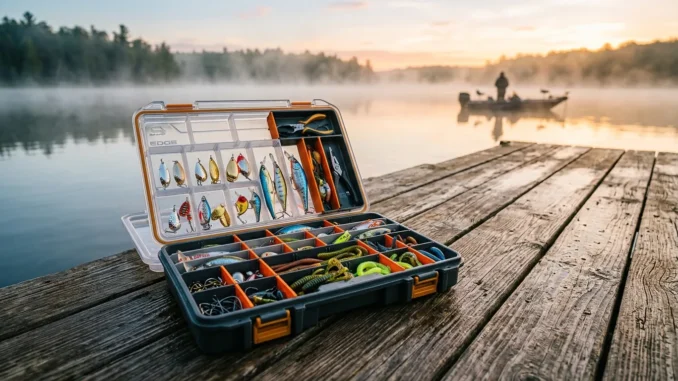
Ever walked into a fishing store and felt completely overwhelmed by the sheer amount of gear? Rows of lures, endless hooks, spools of line that look identical but cost wildly different amounts… it’s enough to make anyone new to fishing throw up their hands and just head home. But what if I told you that getting started with fishing, getting a tackle box that actually works, and catching fish doesn’t have to be complicated or expensive?
As someone who’s spent over two decades chasing fish from urban ponds to coastal piers, I’ve seen countless beginners get bogged down by gear overload. That’s why I’m here to simplify it for you. This guide is your ultimate blueprint for building a functional, effective tackle box for your first fishing adventures, all while keeping your budget firmly under $100. We’re talking about real-world, practical items that will get you on the water catching fish, not just collecting dust.
The Foundation: Your Essential Tackle Box & Fishing Line
Before we even talk about hooks, you need a place to put them and a way to connect everything. First, the tackle box itself. Forget those multi-level, heavy-duty monsters for now. You need something simple, durable, and easy to carry. A small to medium-sized plastic tackle box with a few compartments or trays will do the trick. You can find excellent options for around $10-$20 at any sporting goods store or even a big-box retailer.
Next up is your fishing line. While your rod and reel combo (which we cover in other Fish Hunter articles) comes with line, it’s wise to have a spare spool in your tackle box. For beginners, I strongly recommend monofilament line. It’s affordable, easy to tie, forgiving with knots, and has a bit of stretch, which helps prevent hooks from tearing out of a fish’s mouth. Look for 6-10 lb test monofilament for most freshwater species like bass, trout, and panfish, or 10-12 lb for general saltwater use from a pier. A 200-300 yard spool will set you back about $8-$15 and last you ages.
Why Monofilament is Your Friend
Monofilament line, often just called “mono,” is a single strand of nylon. Its stretchiness acts like a shock absorber, which is great when a fish suddenly pulls hard. It’s also less visible underwater than some other lines, and it floats, which can be an advantage when using topwater lures or bobbers. For the price and ease of use, it’s unbeatable for someone just starting out.
Terminal Tackle: The Absolute Must-Haves for Catching Fish
This is where the magic happens! Terminal tackle refers to all the bits and pieces you tie to the very end of your fishing line – the stuff that actually interacts with the fish. Don’t let the fancy name intimidate you; it’s just hooks, weights, and floats. And honestly, this is where a small investment makes the biggest difference.
-
Hooks: The Point of Connection ($5-$10)
You need a variety of hooks because different fish have different mouths. For a beginner tackle box, I suggest a small assortment of J-hooks (the classic curved hook) in sizes #4, #2, and 1/0. These will cover most panfish (like perch and bluegill), bass, and even smaller catfish. For those interested in catch and release, consider some barbless hooks or simply crimp down the barbs on your regular hooks with pliers – it makes releasing fish much easier and safer for them. A multi-pack of assorted hooks is perfect and usually costs around $5-$10.
-
Weights (Sinkers): Getting Down to Business ($5-$10)
Weights, also called sinkers, help you cast further and get your bait down to where the fish are. For beginners, a small pack of assorted split-shot weights is essential. These are small, round weights that you crimp onto your line with pliers. Get a variety pack with sizes from BB to 1/4 oz. If you plan on fishing for bass with soft plastics, a few worm weights (bullet-shaped weights that slide onto your line) in 1/8 oz and 1/4 oz are also useful. Total cost here, again, around $5-$10.
-
Floats (Bobbers): Your Bite Indicator ($5-$8)
Floats, universally known as bobbers, are invaluable for beginners. They keep your bait at a desired depth and, critically, they signal when a fish bites by dipping or moving across the water. Classic red and white clip-on bobbers are cheap and effective. Grab a pack of small and medium sizes. If you want to get a little more advanced, a few slip bobbers (which slide freely on your line, allowing you to fish deeper) are a great addition later on. For now, a pack of clip-ons for $5-$8 is perfect.
-
Swivels & Snaps: The Little Problem Solvers ($5-$8)
Swivels are tiny metal connectors that prevent your line from twisting, especially when using spinning lures. Snaps allow you to quickly change lures without retying your line every time. A small pack of assorted barrel swivels (sizes 10-12) and snap swivels (sizes 10-12) is a smart investment. Trust me, untwisting a tangled line is no fun, and these little guys save a lot of headaches. Expect to pay around $5-$8 for a starter pack.
Bait & Lures: What Really Catches Fish (Budget-Friendly Options)
Now for the fun part: what goes on the hook! You don’t need a tackle box full of expensive, fancy lures to catch fish. Based on my experience, often the simplest options are the best, especially for beginners.
Natural Bait: Tried, True, and Cheap ($3-$5)
For your first few trips, nothing beats natural bait. It’s inexpensive and universally appealing to a wide variety of fish. For example, imagine this situation: you’re at a local pond, and fish aren’t biting your fancy new lure. What do you do? Often, just putting a simple worm on your hook changes everything!
- Live Worms: The king of baits! Bass, trout, catfish, perch, bluegill – almost anything that swims will hit a worm. You can buy a container at any bait shop for about $3-$5.
- Corn: Surprisingly effective for trout and some panfish. A can of sweet corn from your pantry works wonders!
- Shrimp: If you’re near saltwater, fresh or frozen shrimp (from the grocery store) is a fantastic bait for snapper, flounder, redfish, and more.
- Hot Dogs: Believe it or not, pieces of hot dog are a catfish magnet!
Beginner Lures: Simple & Effective ($15-$25)
Once you’ve got the hang of bait fishing, adding a few simple lures can be a blast. Lures imitate prey and can be incredibly exciting when a fish strikes. For our budget, we’re looking for versatile options:
- Inline Spinners: Lures like the classic Mepps or Rooster Tail in sizes #1 or #2 are fantastic for trout, panfish, and even smaller bass. They’re easy to cast and retrieve, and the spinning blade creates flash and vibration that fish can’t resist. Grab two or three in different colors (silver, gold, chartreuse) for around $10-$15.
- Soft Plastic Worms & Jig Heads: A small pack of 4-inch soft plastic worms (e.g., green pumpkin, black, or natural colors) paired with a few 1/8 oz or 1/4 oz jig heads (a hook with a weighted head) is incredibly versatile for bass and panfish. You can fish them in many ways – slowly dragged along the bottom, twitched, or cast and retrieved. A small pack of each should be around $5-$10.
Essential Tools & Accessories (Safety & Convenience)
You’ve got your line, your terminal tackle, and your bait/lures. But what would you do in this situation: you catch a fish, but the hook is deep? Or your line gets tangled? Having a few basic tools makes all the difference for a smooth, enjoyable trip.
-
Pliers or Forceps: The Hook Extractor ($10-$15)
A good pair of fishing pliers or long-nose forceps is non-negotiable. They’re essential for safely removing hooks from fish, cutting line, and even crimping split-shot weights. You can find a basic but sturdy pair for around $10-$15.
-
Line Clippers or Small Scissors: For Clean Cuts ($3-$5)
Don’t use your teeth! A small pair of dedicated line clippers or even just a pair of nail clippers attached to a lanyard ensures clean, precise cuts when tying knots. This small item saves big frustration. About $3-$5.
-
Small First Aid Kit: Better Safe Than Sorry ($5-$10)
Fishing involves sharp hooks and slippery surfaces. A small, waterproof first aid kit with bandages, antiseptic wipes, and pain relievers is a smart addition to any tackle box. Accidents happen, and I believe it’s always better to be prepared. Expect to pay $5-$10.
-
Measuring Tape: Know Your Limits ($3-$5)
Many areas have size limits for certain fish species. A small, retractable measuring tape helps you comply with regulations and practice sustainable fishing. These are typically just a few dollars.
Common Beginner Mistakes to Avoid
Honestly, the biggest mistake I see beginners make isn’t about gear, it’s about preparation. Not having pliers for hook removal, not having line clippers, or forgetting to check local fishing regulations (including size and bag limits) are common pitfalls. Always know the rules for your local waters before you cast a line!
Your Under-$100 Tackle Box Checklist & Weekend Action Plan
Let’s break down how this all fits into your budget:
- Tackle Box: $15
- Monofilament Line (6-10lb): $10
- Assorted J-Hooks (#4, #2, 1/0): $8
- Assorted Split-Shot Weights & Worm Weights: $8
- Clip-on Bobbers (small/medium): $6
- Assorted Swivels & Snap Swivels: $7
- Inline Spinners (2-3): $12
- Soft Plastic Worms & Jig Heads: $8
- Fishing Pliers/Forceps: $12
- Line Clippers: $4
- Small First Aid Kit: $8
- Measuring Tape: $2
- Total Estimated Cost: ~$100
See? It’s completely achievable! You’ve got everything you need without breaking the bank.
What to Do This Weekend: Get Out There!
Your action plan is simple: head to your local sporting goods store or even a well-stocked department store, pick up these items, and then find a local pond, lake, or pier. Grab a container of live worms, thread one onto your hook, add a split-shot weight a foot or so above it, and clip on a bobber. Cast it out, relax, and watch that bobber. When it dips, set the hook! You’re officially a Fish Hunter!
Building your first tackle box doesn’t have to be a daunting task. By focusing on these essential, budget-friendly items, you’ll be well-equipped for success and ready to enjoy the peace and excitement that fishing brings. Remember, the best gear in the world won’t catch fish if it stays in the garage. So, gather your essentials, get out there, and start making some unforgettable fishing memories. Happy fishing, my friends!
Leave a Reply